Genre

RELATED TERMS: Story (fabula) and Plot (sjuzet or sjuzhet); Defamiliarisation, Ostranenie or making strange

Russian formalism distinguishes three aspects of story, i.e. fabula, sjuzet, and forma, which can roughly be translated as theme, discourse and genre. The first two terms, fabula and sjuzet, have been described by modern literary theorists as, respectively, the timeless or structural aspects (the tale, the story, the already told and/or already known) and the sequential or dynamic aspects of story (the telling, the plot, the as-yet unknown).

Bruner (2004: 696) argues that the timeless/structural fabula is the mythic dimension, the transcendent plight that a story is about, for example, jealousy, authority and obedience, thwarted ambition, and those other plights that are widely experienced and which articulate the human condition. The sjuzet incorporates or realises the fabula not only in the form of a plot but also in an unwinding net of language. Bruner amends Frank Kermode’s (1984) thoughts on fabula and sjuzet in story, to suggest it their relationship is like the blending of timeless mystery and current scandal. The seemingly everlasting human dilemmas of envy, loyalty, jealousy and the like are woven into the acts of Iago, Othello, Desdemona, and Everyman with a fierce particularity and localness, which James Joyce called an “epiphany of the ordinary.” This particularity of time, place, person, and event can also be found in the mode of the telling, in the discourse properties of the sjuzet, Bruner (2004: 696 ) notes.

In order to create such epiphanous and unique ordinariness through the weaving of fabula and sjuzet, Roman Jakobson proposes that the author has to “make the ordinary strange”. Such a effect depends not upon plot alone but upon language because, Bruner (2004: 696) argues, language constructs what it narrates, both semantically and pragmatically as well as stylistically.

The third aspect of narrative, i.e. forma or genre, is an ancient topic dating from Aristotle’s Poetics. A genre is plainly a type, in the linguist’s sense, of which there are near endless tokens, such as romance, farce, tragedy, Bildungsroman, black comedy, adventure story, fairytale, wonder tale and so on. In that sense, it may be viewed as a set of grammars for generating different kinds of story plots. However, it is not that alone. Genre also commits one to use language in a certain way: lyric, for example, is conventionally written in the first person/present tense, epic is third person/past tense, and so on. A question that remains an open one is whether genres are mere literary conventions; are built into the human genome, in a Jungian archetypal sense; or are an invariant set of plights in the human condition to which all persons react in some necessary way (Bruner, 2004: 697).

Thus, Bruner (2004: 697) suggests, we may ask of any story: what is its fabula (or gist, or moral, or leitmotiv); how is it converted into an extended tale and through what uses of language; and into what genre is it fitted.

Reference

Bruner, J. (2004). Life as Narrative. Social Research, 71 (3), 691–711. [Originally published in Social Research, 54 (1), Spring 1987]

Kermode, F. (1984). Secrets and narrative sequence. In On Narrative, edited by W. J. T. Mitchell. Chicago: University of Chicago Press,

Genealogy – Nietzsche

RELATED TERMS: Agonism and avant-gardism; Apparatus – Dispositif; Critical thinking; Historicism; Nihilism; Ontological designing; Philosophy

Genealogy, as defined by Nietzsche, in as far as it is an approach to historicity, meaning-production and values, has great relevance for design practices, as it permits a particular kind of understanding of the limitations of historicism in understanding historical being and change.

Hoy (1991: 276) contrasts Nietzschean genealogy with Hegelian dialectic. In dialectic, history necessarily progresses towards and culminates in the standpoint of the historian narrating the story. With Nietzschean genealogy, however, historical change is a matter of chance rather than necessity. Historical developments have both advantages and disadvantages. The category of universal progress is therefore no longer appropriate. The genealogist considers that the belief in progress serves the ideological purpose of confirming our complacency about the superiority of the present. Genealogical histories challenge other histories of the same events precisely to disrupt this complacency.

Nietzsche’s struggle with nihilism is at the centre of his thought (Gilbert, 1999) and it is a struggle which led him to develop his genealogical method. Nietzsche gave the name nihilism to his diagnosis of an unrecognised and very specific crisis within Western culture, a crisis which he saw as stemming from a triple loss: of human agency; of the foundations of truth; and of a ground of moral judgement. Nihilism created a culture cast adrift, existing with a strong but unexamined sense of loss. This was experienced as a loss of a world that rested upon fundamental meaning, whether vested in God, the absolute, truth or community. Living this loss created overt or repressed feelings of sickness, malaise and dislocation. He held two specific discourses to be responsible for this situation: Platonism and Christian morality, neither of which, he believed, provided an objective ground for moral judgement (Fry, 2012: 25-25).

It was the failure of Hegel’s attempt at a grand synthesis of Platonic and Christian thought that forced upon continental philosophy a radical rethinking and re-evaluation of both metaphysics and theology, what Heidegger has called the onto-theological tradition. Nietzsche’s re-evaluation of that tradition results in the thesis of philosophic nihilism, i.e. that philosophy itself, since Parmenides’ thesis of the identity of thought and Being, is complicitous in nurturing the modem sense of meaninglessness which Nietzsche calls European nihilism. In short, it is precisely the Platonic-Parmenidean persistent focus on ‘Being’ as a purified entity which Nietzsche sees as at the origins of nihilistic thinking (Gilbert, 1999).

For Nietzsche, philosophic nihilism denotes the awareness that our sense of the meaning and value of human life is grounded in a conception of either God or metaphysical truth, i.e. of a true world or one ultimate reality, which provided the context and the substratum for all meaning and value. Not only are all such substrata false or illusory, but they eventuate in a necessary denigration of this, the lived world of everyday experience by existing as standards by which this world is inevitably judged (Gilbert, 1999).

Nietzsche also saw that reason and logic are intimately tied to both metaphysics and Christianity. This sense of reason as the route to truth in philosophy, has led to constructions of ‘seIf’, that particularly in modernity beginning with Descartes, do not correspond to meaningful cultural and social practice. It is this disparity between meaningful experience-praxis and reason-philosophy, defined metaphysically and therefore abstractly, that Nietzsche viewed as leading to European nihilism.

Nietzsche responds to European nihilism with an exploration of the possibilities of history, foremost of which is the notion of eternal recurrence (Gilbert, 1999).

The dissolution of meaning resulted in the inability of individuals to mobilise their interpretive capability in ways that could appropriately inform or direct their actions. In a contradictory movement, conformity increased at the same time as the rhetoric of individualism proliferated. Nietzsche argued that what results from this loss of agency, the implied loss that nihilism named, was not just a sense of powerlessness but also a feeling of alienation from the individual’s creative capacity.

It was the work of Charles Darwin that sowed the seed of Nietzsche’s particular understanding of nihilism. In establishing that life was a process that depended on no agency other than itself, Darwin undercut the ground of the belief that life has a source of foundational meaning, i.e. a belief in the designing hand of God or a transcendent intelligence transcribed in nature (God’s creation). Nietzsche’s nihilism, however, has to be seen in the light of the rise of a secular society in which there arose an inflated sense of the foundational power of reason. For Nietzsche, then, there is no foundational source of meaning: not God, not nature and not reason.

Nietzsche proposed three ways of overcoming nihilism. The first is to show nihilism for what it is, i.e. the form of life that we have become. Second, he suggested that it was imperative for us to act to overthrow that which we have become, including how we view the world, ourselves and all that we understand. Third, he advocated the acquisition of historical experience, but historical experience not validated by metaphysics or religion. The first two actions, however, rely problematically on consciousness as the means to deliver the proposed changes.

History can be said to have a telos, i.e. temporal and directional drive; narrative, i.e. an ordering and interpretation of historical events; and power, i.e. that which mobilises and directs the narrative. The historicity of events does not become history until an act of narrativisation is undertaken. For Nietzsche, all history is perspectival; is not underpinned by reason; and is exclusive, arriving through processes of exclusion and inclusion. The perception of events is transformed by events in the present. We cannot escape our historicity as it constitutes our memory and experience. Against this background, Nietzsche makes a case for a genealogical method.

Genealogy is the sum of actions in situated local contexts with their own relations among logics, imperatives and practices. Genealogy seeks to attend to the connections among processes generated by socially connected actors and groups and the material events and actions that brought these social entities into existence. Genealogy arrives at the present by way of a particular mode of diagnostic history that explores critically the multiplicity of relational factors that intersect with and constitute events.

Genealogy does not accept history as received. It enacts a deep and symptomatic reading of power dispersed across plural situated practices which are not reducible to dialectical dynamics. Thus, genealogical accounts act to disrupt the notion of reason in history, while nonetheless affirming history as a source of meaning. Nietzsche, through his genealogical analysis, seeks to build an overall picture in the present that does not conceal gaps and omissions.

The genealogical method was brought into contemporary critical theory largely through Gilles Deleuze’s rigorous engagement with Nietzsche’s philosophy. It was then taken up by Michel Foucault, under the influence of Deleuze. Foucault’s later work adopted and extended the genealogical method.

The specificity of genealogical criticism as outlined by Nietzsche focused on, first, the logical, i.e. cultural formations and their ideas; the genetic, i.e. a way to name pathways, traces and relations; and the functional, i.e. the contextually specific agency of meaning. The past, as diffracted in the present, is constituted by memory and by history as a unified narrative. Very often, events, especially large, life-changing and world-transformative events, make little sense at the level of individual experience, existing as disjointed incidents amid chaos. In contrast, historical accounts arrive as a violent ordering or in contradiction to what was experienced.

Given this state of affairs, there is a need to refuse, rupture or condemn the grip of the past by subjecting its injustices and concealments to caustic criticism and judgement. Nietzsche recognised that history can cover over the past and that one has to find the force to disclose it. It is here that Nietzsche highlights the relevance of nihilism, because part of the loss of human agency which he diagnoses is evidenced by an inability to confront history critically. This inability extends the loss of agency.

We, as human beings, are the result of the confluence of our world, history and historical processes as they ontologically design the nature of our being, a relational determinate process without a single telos. To acquire agency is to be actively engaged in making history and in so doing creating that which ontologically designs the designing of a socio-materially fabricated world that in significant part designs what we are and can do. While such praxis is always against the grain of history, it comes equally from historically and culturally created resources and possibilities.

Given this characterisation, a loss of agency is a specific loss of capability to be an active, located and future-directive world-formative historical subject. This loss of agency has been compounded in the 20th and 21st centuries by the continuing instrumentalisation of reason and modern technology. The loss of agency announced in the term nihilism has been taken up in significant part in the inanimate world by technology, as mind and matter. Technology is becoming an ever-heightened means of the ontological designing of ‘being now’. Contestation centres on the designed and designing subject.

Against this, Fry argues, design, critically transformed and mobilised, can provide a re-directive mode of engagement with de-futuring technology, and as a means of regaining agency.

There may be lessons to be learned from such discourses on agency and historicity, in relation to actantiality and the formation of (societal) apparatuses, on the one hand, and in relation to design, particularly the design of narrative environments, on the other hand. The narrative environment designer, as genealogist, engages in a form of critical historiography by showing that the beliefs and values of the present, which are taken as eternal and true, are temporal, historical and subject to reinterpretation (Hoy, 1991: 278).

References

Fry, T. (2012). Becoming human by design. London, UK: Berg.

Gilbert, B. (1999). Nietzsche and nihilism [Doctoral thesis]. Department of Theory and Policy, Ontario hstitute for Studies in Education, University of Toronto. Available from http://www.nlc-bnc.ca/obj/s4/f2/dsk3/ftp04/MQ62915.pdf [Accessed 6 February 2016].

Hoy, David Couzens, ‘A History of Consciousness: From Kant and Hegel to Derrida and Foucault’, History of the Human Sciences, 4 (1991), 261–81.

Framing Narrative

RELATED TERMS:

Use for: Frame narrative

A framing narrative contains a second, or further, embedded narrative, or narratives, for which it provides a context or setting. Sometimes the framing narrative begins and ends the narrative as a whole, providing book ends. At other times, it is simply present at the beginning of the narrative, acting as an introduction. Sometimes it reappears as a linking device between a series of embedded narratives. In all cases, the framing narrative sets the scene for the embedded narrative or narratives, providing a context in which we can read and interpret what they tell.

A special form of a framing narrative is a meta-narrative, where the containing and contained narratives are thematically and/or content related.

Framing sometimes comes as nesting of narratives in which A frames B, B frames C, C frames D and so on.

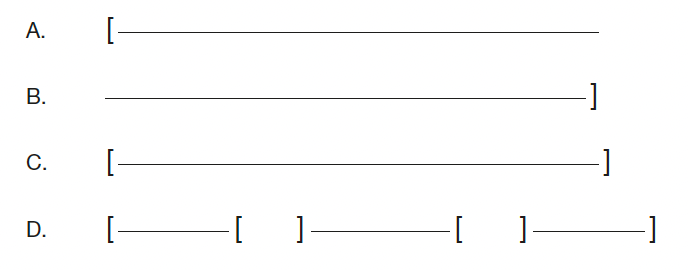
Monika Fludernik (2009: 28) defines four types of framing narratives. Frames, as shown by the square brackets in the figure below, may be found at the beginning, at the end or both at the beginning and the end of a narrative. Type A in the diagram below has been called introductory framing and type B terminal framing. Type C shows frames at both beginning and end. Frame narratives may also be interpolated at some point in the text interpolated frame, as in type D in the diagram. Type A has also been referred to as missing end frame while type B has been referred to as missing opening frame.

Source: Monika Fludernik, Introduction to Narratology, p.28

References

Fludernik, M. (2009) An Introduction to narratology. Translated by P. Häusler-Greenfield and M. Fludernik. London, UK: Routledge.

Hochschule für Gestaltung

RELATED TERMS: Bauhaus; Black Mountain College; Deutscher Werkbund

The Hochschule für Gestaltung in Ulm (Ulm Institute of Design) was founded in 1953. It closed in 1968 amid the cultural and political upheaval of the period. What made Ulm special was the idea that design should be understood and practiced as a socially relevant and ultimately intellectual occupation (Oswald and Wachsmann, 2015).

The Hochschule für Gestaltung and the Recurring Questions for Design

The importance of the Hochschule for ongoing design debate has several strands, all of which might be said to unfold in different dimensions from questions concerning the relationships between design and society.

One such strand is the question of whether design practices can overcome their historic complicity in the violence and excesses of modernisation as manifested in industrialisation and urbanisation. A related question concerns the further complicity of industrial and urban processes in colonialism and imperialism, in taking part in creating an industrialised, urbanised, hierarchically-superior centre along with its inferiorised peripheries in the unfolding of globalisation.

Wrapped up in these processes of modernisation, understood as (civilisational) progress and (economic) development, is the question of the roles of design practices in the relationships among technological change and material culture; or the gradual recognition of the interpenetration of technological ecologies, material ecologies and biological ecologies all of which, separately and together, might be characterised as ‘culture’ and/or civilisation. In this context, technologisation is no longer understood simply as ‘mechanisation’. The machine can no longer simply be understood as mechanical nor can its operation be solely grasped through mechanical metaphors in the context of industrial production.

Another aspect or face of the same tangle of questions concerns different understandings of the role of ‘the sign’ and semiosis. From one direction, the sign can be understood in the constitution of ‘life’ (biosemiotics), ‘technology’ (information semiotics), ‘culture’ (material-sensible semiotics), ‘sense’ (psycho-semiotics, logico-semiotics or transcendental semiotics), ‘meaning’ (discourse semiotics), ‘action’ (actantial semiotics) and ‘environment’ (material-contextual semiotics). From another direction, the sign can be understood in the context of the role of design in reconfiguring existing semiotic regimes which articulate life, technology, culture, sense, meaning, action and environment.

All of these events and event-horizons, which are not stratified into levels but are interwoven or threaded through one another, might be said to constitute the historical traumas to which the modern-post-modern ‘mind’ or ‘body-mind’, as extended psycho-social-ecological intercorporeal-intersubjectivity, is responding. Those responses play out through a complex deconstructive engagement in which emergent systems continue to shake, while to some extent sustaining, existing traditions as well as their critical re-evaluations.

Together, these processes do not permit emergent systems to become settled, either to form an original grounding (arché) for a new beginning as a rupture with the past or a final ending (telos) for a rupture with the past as a new beginning. Design practices play significant roles in the remembering-forgetting, the re-writing, over-writing or erasing of these traumas, forming palimpsests through which the past continues to be interpreted and re-evaluated and decisions affecting future paths continue to be rehearsed in an oscillating, unsettled and unsettling present.

The History of the Hochschule für Gestaltung

The precursor to the Hochschule was a community college set up by Inge Scholl and Otl Aicher in the south German town of Ulm in 1946. They envisioned the school as a centre for democracy to counter the legacy of German militant nationalism and in doing so to provide postwar German youth with cultural ideals and moral direction. Pedagogically, their central aim was to dissolve the historical antagonism between ‘technical civilisation’, equated with the Nazi legacy of industrialised death and destruction, and German Kultur, the culture of Enlightenment humanism, the humanities and ‘high’ or ‘fine’ art. 

The school’s history, according to Paul Betts (1998), can be said to mark modernism’s last concerted effort to conjoin design, science, social reform and cultural renewal. In seeking to reassert the redemptive potential of design against the corrosive effects of past Nazi irrationalism and ongoing American commercialism, the school aimed to rehabilitate the damaged authority of science and rationality as the models of engaged design education.

In recognising the great need for a new cultural direction in Germany in the post-1945 period, the Hochschule drew up a programme for a school of design on socio-political lines. Their educational concept that articulated an anti-fascist stance with democratic hope. To achieve their pedagogical goal, Scholl and Aicher proposed a ‘universal education’. The curriculum encompassed general media studies, including politics, sociology, journalism, radio, and film, and art instruction, including photography, advertising, painting, and industrial design. This was intended to counter the dangers of excessive reliance on instrumental reason and cultural irresponsibility.

“The HfG wanted to work as a successor of the Bauhaus from its heights above the Danube valley, admittedly with a fundamental difference. While the Bauhaus saw training in fine art as a requirement for the design of good industrial form, the HfG stood for a direct, functional approach to the matter in hand. For this reason Ulm had no studios for painters and sculptors and no craft workshops.”

Stock (2015: 11)

When Walter Gropius made Otl Aicher and his colleagues Walter Zeischegg, Tomás Maldonado and Hans Gugelot the offer of calling the Hochschule für Gestaltung “Bauhaus Ulm”, they refused (Aicher (2015a). It was not their intention, Aicher explains, to make a second Bauhaus. They wanted consciously to distance themselves from it. Writing for the Ulm journal in 1963, Maldonado reflected on the HfG’s relation to the Bauhaus. The deepest line of connection, he suggested, lay in the institutions’ common grasp of the emancipatory potential of industrialised production. The Bauhaus had tried, even though without success, to lay open a humanistic perspective on technical civilisation, in other words, to regard the human environment as a ‘concrete field of design activity (Kapos, 2016).

Max Bill, the Swiss sculptor, painter and designer, thought quite differently about these matters than Scholl and Aicher. His appointment of as school director in 1953 radically impacted the the emerging Hochschule‘s tone and outlook. For Bill, the guiding objective should be a more art-oriented design instruction rather than one which emphasised the studies of sociology, cultural theory and politics. As a member of the the Deutscher Werkbund, a German association of artists, architects, designers and industrialists established in 1907, Bill believed that social and cultural reform began with reconstituting the forms of the social environment, such as, city planning, architecture and the design of everyday objects, not with forced political training. Proper design practice, in this view, was itself a kind of political reform and moral re-education for the reason that everyday spaces and objects elicited affective responses from their users.

Nevertheless, despite internal differences of opinion and approach, the Hochschule continued to be infused with a grand vision of social reform based on the reconciliation of art and life, morality and material culture, with culture being understood as being infused in all the material forms present in everyday living.

Although he did not want repetition either, he did, however, want a kind of new Bauhaus, imagining that there would be artists’ studios for painters and sculptors and workshops for goldsmiths or silversmiths, as was the case at the Bauhaus. For Zeischegg and Aicher this was unthinkable. They were interested in designing for daily life and the human environment, in industrial products and social behaviour. In Aicher’s (2015b: 86) words,

“van doesburg or moholy-nagy stood by the primacy of form, which means the same thing as the hegemony of art. In their eyes the criterion for all design was pictures or the picture. art reigned supreme in the bauhaus. … they remained rationalists, and postulated an aesthetic existence above the concrete product. with persistent idealism they raised basic aesthetic forms to a superordinated principle and relegated the product itself to a mere case of application.”

(Aicher, 2015b: 86)

They were no longer prepared to accept that creativity should be classified by objects; that the peak of human creativity was pure aesthetics, without a specific purpose; and that practical matters and things for daily use were of secondary significance. Thus, they held that design means relating thinking and doing and that aesthetics without ethics tends towards deception.

Rather, after the end of the Second World War, they felt they, “had to get back to the matter in hand, to things, to products, to the street, to the everyday, to people.” (Aicher, 2015a: 87). It was not a question of extending or applying art to the everyday, to application. In shaping the everyday, design had become the platform of all kinds of humane creativity. Design, for the ULM school, was not an applied art borrowing its solutions from art.

Bill resigned in 1957, four years after the school opened. He was replaced as rector by the Argentinean painter Tomas Maldonado who had joined the Hochschule faculty in 1954. Maldonado, while sharing the desire to train socially responsible designers rather than commercial artists, rejected Bill’s Werkbund-Bauhaus idealism in favour of a more scientific conception of industrial design.

The work of the Hochschule took place in the context of a changed attitude towards technology. After 1945, taking into account the events the that occurred during the Third Reich and those at Hiroshima/Nagasaki, technology often was treated by West German intellectuals, such as Junger, Giedion, Heidegger and Horkheimer and Adorno, as carrying the stigma of evil and danger. The historical faith in the benevolent marriage of technology and Kultur as well as science and society did not survive the Second World War. Technology could no longer serve as the central figure of German liberation.

In endeavouring to rescue the concept of Industriekultur from its Nazi iteration, by re-setting it within a more humanist tradition of social responsibility and moral education, the staff at the Hochschule were driven by a desire to prevent West German modernity falling into the hands of narrow-minded technocrats, commercial designers and advertising agents.

Science played a key role in the Hochschule’s conception of a post-Nazi redemptive modernisation, giving rise during the late 1950s and early 1960s to the vexed question of how to devise a scientifically-oriented design education that was not compromised by commercial motivations. Bill, for example, had striven to develop the theoretical insights of his former Bauhaus teachers Paul Klee and Wassily Kandinsky, combining spiritual artistic creativity with scientific logic.

For Maldonado, the emergence of modern design as a commercially-driven profession was a result of the Great Depression in the USA, where designers were recruited by business to help aestheticise everyday commodities in order to reinvigorate flagging consumption. Maldonado considered both commercial design and Bill’s notion of the artist-designer as symptoms of the same outdated misconception about the role and meaning of engaged industrial design.

Maldonado’s outline of the stages in design history ran as follows: first, Fordist rationalized mass-production foregrounded the designer as inventor-planner; second, the artist-designer arose as a function of the 1929 Crash and the Great Depression; and third, the designer becomes a coordinator, working in close collaboration with a large number of specialists, the most varied requirements of product fabrication and usage in order to ensure maximum productivity, material efficiency, and the cultural satisfaction of the user. In short, Bill’s autonomous artist-designer had been replaced by the designer as active partner of industry.

By integrating the designer into the industrial process itself, Maldonado had secularised the designer by transferring their sphere of operation from the lofty heights of Kultur to the workaday world of industrial Zivilisation.

Semiotics

One particularly revealing aspect of the school’s ongoing scientisation of its curriculum could be seen in the primacy of semiotics. To a great extent, this stemmed from the larger attempt to decouple design from the trappings of Kultur, namely, morality, taste and aesthetics. Here, Maldonado again led the way, although he drew heavily from the work of Charles Sanders Peirce, Charles Morris, Anatol Rapoport and especially the long-forgotten West German philosopher and Ulm lecturer Max Bense.

Functionalism

Over the course of the 1960s, a pronounced ‘crisis of functionalism’ occurred within West German architecture and design circles. For many West Germans, the 1920s’ belief in the therapeutic powers of functionalist building and city planning was transformed into a post-1945 nightmare, as its once soaring social and socialist rhetoric had been emptied of any Utopian promise or cultural redemption.

Once a passionate watchword of social democracy and the demystification of Kultur, functionalism was now demonised on all sides as the very expression of the miscarried dreams of postwar reform and renewal.

Science, Technology and Society

The project of reuniting science and society in a grand vision of cultural engagement and political liberation never survived the upheavals of 1968. After that, the focus of design shifted from aestheticising the relationship between people and objects-machines in such practices as interior decoration, advertising, ergonomics and cybernetics, to that between people and the environment, in the ecology movement, park design and urban renewal, as space re-emerged as a new politicised social category in the 1970s. Still, Ulm represented the postwar’s most sustained attempt to rethink the role of social science and political engagement in a post-Kultur world of overproduction, hyper-consumerism and instant commodification.

Nowhere else in West Germany were the problems associated with trying to combine industry and enlightenment, aesthetics and liberation, as well as technology and culture, so passionately explored and debated as in the Hochschule fur Gestaltung.

Pedagogical Innovation; Design Education; Design as Academic Discipline

The period 1960-1962 saw the introduction of the Ulm Model, a novel form of design pedagogy that combined formal theoretical and practical instruction with work in so-called Development Groups for industrial clients under the direction of lecturers. This led to the introduction of theory instruction in subject areas deemed to be essential for the preparation of designers capable of engaging with the complexities within which industrial design now operated. These new subjects included cybernetics, games theory, mathematical operations analysis and ergonomics (Kapos, 2016).

However, even though they amplified Maldonado’s insistence upon the complexity of the various communicative and operational systems within which design for industry was positioned, the approach developed by these more scientifically oriented theorists broke the connection between design and social transformation, a connection that they did not think was valid. They sought the removal of certain curricular elements in a bid to render their analytic processes fully objective. In their positivistic view, the sphere of values, in particular, lacked rational foundation. In the name of rationality, precision and objectivity, the design process was to be purged of all non-rational framing devices, whether these were taken to be normative, ethical or political in kind.

What had begun as rigour descended into what Maldonado referred to disparagingly as ‘methodolatry’.

Things reached a crisis point in 1962, when the science-oriented faculty pressed for a theoretical transformation of the very concept of design, severing the practice’s association with aesthetic form-giving, which it considered the result of a category error, and service to values, which it took to be ill-construed and irrational.

In the face of what was in effect a coup, Aicher, Maldonado and Zeischegg succeeded in restoring a more practically oriented mode of design to its previous position, but only by means of a rearguard action that involved a re-drafting of the school’s constitution.

In the end, politics was reinstated but only on the realisation that design was not, in fact, in a position to nominate its mode of relation to the social world. It was already bound up with the processes of development it had believed itself to influence. Although Bill’s ideal of the artist-designer shaping society from a position of distance had been thoroughly repudiated, the identification of design’s actual integration within destructive social processes forced its return to a similar position of exteriority, albeit one more critical than artistic. 

In the view of Pro-Rector of the Hochschule Claude Schnaidt, extending insights initially developed by Maldonado and sharpened by Abraham Moles, the problem of how design might perform socially under fundamentally antisocial conditions was not to be evolved out of the practice of design under conditions of ‘neo-capitalism’. Indeed, the assumption that design held sufficient resources within itself for the task was itself a hallmark of the idealism that accompanied its persistent failure. Properly construed, the question as to whether the situation lent itself to correction was one of politics, not of design at all (Kapos, 2016). Whatever design’s contribution might be, it would have to be made on the basis of the self-critical recognition of its own practical insufficiency.

Citing the example of modern architecture, which sought to play its part in the liberation of mankind by creating a new environment in which to live, Schnaidt argued that architecture had instead been transformed into a massive enterprise for the degradation of the human habitat. Even though Schnaidt recognised that designers occupy an ambivalent position between the demands of capital and those of human needs, this did not prevent him from pouring scorn on the earlier modernists, such as Frank Lloyd Wright, Walter Gropius and Le Corbusier, who were content to project their social utopianism at the level of formal perfection. For Schnaidt, the apparent radicalism of these gestures condemned the present by holding it up to an ideal future state, while providing no concrete means whereby there might be a transition from one to the other (Kapos, 2016).

Such conclusions threw the Ulm Model, the Hochschule’s pioneering pedagogical device of combining instruction with practical work for industrial clientele, into doubt. It now transpired that the apparent radicality of fusing educational with industrial activity merely anticipated the tendency of exchange relations to instrumentalise cultural practices. The ideal of the designer’s integration within the production process, the mainstay of the Hochschule’s pedagogy, had to admit a bitter professional reality, first, in the submission of the designer to the findings of market research at the level of practice; and, second, in the structural integration of design into processes of production and reproduction at the level of its social function.

When the relation of design to these socio-political elements was thought through, a more challenging pedagogic model suggested itself, one that would not merely reflect the existing state of things but would contest it by supplying alternatives to practice. For, as Hochschule instructor Gui Bonsiepe observed: ‘if training [education] is not to become an insignificant appendage of ‘industry, it must create its own models and patterns so as to give future practice its bearings; otherwise training will be merely duplication’.

The antagonism between a politically-committed design practice and the social world had to be expressed directly in its practical and pedagogic forms.  Unfortunately, there was to be no opportunity to develop this insight: the fact that the Hochschule was fundamentally at odds with the world was already very well understood by those members of the political class charged with allocating funds to it. From the early 1960s, the Hochschule had faced mounting debts and an increasing dependency on a conservative political class that was not inclined to support it.

In 1968 funding to the school was cut and the Hochschule closed.

References

Aicher, O. (2015a) Bauhaus and Ulm. In The World as design. Berlin, DE: Ernst and Sohn, pp.85-93.

Aicher, O. (2015b) Analogous and digital. Berlin, DE: Ernst and Sohn.

Betts, P. (1998) Science, semiotics and society: The Ulm Hochschule für Gestaltung in retrospect, Design Issues, 14(2), pp. 67–82. Available at: https://www.jstor.org/stable/1511852 (Accessed: 5 January 2023).

Kapos, P. (2016) Art and design: the Ulm Model, Das Programm. Available at: https://www.dasprogramm.co.uk/learn/writings/view/4 (Accessed: 10 January 2024).

Neves, I. C., Rocha, J. and Duarte, J. P. (2014) Computational design research in architecture: The legacy of the hochschule für gestaltung, Ulm, International Journal of Architectural Computing, 12(1), pp. 1–25. doi: 10.1260/1478-0771.12.1.1.

Oswald, D. and Wachsmann, C. (2015) Writing as a design discipline: the Information Department of the ULM School of Design and its impact on the School and beyond, AIS Design Journal, 3(6), pp. 87–106.

Schnaidt, C. (2013) Architecture and political commitment, Charnel House. Available at: https://thecharnelhouse.org/2013/09/25/architecture-and-political-commitment/ (Accessed: 3 February 2024).

Stock, Wolfgang Jean (2015). Introduction. In Otl Aicher The World as design. Berlin, DE: Ernst and Sohn, pp.10-15.

Weiner, F. (2011?) Beginnings of the Hochschule für Gestaltung at Ulm, Academia.edu. Available at: https://www.academia.edu/38187301/Beginnings_of_the_Hochschule_für_Gestaltung_at_Ulm_pdf (Accessed: 10 January 2024).

Focalisation

RELATED TERMS: Agon; Agonistic politics – Mouffe; Dramatic conflict

Use for: Focalization

“Are you genuine? or just a play-actor? A representative? or the actual thing represented? — Ultimately you are even just an imitation play-actor … Second question for the conscience.”

(Nietzsche, 1998: 9)

Focalisation is a valuable concept for design practices because it facilitates consideration of and reflection upon the articulation of dramatic conflicts, both intra-character, as the agony of conscience, and between characters, as agonistic struggle, and also the dramatic reversal of focalisations from one character to another to permit multi-perspectivalism, a useful capability in our plural and diverse world.

Gerard Genette’s narratological model, presented the late 1960s, in Figures, is responsible for establishing the concept of focalisation in narrative studies. Fludernik (2005: 40) suggests that this term has now largely replaced the traditional terms perspective and point of view, but the relationship between focalisation and point of view is more complicated than simple replacement.

Niederhoff (2011) proposes that focalisation “may be defined as a selection or restriction of narrative information in relation to the experience and knowledge of the narrator, the characters or other, more hypothetical entities in the storyworld.” In general, Genette thinks of focalisation in terms of knowledge and information, defining it as a selection of narrative information with respect to what traditionally was called ‘omniscience’. Ryan, Foote and Azaryahu (2016: 20) suggest that the difference between point of view and focalisation is that the former stands for a spatial position from which a scene is observed, irrespective of whether or not this position is occupied by someone, whereas the latter suggests the scene is inscribed in someone’s consciousness.

Genette makes a distinction between focalization and the narrator. Genette refers to the narrator through the grammatical metaphor of ‘voice’. Previous theories had analyzed such categories as first-person narrator, omniscience, and camera perspective under one umbrella term, usually point of view or perspective. Genette considered that such treatments of the subject confused two question: that of who is the character whose point of view orients the narrative perspective (‘who sees?’), the position from which events of the narrative can be viewed; and the very different question of who is the narrator (‘who speaks?’), the point from which the story is told. A single text may contain several points of view or kinds of focalization at different moments in the narrative. In presenting a narrative to readers, an author may use one or more of the three points of view: first, second, and third person.

Genette distinguishes between zero focalisation, on the one hand, and a pair of terms defining restricted points of view, internal and external focalisation, on the other hand. With zero focalisation the authorial narrator is above the world of the action, looking down on it, and is able to see into the characters’ minds as well as shifting between the various locations where the story takes place (‘omniscient narrator’). This perspective is unrestricted or unlimited in contrast to the limitations of internal and external focalization. In the case of internal perspective, the view is restricted to that of a single character; in that of external perspective to a view of the world from outside, allowing no insight into the inner workings of people’s minds.

For Genette, internal focalization refers to a narrative situation where the narrator is external to the storyworld – i.e. heterodiegetic – and talks about the characters in the third person while providing information about the protagonist’s inner, mental life (Lissa, et al, 2016, 44).

The Genettean model is, however, inconsistent, Fludernik (2009) argues, because the reflector character is presented by means of internal focalization but s/he sees other characters under the restrictions of external focalisation. Reflector characters or reflector figures are so called, originally by Henry James, because they ‘reflect’ the story to the reader rather than telling it to them as a narrator persona would.

References

Bal, M. (1997). Narratology: introduction to the theory of narrative, 2nd ed. Toronto: University of Toronto Press.

Fludernik, Monika (2005). Histories of narrative theory (II): from structuralism to the present, In: A Companion to narrative theory, edited by J. Phelan and P. J. Rabinowitz. Oxford: Blackwell Publishing, 36-59.

Fludernik, M. (2009). Focalization, perspective, point of view. In: An Introduction to Narratology. London, UK: Routledge, 36–39.

Lissa, C. J. van et al. (2016) ‘Difficult empathy: the effect of narrative perspective on readers’ engagement with a first-person narrator’, Diegesis, 5(1), pp. 43–63. Available at: https://www.diegesis.uni-wuppertal.de/index.php/diegesis/article/view/211.

Niederhoff, B. (2011). Focalization. The Living Handbook of Narratology. Available from http://wikis.sub.uni-hamburg.de/lhn/index.php/Focalization [Accessed 1 June 2017].

Nietzsche, F. W. (1998) Twilight of the idols, or How to philosophize with a hammer. Translated by D. Large. Cambridge, UK: Cambridge University Press.

Ryan, M.-L, Foote, K. and Azaryahu, M. (2016). Narrating space/spatialzing narrative: where narrative theory and geography meet. Columbus, OH: Ohio State University Press.

The Commodity

RELATED TERMS: Alienation; Reification; Historical materialism – Marxism

“A commodity appears at first sight an extremely obvious, trivial thing. But its analysis brings out that it is a very strange thing, abounding in metaphysical subtleties and theological niceties.”

Marx (1976: 163)

“The belief systems of consumption and commodity have been exposed as empty.”

(Brody, 2010)

One common notion associated with designs is that they are commodities. In the context of design practices, it may be of value to consider the meanings attributed to the commodity and commodification in order to understand the specific modes of performativity and actantiality of the material elements of designs such as, for example, their potential roles in the performance of identity or their role in performing relations of domination, discrimination, exclusion and exploitation; in short, their potential roles in ongoing injustices.

Commodity fetishism is key concept in the work of Karl Marx. Marx sees capitalism as driven by the need to produce commodities for consumption in an ever-expanding market. In the process the ‘use-value’ of the objects produced by human labour is replaced by their ‘exchange-value’, expressed generally in monetary terms (Brooker, 2003).

In its primary function as a commodity under capitalism, the resulting object becomes a ‘fetish’, substituting itself for the social relations it has occluded or repressed. In his book, Capital, Marx speaks of reification, rather than alienation, a term that he had used in his earlier work, to describe this process of becoming objectified. Not only the products of labour but the labourer also becomes a commodity and is induced to see himself or herself in this way.

In the era of mass consumption, a re-conceptualization of the commodity has taken place. The commodity is now seen as having positive and flexible social, cultural and personal meanings, indeed ‘use value’, and not simply the exchange and monetary value that enforce reification, as discussed in Appadurai (1986). The idea of the commodification of labour power, along with other key Marxist concepts, has also been critiqued by critical thinkers, such as Laclau and Mouffe (1985), for example, who see it as a ‘fiction’ brought into being by a commitment to a theory of inflexible laws of economic necessity.

‘Shopping’ and Commodification

The Harvard Project on the City’s chapter on Shopping’ (Koolhaas, et al., 2000: 124-184) argues polemically that ‘architecture = shopping’ and that this equivalence has infiltrated the design of museums, airports and public spaces as well as cartography, urbanism and city planning, such that all urban environments are now constituted as shopping malls in an endless interiority. In his review of this text, Fredric Jameson (2003) discusses how the Project’s notion of ‘shopping’ is, in one sense, a synonym for what has been understood in the Western Marxist tradition as the process of commodification, but by understanding commodification as shopping a new twist is added. 

As Jameson explains, Marx saw commodification as ideological. It operated as a form of false consciousness, the function of which was to mask the production of value from the consumer, a group limited at that time to the middle classes. In History and Class Consciousness, Georg Lukács develops this analysis within the history of philosophy. In doing so, he re-situates commodification, seeing it as crucial for understanding the social processes of mental and physical reification (Jameson, 2003: 78)

In the aftermath of World War II, a moment when the sale of commodities and luxury items becomes generalised across a wider population in the prosperous areas of Western Europe, the United States and Japan, the orientation towards commodification takes a different turn. 

In Europe, this novel perspective on commodification, invented by the Situationists, and in particular by Guy Debord, took the form of a reiteration of the emphasis on commodity fetishism. Debord argued that the final form of commodity fetishism is the image. On this basis, he developed his theory of the society of the spectacle: what was previously discussed in material terms as wealth had now become an immense agglomerate of spectacles. 

This perspective, Jameson comments, is close to our current assumptions about the commodification process: that it is less a matter of false consciousness than of a new consumerist life style, one that is similar to an addiction more so than a philosophical error or a poor political choice. This is part of a more general view that a, pervasively commodified, culture is the substance of everyday life, a view pioneered in the post-1945 period by the likes of Henri Lefebvre and Michel de Certeau, for example.

Pursuing this line of thought, Jameson contends, the images discussed in the Harvard Project on the City’s text are images of images (of images …). They should, by rights, facilitate a kind of critical distance, by returning the notion of commodification to its original situation in the commercial exchange. 

Jameson points out that these developments indicate that what we do with commodities as images is not simply to look at them. It is already a valuable defamiliarisation of the notions of commodity and image to say that we buy images. However, the idea that we shop for images has even greater value because it displaces the process of commodification onto a new form of desire which situates commodification and desire well before any actual sale takes place, the moment of purchase being, theory has it, when we lose all interest in the object as such and we move on to the next ‘object of desire’ in an act of acceptance of the impossibility of satisfaction. 

Consumption is dematerialised: materiality simply serves as a pretext for cognitive pleasures. The upshot of the Harvard Project on the City’s research and polemic suggests there will be little else for us to do but shop but with a particular understanding of shopping: for (material) commodities as (mental) images (of images of images …), as fantasy, our own imaginary self-sufficient, self-entertaining spectacle.

Jameson concludes that this could be seen as, “an extraordinary expansion of desire around the world”. He suggests it gives rise to,

“a whole new existential stance of those who can afford it and who now, long since familiar with both the meaninglessness of life and the impossibility of satisfaction, construct a life style in which a specific new organization of desire offers the consumption of just that impossibility and just that meaninglessness?”

(Jameson, 2003: 79)

Given these horizons, one crucial question for design practices is where they sit within this extended urban mall-space, in other words in relation to a life-style centred on ‘shopping’. Are they framed by it (how could they not be?) and if so, to what extent? Are they capable of creating or inventing an opening through which to reach that which exceeds the mall-space, as ‘junkspace’1, in Koolhaas’ (2002) term?

Notes

[1] “If space-junk is the human debris that litters the universe, Junk-Space is the residue mankind leaves on the planet. The built … product of modernization is not modern architecture but Junkspace. Junkspace is what remains after modernization has run its course, or, more precisely, what coagulates while modernization is in progress, its fallout.” (Koolhaas’, 2002: 175)

References

Appadurai, A., ed. (1986). The Social Life of Things: Commodities in Cultural Perspective. Cambridge: Cambridge University Press.

Brody, N. (2010) Anti-Design Festival Manifesto, Design Manifestos. Available at: https://designmanifestos.org/neville-brody-anti-design-festival-manifesto/ (Accessed: 27 March 2024).

Brooker, P. (2003). A Glossary of Cultural Theory, 2nd ed. London, UK: Arnold.

Jameson, F. (2003) Future city, New Left Review, 21(May/June), pp. 65–79. Available at: https://newleftreview.org/issues/ii21/articles/fredric-jameson-future-city (Accessed: 22 March 2024).

Koolhaas, R. et al. (2000) Mutations: Rem Koolhaas, Harvard Project on the City, Stefano Boeri, Multiplicity, Sanford Kwinter, Nadia Tazi, Hans Ulrich Obrist. Barcelona, ES: Actar.

Koolhaas, R. (2002) Junkspace, October, 100, pp. 175–190. Available at: http://links.jstor.org/sici?sici=0162-2870%28200221%29100%3C175%3AJ%3E2.0.CO%3B2-M (Accessed: 22 March 2024).

Laclau, E. and Mouffe, C. (1985). Hegemony and Socialist Strategy: Towards a Radical Democratic Politics. London: Verso.

Marx, K. (1976). The Fetishism of the commodity and its secret. In Capital: a critique of political economy. Volume 1. Edited by B. Fowkes. Penguin Books in association with New Left Review. pp.163-177.

Rhizome

RELATED TERMS:

The term rhizome, ‘a tangle of roots’, is a metaphor for an assemblage, a multiplicity, a network, a complex adaptive system (CAS), an open system or a living ecology. In the majority of its contemporary usages, as a critique of rootedness and fundamentalism, it derives from Deleuze and Guattari (1987) who enumerate certain principles of the rhizome, such as those of connection, heterogeneity, multiplicity, asignifying rupture, cartography and decalcomania, and summarise its principal characteristics. The qualities of the rhizome are also discussed from a semiotic point of view by Umberto Eco (1984: 80-84).

The notion of rhizome allows a mapping of social production in relation to the circulation of power and desire and therefore a consideration of how a designed entity might be said to act in the ongoing situation into which intervenes. In terms of design practices, it provides a sense of the complex socio-cultural and socio-economic cloth from which narratives, places and subjectivities may be cut, shaped and (re-)defined.

Discussion

Deleuze and Guattari (1987) state, “A plateau is always in the middle, not at the beginning or the end. A rhizome is made of plateaus” (page 21) and also “A rhizome has no beginning or end; it is always in the middle, between things, interbeing, intermezzo” (page 25).

In other words, a rhizome is made of ‘middles’, ‘in-betweens’ or ‘mediums’ (‘media’): neither top nor bottom; neither centre or periphery; neither inside nor outside, and so on; but also both top and bottom; centre and periphery; inside and outside, and so on. Rhizomes are contradictory, paradoxical or aporetic (they raise doubts).

While the metaphor of rhizome may be useful for discussions of non-hierarchical systems and decentred systems, the practices of design are perhaps more interested in the notion of ‘tangled hierarchy’ or ‘strange loop’. In the latter, commonsense understandings of what is fundamental and what is superstructural (determinism) and what is central and what is peripheral (focalisation) are turned on their head and turned inside out, such that the processes by means of which senses of grounding and centring are produced become explicit.

With design practices, it is most often the case that one starts with an existing hierarchy and centre which a design may be seeking to de-hierarchise or de-centre. In doing so, they may create another hierarchy and another centre, whether by intention or as an unintended consequence. These are the risks to be undertaken in considering the action which the design intervention seeks to undertake.

There are risks also in advocating permanent groundlessness and permanent decentredness (anomie, alienation, instability, nihilism). Are there limits to the value, then, of the rhizomic metaphor in the DeleuzoGuattarian sense? Or perhaps this is a misinterpretation of Deleuze and Guattari.

“A rhizome is … a unity and a multiplicity, made of dimensions and movement, not units. It is of duration, a ‘strange loop’, möbius strip-attractor-fold that is only ever a middle in excess of itself, without beginning or end. It is immanent and self-organising and has no Governor (Galloway, 2003, 34). These definitions of rhizome introduce terminologies conducive to creative processes with collaborative technologies: rhizomatic = abstract machine = diagrammatic …” (Doruff, 2006: 18)

Reference

Deleuze, G. and Guattari, F. (1987) ‘Introduction: Rhizome’, in A Thousand Plateaus. Minneapolis, MN: University of Minnesota Press, pp. 3–25.

Doruf, S. (2006) The Translocal event and the polyrhythmic diagram [PhD thesis]. Central Saint Martins, University of the Arts London.

Eco, U. (1984) Semiotics and the philosophy of language. Houndmills, Basingstoke, UK: Macmillan Press.

Hofstadter, D. R. (2000, c.1979) Godel, Escher, Bach: an eternal golden braid. London, UK: Penguin.

Hofstadter, D. R. (2007) I am a strange loop. New York, NY: Basic Books.

Heidegger

RELATED TERMS: Arendt; The Everyday and Design; Lefebvre; Philosophy; Present-at-hand (Vorhanden) and Ready-to-hand (Zuhanden); Sloterdijk

Heidegger1

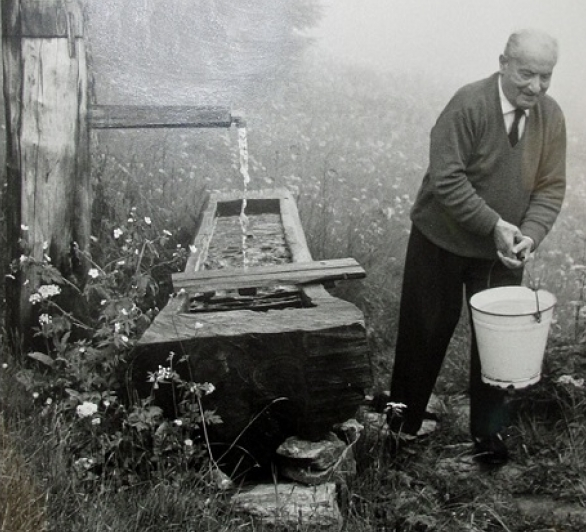
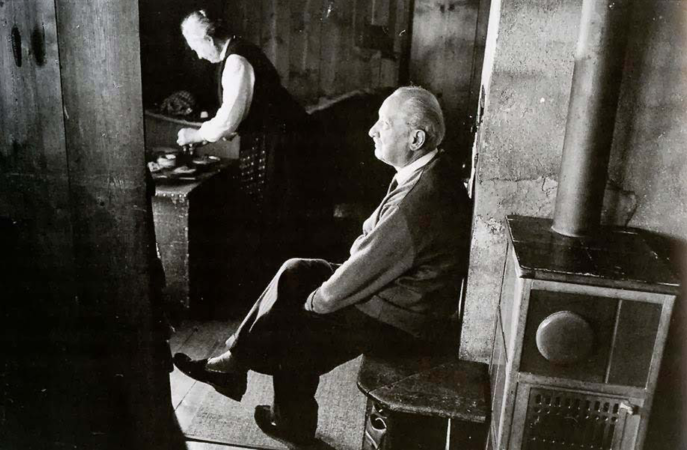
The work of Martin Heidegger (1889–1976) is of great relevance to design practices and to the analysis of designs as elements of material culture because it deals with spatio-temporal ways of being in the world and contains concepts such as Dasein (ex-sistence), present-at-hand and ready-to-hand, which might be of value in design contexts, so long as they are not uncritically appropriated.

It has been argued that the importance of Heidegger’s book, Being and Time, is that it is the first serious attempt to provide a phenomenology of the everyday, reversing the hierarchy within philosophy in which the theoretical is valued over the practical. In extending this to design practices, the importance of a phenomenology of the everyday is that many of the ‘objects’ discussed have been designed: they are the products of design thinking, design practice and design manufacture. It is ‘design’ that shapes the everyday in many respects.

Heidegger’s work is also of relevance because of its influence on others, such as Henri Lefebvre, Michel Foucault and Peter Sloterdijk. For example, even as Lefebvre distanced himself from Heidegger, seeing Heidegger’s Holderlin-inspired poetic critique of habitat and industrial space as a critique from the right, nostalgic and old-fashioned, Lefebvre’s emphasis on space is indebted to Heidegger’s inauguration of space as a problematique, while Foucault took Heideggerean ideas forward in his analysis of the relation between history and space (Elden, 2004).

However, use of his work can only proceed with great caution. Firstly, he held a mostly negative view of modernity, the processes of modernisation and the modern world, and therefore his work will be of limited value in discussing modern and contemporary issues. He idealised rural life in late-19th-century Germany and experienced discomfort at the flourishing of German science and technology after 1860.

Secondly, and perhaps more importantly, a major difficulty in using Heidegger’s work lies in his involvement in politics, and the relation of that involvement to his philosophy. It is a topic that has generated acrimonious disagreement [1].

One central question is whether Heidegger’s Nazism was a passing aberration or a lasting commitment. There can be little doubt that his politics are connected to some enduring elements of his philosophy. Heidegger believed that a moment of communal authenticity, as discussed in section 74 of Being and Time, had arrived. Utilising his understanding of historicity, he held that a movement based on a particular people’s heritage was truer and deeper than any politics based on universal, abstract principles, such as liberal democracy or communism, as he understood them (Fried and Polt, 2014: xiv).

However, this is not to conclude that his philosophical ideas can only lead to fascist politics or that his ideas are exhausted by such politics. Heidegger distanced himself increasingly from Nazism, or rather from the actual practice and dominant mentality of the movement, as distinct from its “inner truth and greatness” (Heidegger, 2014: 222). By 1940, Heidegger had developed a metaphysical critique of standard Nazi ideology, without drawing closer to a liberal or leftist position.

In his thinking from the mid- to late-1930s, Heidegger shifts towards a new, historical understanding of Being: being is to be grasped as a fundamental happening, the appropriating event (das Ereignis). The event can found Dasein by opening a time-space or site of the moment where Dasein is appropriated. Genuine selfhood can then be achieved and people can learn to shelter truth in particular beings, such as works of art, but only if truth is understood as openness to the meaningfulness of things, not as a set of correct propositions about the world that we hide away and safeguard.

It was such an appropriating event that Heidegger had been hoping to find in the National Socialist revolution. Nevertheless, in Contributions to Philosophy, a text written in the mid-1930s but not published until after his death, Heidegger submits the typical Nazi worldview to strong criticism, insisting that a Volk is never an end in itself. From this point onwards, Heidegger begins to look less towards politics and more toward poetry, specifically that of Holderlin, in order to consider new ways for the Germans to seek themselves. Heidegger’s late writings move even further from the domains of wilful action and power, emphasising the need for patience.

Heidegger2

In the speeches, lecture courses and seminars from his year as rector of the University of Freiburg in 1933-1934, Heidegger speaks as an enthusiast of National Socialism. By the time of writing Introduction to Metaphysics in 1935, his enthusiasm is waning and he has become engaged in an internal critique of National Socialism, in an effort to be more radically revolutionary than the Nazi revolution itself. Fried and Polt (2014: xviii) suggest that the question of whether Heidegger is a Nazi in Introduction to Metaphysics, because he surely is, is less interesting than the question of what it means to be a Nazi, a question which Heidegger raises in that text, as well as broader questions about what it means to be German, to be Western and to be human.

While the lines of questioning he begins are irreducible to a particular political party’s programme or ideology, the text nonetheless resonates with the most terrifying aspect of the Nazi movement, its readiness to commit violence and murder against its perceived enemies. Heidegger explores the idea that human beings, or at least great ones, are uncanny and violent. They must fight against other beings and against Being itself until they are inevitably and tragically crushed by the overwhelming power of Being. Throughout the mid-1930s, Heidegger seems to celebrate creative conflict (creative destruction). He seems also to believe that National Socialism may find an appropriate way to spur such creativity and revive an ancient understanding of techne a a forceful and disclosive struggle (Fried and Polt, 2014: xx).

However, with his turn away from power and will, and his development of a critique of modern technology, Heidegger develops a less violent understanding of human greatness, as he continues to explore the dimensions of what he considers to be primordial phenomena: beings, Being and Dasein or ex-sistence. Thomas Sheehan (2014) is of the view that Heidegger did not get beyond the essence of human being as ex-sistence, a term that Sheehan prefers to Dasein. Human ex-sistence, Sheehan explains,

“consists in our being made to “stand out ahead” of ourselves as a groundless “openness” or clearing.” Within this openness we can synthesize this object here with that meaning there and thus understand the thing’s current “being,” i.e., what it currently is for us or better, how it is meaningfully present to us. Thus our essence as ex-sistence is what allows for all forms of “being”… “

This, Sheehan concludes, answers Heidegger’s basic question: “Whence the ‘being’ of things?”

Notes

[1] To find out more about Heidegger, philosophy and politics, the following books are of great value:

Farias, V. (1989). Heidegger and nazism, edited by J. Margolis and T. Rockmore. Philadelphia, Temple University Press.

Faye, E. (2009). Heidegger, the introduction of Nazism into philosophy in light of the unpublished seminars of 1933-1935. New Haven, CT: Yale University Press.

Fried, G. (2000). Heidegger’s polemos: from being to politics. New Haven, CT: Yale University Press.

Ott, H. (1993). Martin Heidegger: a political life. Hammersmith, London: HarperCollinsPublishers.

Rockmore, T., & Margolis, J. (1992). The Heidegger case: on philosophy and politics. Philadelphia, PA: Temple University Press.

Safranski, R. (1998). Martin Heidegger: between good and evil. Cambridge, MA: Harvard University Press.

Wolin, R., ed. (1993). The Heidegger controversy: a critical reader. Cambridge, MA: MIT Press.

For a recent evaluation of Heidegger scholarship, see:

Sheehan, T. (2014). Making sense of Heidegger: a paradigm shift. London: Rowman and Littlefield International.

References

Elden, S. (2004). Between Marx and Heidegger: politics, philosophy and Lefebvre’s The Production of Space. Antipode, 36 (1), 86–105. Available from http://doi.wiley.com/10.1111/j.1467-8330.2004.00383.x

Fried, G. and Polt, R. (2014). Translators’ introduction to the second edition. In: Introduction to metaphysics, 2nd ed., by Martin Heidegger. New Haven, CT: Yale University Press.

Heidegger, M. (2014). Introduction to metaphysics. Revised and expanded translation by Gregory Fried and Richard Polt, 2nd ed. New Haven, CT: Yale University Press.

Sheehan, T., Polt, R. and Fried, G. (2014). No one can jump over his own shadow. 3:AM Magazine, (8 December). Available from http://www.3ammagazine.com/3am/no-one-can-jump-over-his-own-shadow/ [Accessed 1 September 2016].

Design and General Economic Anti-Epistemology

RELATED TERMS: Complementarity

General and restricted economies

Plotnitsky (1994: 2): “General economy denotes a mode of theory that relates the configurations it considers to the loss of meaning – a loss it regards as ineluctable within any given system. The concept of general economy was introduced by Bataille and deployed by Derrida, although Nietzsche may be seen as the first practitioner of general economy and Bohr as the second. According to Bataille, “the general economy . . . makes apparent that excesses of energy are produced, which, by definition, cannot be utilized. The excessive energy can only be lost without the slightest aim, consequently without any meaning.” The general economy is juxtaposed by Bataille to classical theories or restricted economies – such as, in particular, Hegel’s philosophy or Marx’s political economy. Restricted economy, however, defines classical theories across a broad spectrum of Western intellectual history: in philosophy, the social and human sciences, history, and other fields. Mathematics and the natural and exact sciences, too, can be seen as restricted economies, when their practice is governed by metaphysical epistemologico-ontological agendas, as they have often been even in the works of many revolutionary scientists, from Kepler to Einstein, and beyond.”

Design practice as restricted and general economy

Arkady Plotnitsky (1994: 2) states that, “Restricted economies consider their objects and the relationships between those objects as always meaningful and claim that the systems they deal with can avoid the unproductive expenditure of energy and control multiplicity and indeterminacy within themselves. General economy exposes such claims as untenable.”

The argument being developed in Incomplete … is that design has been conceived primarily as a restricted economy, one that promotes a conception of ‘total design’ in which there is no unproductive excess which escapes its meaning production and which is able to control multiplicity and indeterminacy. Design practice in the form of a restricted economy of total design takes as its model the onto-theology of divine creation, creatio ex nihilo, creation by divine fiat. Total design, as Wigley (1998) points out, will always be frustrated because it is untenable when understood in the context of a general economy. As Incomplete … argues, design must open up to that which exceeds it, to multiplicity and to indeterminacy.

The conception of design at which Incomplete … is aiming is one where it is understood in the context of a general economy. There are aspects of any design practice that generate an excess that escapes the frame of its meaning production, which open up unanticipated multiplicity and which give rise to outcomes which are not determined by the design. Not all of the world, as actantial entanglement, is, or can be, captured within the (restricted, restrictive) meaningfulness of design. The world does not conform to one, singular ‘total design’. The entangled actantiality of the world, as a general economy, will always exceed the actantiality of design intention (as a restricted economy).

The view that Incomplete … seeks to articulate is that a different approach to design is possible whereby designs open up to and acknowledge the general economy of the world, with its excess, multiplicity and indeterminacy, without seeking to encapsulate it within a restricted economy that designs, as future-oriented intentionality, must nevertheless articulate. A complementary approach to design, following Bohr’s insights, acknowledges both the conventional teleological character of design, as aiming toward a specific goal within a restricted economy, and the falling apart of design as end or closure within a general economy, as it admits its own excess, multiplicity and indeterminacy.

Design practice and processes are suspended (are in suspension) between general and restricted economies. Design as enacting a restricted economy and design as enacting a general economy are complementary: they are mutually exclusive but equally necessary for a comprehensive, complete description and analysis of design design actantiality (what design does). [“Complementarity, thus, connotes both mutual exclusivity and completeness of description” Plotnitsky, 1994: 5)]

Through this suspension, “the possibility of representation without loss” , in other words, design without loss, has to be acknowledged. Could we say, analogously to quantum mechanical configurations, that all design configurations (as re-entanglements of existing entanglements) are simultaneously both irreducibly incomplete and irreducibly rich.

Design as a general economy: “All general economies deal with arrangements (between and within the configurations they consider) that are complementary in the broad sense of being heterogeneous but interactive – heterogeneously interactive and interactively heterogeneous.” (Plotnitsky, 1994: 10-11) …”while they multiply interact, the elements or fields engaged in such relationships never allow for a complete synthesis, Hegelian or other.” (Plotnitsky, 1994: 11) forming a “general economy of asynthesis” (Plotnitsky, 1994: 11) [Arrangements – Entanglements]

The dislocation created by a general economy of design is never a simple or uncritical dismissal of conventional theories of design. Rather, it is their rigorous suspension, implying an analytical exposure of their limitations and a refiguring of the conventional concepts through a general economy.

An absolute abandonment of conventional design theories does not amount to a sufficiently radical transformation of the field; and transformation is not radical at all.

Radical suspensions imply the introduction of complementary modes of description and analysis.

Bohr and complementarity

(Plotnitsky, 1994: 5) “To offer a preliminary outline, complementarity as developed by Bohr enables one to describe comprehensively and employ productively the conflictual aspects of quantum phenomena that cannot be accommodated by classical theories. In Bohr’s interpretation such aspects become their complementary features – the features that are mutually exclusive but equally necessary for a comprehensive, complete, description and analysis of all quantum processes. Bohr speaks of “a new mode of description designated as complementary in the sense that any given application of classical concepts precludes the simultaneous use of other classical concepts which in a different connection are equally necessary for the elucidation of the phenomena.” Due to Heisenberg’s uncertainty relations, quantum mechanics introduces a certain irreducible-general economic loss in representation and thus irreducible incompleteness of knowledge as classically understood. Quantum mechanics, however, and specifically complementarity form, as Bohr argues, a complete theory of its data-as complete as a theory can be under these conditions of irreducible incompleteness. Complementarity, thus, connotes both mutual exclusivity and completeness of description, as the word complementarity, which carries both these meanings, would suggest.

“Two forms of complementarity are of particular significance in Bohr’s framework …

The first is the wave-particle complementarity, reflecting the duality of the behavior of quantum objects and relating the continuous and discontinuous representations of quantum processes. These two types of representation have always been unequivocally dissociated in classical physics. … Bohr’s complementarity equally deconstructs both the classical, unequivocal unifications and classical, unequivocal dissociations of features through which physics constructs, describes, and interprets its objects.

The second complementarity is the complementarity of coordination, defining a position or a configuration of positions of a quantum object or system, and causality, classically determining the behavior of such an object or system.

Coordination and causality are always united in classical theories, and these theories are in fact defined by this unity. In quantum mechanics, however, in Bohr’s defining formulation: “The very nature of the quantum theory … forces us to regard the space-time co-ordination and the claim of causality, the union of which characterizes the classical theories, as complementary but exclusive features of the description, symbolizing the idealization of observation and definition respectively.” Bohr’s word “idealization” is extremely important here. Both coordination and causality must be seen as idealizations, symbols, metaphors. This understanding is crucial in defining complementarity as a theoretical matrix and specifically in making it a general economy.

In contrast to the classical theories, then, we cannot ultimately establish or calculate, or postulate, the causal dynamics – or, one might say, the history of a system – given the positions of its elements at a given point.

This disjunction between the classically united observation of position and definition of causality leads to what may be seen as the anticausality or indeterminacy postulate of quantum theory.

A decisive feature of the quantum postulate, however, is that it also implies the acausal character of the quantum behavior of light, as against the causal character of the wave or continuous theory of light. Thus the quantum postulate leads to the anticausality and indeterminacy of quantum theory.

The complementarity of coordination and causality is directly connected to the complementarity of position and momentum, or the kinematic-dynamic complementarity as it is sometimes called, which precludes one from measuring or even meaningfully defining both variables – position and momentum-simultaneously at any given point. By virtue of this connection, the mathematical counterpart of the complementarity of coordination and causality becomes Werner Heisenberg’s uncertainty relations.

It can be said that uncertainty relations connote a radical, irreducible loss in representation affecting – in advance, always already – any quantum system and ultimately making all such representations idealizations.

Bohr directly invokes the inevitable loss of knowledge on several occasions. In terms of the present study, this loss defines Bohr’s complementarity as a general economy. This “loss” is so radical that, strictly speaking, it prohibits one from assuming that there is somewhere a complete or unified system, existing in itself or by itself, concerning which system some information is lost in the processes of observation, measurement, and interpretation.

As Bohr stressed throughout his writing, the statistical character of quantum mechanics is radical – irreducible – insofar as, contrary to Einstein’s hope, it does not imply some “hidden” large complete, unified, and causal system about which quantum mechanics provides partial, statistical information.

Quantum statistics appears to result from a radical – irreducible – multiplicity, which becomes particularly pronounced in modern quantum electrodynamics and field theory.

But such a multiplicity cannot be conceived in classical terms, and it could be contrasted to classical multiplicities, including those of classical statistical physics. Whether in physics or meta-physics, or philosophy, an assumption of a complete large system would restore the classical, metaphysical appurtenance to the interpretive and theoretical framework based on it.

One needs instead a very different and more complex economy of difference, exteriority, alterity – general economy. By the same token, the irreducible loss at issue leads to the irreducible fragmentation, the fracturing in advance of any quantum system. One thus is also prohibited from speaking of complete quantum systems, although within its limits quantum mechanics must, as I said, be seen as a complete theory as complete as a theory can be under these conditions of irreducible incompleteness. (Plotnitsky, 1994: 8)

Quantum electrodynamics (QED) suggests that if “the very nature of quantum theory forces us” to renounce the claims of causality and the possibility of representation without loss, it also forces us to regard all quantum systems as fields defined by an irreducible, infinite multiplicity and incessant, unending transformations of their constitutive elements. This multiplicity equally redefines one-particle systems, or rather the systems classically defined as one particle systems – one photon, one electron, and so forth – which are all transformed into irreducibly multiple fields. All quantum mechanical configurations are, thus, simultaneously both irreducibly incomplete and irreducibly rich.

The features just described allowed Bohr to develop complementarity into a comprehensive framework that encompasses both quantum physics and quantum meta-physics – the ontological-epistemological and, as it turned out, the anti-ontological and anti-epistemological dimensions of quantum theory.

In this sense, Bohr’s meta-physics is anti-metaphysics, as metaphysics has been developed from (or before) Plato and Aristotle, in their physics and metaphysics alike, to Heidegger, via Descartes, Leibniz, Spinoza, Kant, Hegel, Husserl, and most other major figures in the history of philosophy or intellectual history in general. Aristotle’s works after his Physics – ta meta ta physika – the phrase apparently introduced by commentators on Aristotle to refer collectively to these works, were seen as dealing with things beyond nature or physis. These works, however, continued and reinforced the grounding structures defining philosophical discourse as developed before Aristotle, particularly in Parmenides and Plato.

[In this sense, metaphysics = metaphysics of presence, ontotheology or restricted economy. On the other hand,] Bohr’s meta-physics implies and in fact practices an anti-epistemological general economy of physics, rather than any form of metaphysics developed in the history of philosophy.

As such, Bohr’s meta-physics can be used to dislocate all classical or, in terms of the present study, restricted economic metaphysics, the metaphysics of presence-all its ontology, epistemology, phenomenology, ontotheology, and so forth-and the philosophy of physics that such metaphysics has produced. This dislocation implies that one can neither fully separate physics and meta-physics nor fully unite them, for example, by encompassing physics within philosophy, as Hegel wanted to do. These relationships may instead be defined as complementary, even variably complementary, with shifting border lines between physics and meta-physics.

The anti-epistemology of my title refers, broadly, to the general possibility of a dislocation, or as we say now, deconstruction of classical or metaphysical theories-epistemologies, ontologies, phenomenologies, or, to return to Derrida’s more encompassing terms, forms of ontotheology, logocentrism, and the metaphysics of presence. The theoretical base of this dislocation in Bohr’s work is the general economic character of complementarity as a theoretical matrix. This character is, once again, codetermined by the irreducible loss – and thus indeterminacy – in the process of representation and by the equally irreducible heterogeneous multiplicity of all representations that such a matrix generates and employs.

All general economies deal with arrangements (between and within the configurations they consider) that are complementary in the broad sense of being heterogeneous but interactive – heterogeneously interactive and interactively heterogeneous.

… the general economy of asynthesis is a fundamental aspect of Bohr’s complementarity, which makes it a profoundly anti-Hegelian, or a-Hegelian, theory. In both Bataille and Derrida, general economy is explicitly defined in relation to Hegel and Hegelianism. Derrida, in fact, uses the name “Hegel” to connote the culmination of the history of the philosophical understanding of interpretive, theoretical, historical, and political processes, the history defining what he calls the closure of the epistemethe closure of the metaphysics of presence – on which we might still depend even in our anti-epistemological projects and practices. The pervasiveness and power of this closure is one of the main reasons why one is compelled to see general economy as “anti-epistemology.”

The dislocation created by a general economy is never a simple or uncritical dismissal of classical theories, but is instead their rigorous suspension – an analytical exposure of their limitations and a refiguring of classical concepts through a general economy.

an absolute abandonment of classical theories – or, for that matter, anything absolute – never amounts to a sufficiently radical transformation of the field, and in a great many cases such a transformation is not radical at all. Radical anti epistemology and anti-Hegelianism may be defined by their anti-absolutism; whether a positive or a negative absolute is at issue. Radical suspensions of epistemology are possible, however.

Radical suspensions do appear to imply the introduction of complementary modes of description and analysis.

References

Plotnitsky, A. (1994) Complementarity: Anti-epistemology after Bohr and Derrida. Durham, NC: Duke University Press.

Plato, Platonism and Neoplatonism

RELATED TERMS:

Myth and philosophy can be seen as two forms of narrative, Keum (2021) suggests.

Keum (2021) argues that during the 18th century, Plato was adopted as the original champion of philosophy’s long and continuing battle against myth. Prior to that, Europeans would have been more familiar with a different portrait of Plato’s thought: the one offered by Neoplatonism. Adherents of this wide-ranging philosophical tradition, which first flourished in late antiquity and was revived in Renaissance Italy, saw in Plato’s scattered writings a radically coherent metaphysical system, arranged around a highest, unifying Form of goodness. Neoplatonic interpretations of Plato’s philosophy often had a mystical bent – acquired, in part, as it gradually negotiated for itself a place alongside Christian orthodoxy. In order to reassure Christians, who were wary of granting too much influence to a pagan, Neoplatonists insisted that Plato had been divinely inspired as a prophetic instrument of God’s design for human history. Pointing to Plato’s descriptions of divine poetic inspiration in the Ion and Phaedrus, they argued that Plato himself was aware of his own role as a vessel of a higher power. Such readings of Plato gained an esoteric flavour. ?ey elevated the role of inspiration over that of reason, and they tended to focus on themes such as enthusiasm, love or – especially in the context of Renaissance humanism – the divine gift of eloquence.”

Keum (2021): Academic scepticism: “When Enlightenment thinkers such as Voltaire and his associates turned to Plato, however, they often did so in the spirit of a far older interpretive tradition, one that long predated the Neoplatonists. This was academic scepticism, which had been the dominant school of thought in Plato’s Academy from the 4th century BCE – about three generations after Plato’s death – and lasted into the 1st century BCE. Where the coherence of Plato’s metaphysical system was a central tenet of the Neoplatonic tradition, academic sceptics denied that Plato had any system of philosophy at all. Rather, their Plato was the antisystematist par excellence, resisting dogma at all costs in favour of the critical suspension of judgment. Plato’s sceptic interpreters emphasised the mercilessly rigorous nature of Socratic interrogation and the inconclusive endings of some of the early dialogues, which seemed to represent a disavowal of certain knowledge.”

“The sceptic portrait of Plato was especially appealing to Plato’s Enlightenment readers, who similarly adopted a principled programme of challenging authority and questioning received knowledge.”

“Enlightenment champions of Plato were unwilling, at the same time, to accept the fully sceptic conclusion that certain knowledge was impossible. Eventually, they negotiated a compromise between the Neoplatonist and sceptic accounts of Plato. They accepted that Plato had a coherent philosophical system, and that constructive and certain knowledge was indeed possible. But the path to knowledge was not through revelation or inspiration, but through the kind of critical reason that the academic sceptics so prized.”

“Plato’s Enlightenment readers also took him to be an embodiment of their own political values. His portrayal of the Socratic gadfly helped model an ideal of philosophical citizenship – of citizens as critical thinkers, refusing to take social norms for granted, but instead exposing unfounded pretences to knowledge and the vague and mystifying myths of society.”

“The dominance and popularity of the Enlightenment portrait of Plato meant that the interpretations that had preceded it largely fell out of sight … . This was the process by which the rationalist Plato, so despised by Nietzsche, was created.”

“For Plato was not just the champion of rational argument that the Enlightenment presented him to be. His dialogues, significantly, contained myths: carefully constructed narrative interludes, woven into the philosophical investigation, that reworked or mimicked existing material from the Greek mythological tradition.”

“This Enlightenment Plato is, by and large, the one we have inherited today, who coexists uneasily in our imaginations with the mythmaking Plato we encounter when we read his texts.”

“The lessons of Plato’s myths, however, point us to another way. If we remain allergic to the presence of myths in our cultural landscape, we miss the larger point, and risk throwing out the baby with the bathwater. Plato’s insight was that myth is a powerful, enduring force in politics and culture – a point of common ground in both Nietzsche’s and Popper’s critiques of Plato. Not taking this seriously risks falling into denialism about the very real ways in which such symbolically rich narratives influence our worldviews.”

” … Plato’s own philosophical reinvention of myth also suggests that myths can be reworked in creative ways. Myths are not monoliths impervious to change, but dynamic stories open to reinterpretation every time they are retold.”

“If myths turned out to be an inescapable part of modern life, Plato teaches us not to despair that our Enlightenment expectations of rational progress have gone unmet. Instead, he invites us to make theoretical space for the myths around us, and to remember our own capacity to rework them.”

References

Keum, T.-Y. (2021) ‘Why philosophy needs myth’, Aeon. Available at: https://aeon.co/essays/was-plato-a-mythmaker-or-the-mythbuster-of-western-thought (Accessed: 10 November 2021).