Design: Dramatisation and Narrativisation

RELATED TERMS: Theatre; Epic Theatre; Tragic Theatre – Aristotle; Theatre of Cruelty

“The tension between the endless desire that is the source of human motivations and the hopeless demands that fail to appease it is the very heart of the human tragedy, according to Lacan.”

Mansfield, 2000: 46)

In as far as designs intervene in existing entanglements of socio-cultural situations embedded in techno-natural situations, and vice versa, design practices may engage with processes of dramatisation and narrativisation. This is in line with the conception that techno-genesis and socio-genesis are mutually entwined through the processes of exosomatisation. While narrative and drama are most often woven together in practice through plot – narratives involve dramatic incidents while dramas involve narrative sequences – they may be distinguished for analytical reasons.

The designer may therefore consider how the design enters into the drama of the situation, heightening, extending or resolving a dramatic tension, or takes part in the movement of events as part of a narrative progression. Designing, in other words, may be considered as part of dramatisation, as part of (story) telling; or as part of the dramatisation of story telling through the arrangement of plot. This may affect decisions as to which modes and media of communication are drawn upon in the design, impacting the balance between ‘telling’ and ‘showing’. 

References

Mansfield, N. (2000) Subjectivity: theories of the self from Freud to Haraway. St Leonard’s, NSW: Allen & Unwin.

Resources

Sorkin, A. and Wilson, J. (2022) Aaron Sorkin. [Interview with John Wilson in This Cultural Life series on the BBC Sounds platform]. Available at https://www.bbc.co.uk/programmes/m00161mc [Accessed 13 July 2022]

Aaron Sorkin discusses the distinctions that exist under the umbrella term ‘writer’. He focuses on the differences between being a playwright and being a screenwriter, but implicitly he also distinguishes those two roles and that of the novelist. All three writerly roles deal with ‘dramatisation’ but in different ways. Although having worked on stage plays, television dramas and cinema films, Sorkin sees himself primarily as a writer of radio plays because, for him, it is the rhythm and flow of the verbal dialogue which holds his interest.

Afrofuturism

RELATED TERMS: Afro-Pessimism; Black Studies; Critical Race Theory; Intersectionality; Identity Politics

Afrofuturism has been defined as a cultural aesthetic that combines science-fiction, history and fantasy. It aims to connect those from the black diaspora with their forgotten African ancestry (Tate, No Date). ‘The Comet,’ a short story by W. E. B. DuBois that represents DuBois’ foray into fantasy in 1920, is said to have helped lay the foundation for the paradigm that came to be known as Afrofuturism (Ogbunu, 2020). While its beginnings may be said to lie in African-American science fiction, such as the writings of DuBois, Octavia Butler and Samuel R. Delany, it now refers to literature, music and visual art that explores the African-American experience. In particular, it draws attention to the role of slavery in that experience.

Mark Dery, while coining the term Afrofuturism, points to a potentially troubling paradox to which it gives rise. Thus, he writes, 

“Speculative fiction that treats African-American themes and addresses African-American concerns in the context of twentieth century technoculture – and, more generally, African-American signification that appropriates images of technology and a prosthetically enhanced future – might, for want of a better term, be called ‘Afrofuturism.’ The notion of Afrofuturism gives rise to a troubling antinomy: Can a community whose past has been deliberately rubbed out, and whose energies have subsequently been consumed by the search for legible traces of its history, imagine possible futures? Furthermore, isn’t the unreal estate of the future already owned by the technocrats, futurologists, streamliners, and set designers – white to a man – who have engineered our collective fantasies? The “semiotic ghosts” of Fritz Lang’s Metropolis, Frank R. Paul’s illustrations for Hugo Gernsback’s Amazing Stories, the chromium-skinned, teardrop-shaped household appliances dreamed up by Raymond Loewy and Henry Dreyfuss, Norman Bel Geddes’s Futurama at the 1939 New York World’s Fair, and Disney’s Tomorrowland still haunt the public imagination, in one capitalist, consumerist guise or another.”

(Dery et al, 1994: 180)

In his interview with Dery, Samuel R. Delany, points out that science fiction (SF) was by no means initially a clear choice for African-American readers and writers because of its cultural significance in the United States: 

“It was fairly easy to understand why, say, from the fifties through the seventies, the black readership of SF was fairly low – by no means nonexistent. But far lower than it is today. The flashing lights, the dials, and the rest of the imagistic paraphernalia of science fiction functioned as social signs – signs people learned to read very quickly. They signaled technology. And technology was like a placard on the door saying, ‘Boys Club! Girls, keep out. Blacks and Hispanics and the poor in general, go away!’ “

(Delany in Dery et al 1994: 188)

As Ogbunu (2020) points out, when most people think of Afrofuturism today, in the early decades of the 21st century, the Marvel Cinematic Universe’s Wakanda comes to mind, an African country that hides advanced technology from the world. Within Wakanda, Afrofuturism, in this case, manifests most explicitly in the award-winning fashion and set design, a hypnotic blend of African traditional art and dress, cyberpunk, and space opera, as discussed by Angela Watercutter (2018).

Afrofuturism’s importance might be seen to transcend the arts and may be described as a political identity or ideology. In that context, it bears some relationship to Afro-pessimism. While Afrofuturism uses science fiction themes to reimagine historic events through futurist frameworks, the focus of Afro-pessimism is on the continued appearance of, and resistance to, forms of racism and slavery in contemporary life (Gaylord, 2018)

References

Dery, M. et al. (1994) Black to the future: interviews with Samuel R Delany, Greg Tate and Tricia Rose, in Dery, M. (ed.) Flame wars: the discourse of cyberculture. Durham, NC: Duke University Press, pp. 179–222.

Gaylord, Z. G. (2018). Afro-Pessimism And Afrofuturism | NAS. kmuw. Available at https://www.kmuw.org/new-american-songbook/2018-01-29/afro-pessimism-and-afrofuturism-nas [Accessed: 3 July 2022]

Ogbunu, C. B. (2020) How Afrofuturism can help the world mend, Wired, (15 July). Available at: https://www.wired.com/story/how-afrofuturism-can-help-the-world-mend/ [Accessed: 2 July 2022].

Tate (No Date). Afrofuturism. Tate. Available at https://www.tate.org.uk/art/art-terms/a/afrofuturism [Accessed: 2 July 2022]

Watercutter, A. (2018) Behind the scenes of Black Panther’s Afrofuturism, Wired, (1 February).

Design: Incomplete Conjectures

RELATED TERMS: Finnegans Wake (and Design); Methodology and Method

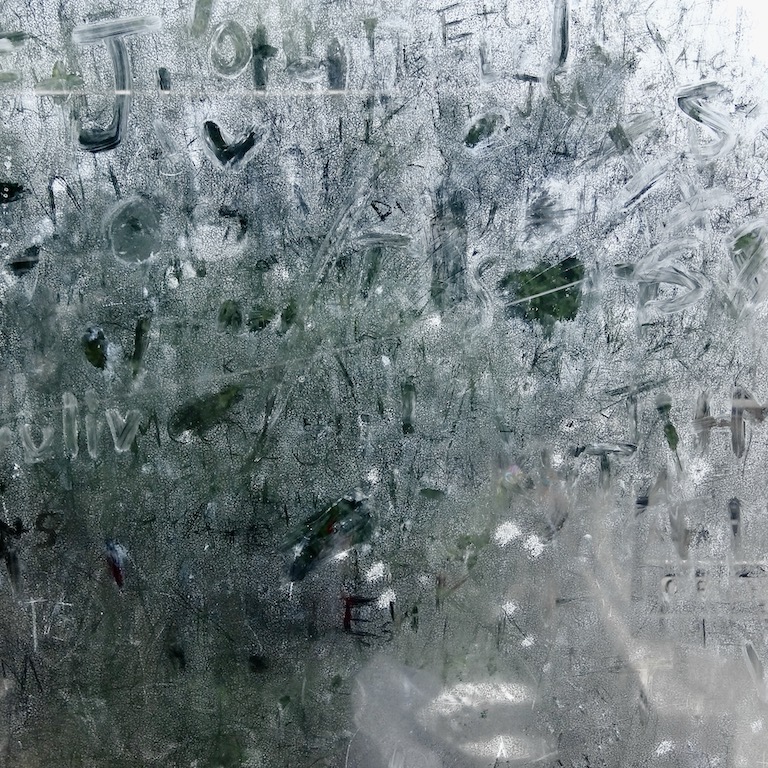
Undesigned design: Accumulated graffiti as graphic communication, London

First …

Design as a professional, social practice has historically been divided according to its material outputs, its concrete products, using categories that have become conventional. For example, jewellery design produces items of jewellery, fashion design produces items of clothing and architectural design produces buildings and cities, with each domain incorporating a value hierarchy: there is good design and there is bad design. However, professional design practices have moved far beyond the creation and styling of commodities. They now include such domains as software development, ethnographic research and management consulting (Stern and Siegelbaum, 2019: 268); and even extend to the design of organisational structures and entire societies (Engholm, 2023). This makes design increasingly elastic and difficult to define. Its scope continues to extend because, as Buchanan (2001: 9) notes, “design is an art of invention and disposition, whose scope is universal, in the sense that it may be applied for the creation of any human-made product.”

In seeking to explain the historical development of design practices, Engholm (2023) argues that one could speak of a discipline-specific understanding of design, on the one hand, and a general understanding of design, on the other hand. In the discipline-specific understanding, design is primarily linked to the modern industrial age, with craftsmen employed to create concept designs and product prototypes for industrial mass production. It centres on a materially or artistically based intention to create a given form and is tied to traditional design disciplines, such as industrial design and graphic communication.

In the general or anthropological understanding, designs emerge from human responses, engagements and entanglements with their situations and their surroundings. In this perspective, all forms of tool use as well as projective action, action aimed at bringing something that does not yet exist into concrete, material existence, can be considered design.

Continue reading “Design: Incomplete Conjectures”

Incompletion

RELATED TERMS: Collage, Montage, Assemblage and Bricolage; Sabi and Wabi-Sabi

USE FOR: Incompleteness

“Abstraction and perfection transport us into the world of ideas, whereas matter, weathering and decay strengthen the experience of time, causality and reality.” (Pallasmaa, 2000: 79)

As noted in the About page, the approach to design taken in this website is guided by an aesthetic that accepts the impermanence, imperfection and incompleteness of the world. As a consequence, designs as part of the world, are conceived as impermanent, imperfect and incomplete. In as far as designs are ‘made’ in order ‘to do’, that is, to act upon people and in the world, what they actually do is not up to the design itself. Designs are open to use and ‘mis’-use, to interpretation and invention. Designs, once launched into the world, continue to act and to reverberate. In that sense, they may be considered to take part in the ongoing montage which is the world. Montage, according to Graver (1995), flaunts the cohesive power of its constructive procedure through its intentional incompleteness.

As highlighted by Damon Taylor (2013: 372) when discussing the Do Add chair, where Jurgen Bey took a functioning chair and sawed off one of its legs, some designs, by their material form or deformation, can bring this incompletion to the surface. Thus, Taylor states,

“In a culture whereby things are presented to us as “complete,” the creation of a radically incomplete object is a refutation of the dominance of the finished commodity; it is a refusal of the socio-technical script of efficiency; it is a frustration of the metascript of the complete and completed commodity and therefore the static entity which is the consumer.”

Such designs, in other words, refuse to engage in the constitution of the complete and perfectly behaved consumer, frustrating their sense of self-possession through possessions (commodities). For Taylor, this constitutes a political act.

Although it is not necessarily a model for design practice, there are similarities between the practice of designing and the writing of James Joyce’s Finnnegans Wake, as discussed by Stephen Heath:

“The writing of Finnegans Wake, however, work in progress (‘wordloosed over seven seas’ (FW2I9.16)), develops according to a fundamental incompletion; the text produces a derisive hesitation of sense, the final revelation of meaning being always for ‘later’.”

(Heath, 1984: 31)

In Joyce’s own words, the principle of incompletion may be expressed in the following way:

“Toborrow and toburrow and tobarrow! That’s our crass, hairy and evergrim life, till one finel howdiedow Bouncer Naster raps on the bell with a bone and his stinkers stank behind him with the sceptre and the hourglass. We may come, touch and go, from atoms and ifs but we’re presurely destined to be odd’s without ends”.

(James Joyce, Finnegans Wake, p.455, lines 12–18).

References

Graver, D. (1995) The Aesthetics of disturbance: anti-art in avant-garde drama. Ann Arbor, MI: University of Michigan Press.

Heath, S. (1984) ‘Ambiviolences: notes for reading Joyce’, in Post-structuralist Joyce : Essays from the French. Cambridge, UK: Cambridge University Press, pp. 31–68.

Pallasmaa, J. (2000). Hapticity and time. Architectural Review, 207 (1239), 78–84.

Hypomnesis, Hypermnesis and Anamnesis

RELATED TERMS: Remembering: Mnemotechne, Mnemonics and Memory; [Of] Grammatography; Exosomatisation

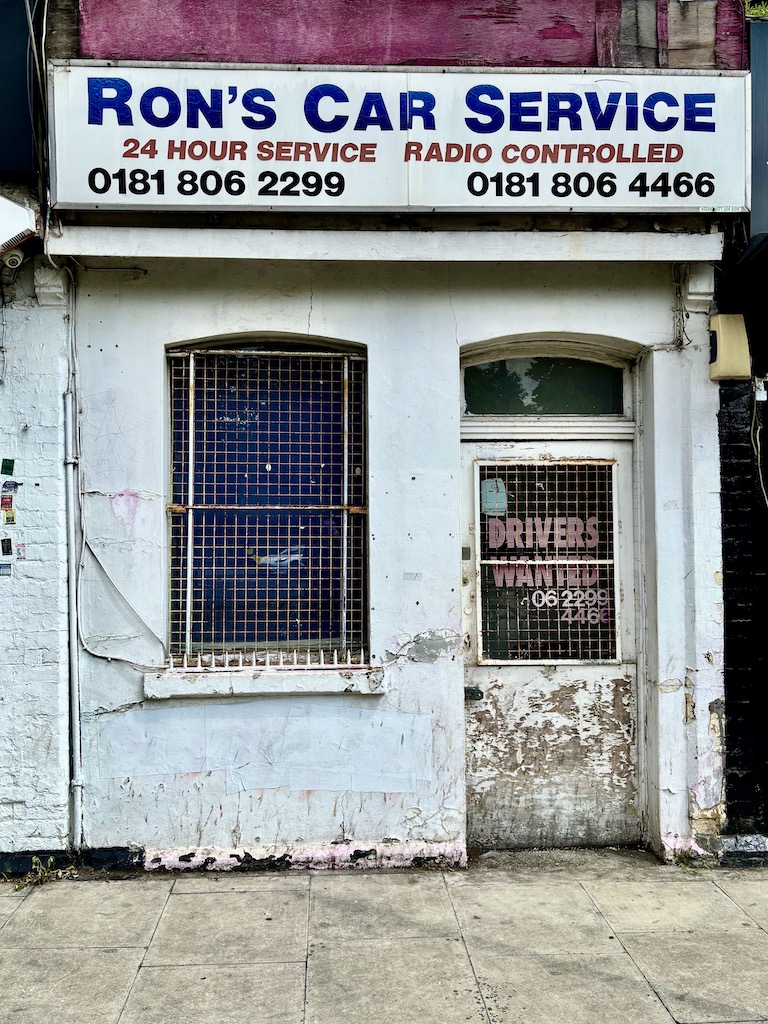
Drivers Wanted. Inscribed Appearances Remain to Recall an Obsolete Service Design and an Obsolete World

Design practices and designed artefacts may be understood in the context of the discussion of hypomnesis, the weakening of memory, and hypermnesis, the strengthening of memory or the making of an unusually poignant and accurate memory of the past. In Platonic language the relation between memory and technics are discussed in terms of anamnesis, hypomnesis and hypomnemata. The term hypomnemata, which derives from Plato, might also be translated as
‘inscriptions’. Hypomnemata may also be thought of as a writing of the self.

As Louis Armand and Arthur Bradley (2006) explain,

“In the Meno and other texts, Plato institutes a now infamous opposition between the Socratic “recollection” of the immortal soul, called ἀνάμνησις (anamnēsis), and the artificial or technical supplement to memory, called ὑπόμνησις (hypomnēsis). It is with this entirely unprecedented opposition that western metaphysics and, arguably, western philosophy more generally, comes into existence. To Plato’s way of thinking, thought is nothing other than the act of the immortal soul remembering itself once again.”

Jacques Derrida, for example, defined James Joyce’s Ulysses and Finnegans Wake as hypermnesic machines that condense or quote a whole culture. By doing so, these all-encompassing books play dangerously with an unmoored historicism. They also modify our reading habits. As Rabate (2011) notes,

“Reading these texts we discover that we are being read by them, we have been read in advance by the author, traversed by Joyce’s encyclopedic culture. Stephen Dedalus spoke of Shakespeare as the father of his grandfather and his own grandson, presenting him as the paradigm of the self-generating artist.”

The question of hypomnesis is raised by Derrida in Of Grammatology and is developed subsequently by Bernard Stiegler (2006; 2020). Derrida (1976: 91) writes that,

“Now, it is precisely by pointing out, as we shall see, that the pharmakon of writing is good for hypomnesis (re-memoration, recollection, consignation) and not for the mneme (living, knowing memory) that Thamus, in the Phaedrus, condemns it as being of little worth.”

Derrida (1976: 110) continues,

“Whence the pharmakon’s two misdeeds: it dulls the memory, and if it is of any assistance at all, it is not for the mneme but for hypomnesis. Instead of quickening life in the original, “in person,” the pharmakon can at best only restore its monuments. It is a debilitating poison for memory, but a remedy or tonic for its external signs, its symptoms, with everything that this word can connote in Greek: an empirical, contingent, superficial event, generally a fall or collapse, distinguishing itself like an index from whatever it is pointing to.”

Thus, it could be argued analogously, substituting ‘design’ for ‘writing’ in Derrida’s text, that design, a mnemonic means, supplants good memory, spontaneous memory, and therefore signifies forgetfulness because it is a mediation and the departure of the ‘logos’ from itself.

“Writing, a mnemotechnic means, supplanting good memory, spontaneous memory, signifies forgetfulness. It is exactly what Plato said in the Phaedrus, comparing writing to speech as hypomnesis to mnémè, the auxilliary aide-mémoire to the living memory. Forgetfulness because it is a mediation and the departure of the logos from itself. Without writing, the latter would remain in itself. Writing is the dissimulation of the natural, primary, and immediate presence of sense to the soul within the logos.” (Derrida, 1976: 37)

Rather that simply ‘good’ memory or ‘bad’ memory, it may be preferable to acknowledge that there are different kinds of memory, for example, as distinguished by Stiegler (2020): species memory, ethnic memory and artificial memory. Design, initially artificial or artifactual in character, may open to species memory and ethnic memory as an element in the inscribing, encoding and interweaving of embodied, embedded, extended and enactive intelligence(s).

References

Armand, L. and Bradley, A. (eds) (2006) Technicity. Prague: Litteraria Pragensia.

Derrida, J. (1976) Of grammatology. Translated by G. C. Spivak. Baltimore, MD: Johns Hopkins University Press.

Rabate, J.-M. (2011) ‘The Joyce of French Theory’, in Brown, R. (ed.) A Companion to James Joyce. Chichester, West Sussex, UK: Wiley-Blackwell.

Stiegler, B. (2006) ‘Nanomutations, hypomnemata and grammatisation’, Ars Industrialis. Available at: https://arsindustrialis.org/node/2937 (Accessed: 16 October 2021).

Stiegler, B. (2020) ‘Elements for a general organology’, Derrida Today, 13(1), pp. 72–94. doi: 10.3366/DRT.2020.0220.

Black Mountain College

RELATED TERMS: Bauhaus; Hochschule fur Gestaltung

Black Mountain College was an experimental liberal arts college in Black Mountain, near Asheville, North Carolina. It was founded in 1933 by John Andrew Rice and Theodore Dreier and other former faculty members of Rollins College in Florida. It was “the site of a crucial transatlantic dialogue between European modernist aesthetics and pedagogy and their US counterparts” (Diaz, 2015: 1). The stated holistic aim of its founders was “to educate a student as a person and as a citizen” (Kurtz, 1944). Its heyday was between the mid-1940s and the early 1950s.

Inspired by the work of philosopher John Dewey, who joined the College’s advisory board, it was a seminal site of post-1945 art practices in the United States.

References

Diaz, E. (2015) The experimenters: chance and design at black mountain college. Chicago, IL: University of Chicago Press.

Kurtz, K. (1944) ‘Black Mountain College, its aims and methods’, Black Mountain College Bulletin, (8). [Reprinted from The Haverford Review, Vol. 3, No. 1, Winter 1944.]

Khora or Chora

RELATED TERMS: Place, Space, Placiality, Spatiality

In philosophy, the term khôra or chora is associated with four main authors: Plato, Heidegger, Derrida and Kristeva. In the context of developing an understanding of design as practice, discipline and material public discourse, that is, as professional, academic and socio-cultural practice at once, khôra or chora is taken to be the place of human creation and participation, of invention, as the in-coming of the other, and of imagination, as the articulation of hodological, Euclidean, Cartesian and topological spacings. Together, these spacings form interiors and exteriors as well as exteriorised interiors and interiorised exteriors with barriers between them which, when breached, through ‘foreign exchange’ bring ‘disease’ and ‘destruction’, terms which are relative to the currents and currency of the system in question.

Wilken (2007), citing Derrida notes that in Greek, khôra or chora means ‘place’ in several different senses. It has been used to refer to place in general, the residence, the habitation, the place where we live, the country. It also has to do with interval; it is what you open to ‘give’ place to things, or when you open something for things to take place.

According to Niall Lucy, for Derrida, taking his lead from Plato, khôra is that third genus between the intelligible and the sensible that makes it possible to think anything like the difference between pure being and pure nothingness, between my autonomous selfhood and your autonomous otherness. It is what makes it possible to think the difference between ‘I’ and ‘you’. Derrida brings to attention the distinction between to situate and to give place, to yield, perhaps

For Plato, khôra is a formless interval. However, rather than being akin to a non-being,  khôra is understood here as a being-with, with the dimension of ‘withness’ taken as variable and conditional, not universal.

Alberto Perez-Gomez (1994) takes Plato to be describing the space of human creation and participation, postulating a coincidence between topos (natural place) and chora, yet naming the latter as a distinct reality to be apprehended in the crossing, in the chiasma, of being and becoming. This disclosure is a prerogative of human artefacts. In the particular context of Plato’s tradition, this was the province of poetry and art. In the post-industrial, post-consumerist, Anthropocene age in which we live, this is the province of design and the role of imagination in realising design in practice.

References

Burchill, L. (2011) In-between “spacing” and the “chôra” in Derrida: a pre-originary medium?, in Oosterling, H. and Ziarek, E. P. (eds) lntermedialities: philosophy, arts, politics. Lanham, MD: Lexington Books, pp. 27–35.

Derrida, J. (1995) Khora, in Dutoit, T. (ed.), McLeod, I. (trans.) On the name. Stanford, CA: Stanford University Press, pp. 89–127.

Lucy, N. (2004) Khora, in A Derrida Dictionary. Oxford, UK: Blackwell Publishing, pp. 68-69.

Perez-Gomez, A. (1994) Chora: The Space of architectural representation, in Perez-Gomez, A. and Parcell, S. (eds) Chora: intervals in the philosophy of architecture. Volume 1. Montreal, CA: McGill-Queen’s University Press, pp. 1–34.

Wilken, R. (2007) Diagrammatology, in Toffs, D. and Guy, L. (eds) Illogic of sense: the Gregory L. Ulmer remix. Alt-X Press, pp. 48–60. Available at: https://researchbank.swinburne.edu.au/file/bb2dcd7d-2a96-4e56-8839-dadf52a727b5/1/PDF %28Published version%29.pdf (Accessed: 21 July 2023).

Complementarity

RELATED TERMS: Design and General Economic Anti-Epistemology; Uncertainty

Karen Barad (2007: 19-20), through a discussion of Michael Frayn’s play Copenhagen, analyses the disagreement between Werner Heisenberg and Niels Bohr concerning the former’s uncertainty principle. She summarises the difference between their views in the following way.

For Bohr, what is at stake is that particles do not have determinate values of position and momentum simultaneously. The issue for Bohr is not that we cannot know both the position and momentum simultaneously. Heisenberg’s point is that in measuring any of the characteristics of a particle, we necessarily disturb its pre-measurement values, so that the more we know about a particle’s position, the less we will know about its momentum, and vice versa.

Bohr is making a point about the nature of reality, not simply our knowledge of it. He is calling into question the belief that the world is made up of individual things with their independent sets of determinate properties. The lesson that Bohr derives from quantum physics is that the world is not constituted by things drifting aimlessly in the void that possess the complete set of properties that Newtonian physics assumes, such as, for example, position and momentum.

Rather, it is in the nature of measurement interactions that, given a particular measurement apparatus, certain properties become determinate, while others are excluded. Which properties become determinate is not governed by the desires or will of the experimenter, but by the specificity of the experimental apparatus. Different quantities become determinate using different apparatuses.

It is not possible to have a situation in which all quantities will have definite values at once, because some are always excluded in any one case. Two complementary sets of variables emerge from this. For any given experimental apparatus, those variables that are determinate are said to be complementary to those that are indeterminate, and vice versa. Complementary variables require different and mutually exclusive apparatuses. Heisenberg eventually accepted Bohr’s interpretation that it is complementarity that is at issue, not uncertainty.

The principle of complementarity is defined in the Principia Cybernetica Web as follows:

“Some observations can never be made simultaneously. For example, one cannot see an electron as a particle and a wave at the same time. Two different experimental situations are necessary, and they cannot be realized simultaneously. The principle was first formulated by Niels Bohr. (Lefebvre, 1983, p. xxv) “


References


Barad, K. (2007). Meeting the universe half way: quantum physics and the entanglement of matter and meaning. Durham, NC: Duke University Press.

Originally posted on the Actors/Networks blog on 14 May 2010 by Allan Parsons

Artifactuality and Actuvirtuality

RELATED TERMS: Design and Philosophy

Artifactuality

As Victor Margolin (2006: 107) comments, design is the conception and planning of the artificial. The scope and boundaries of design are intimately entwined with our understanding of the limits of the artificial. As design continues to make incursions into realms that were once considered as belonging to nature, so does its conceptual scope widen, leading to situations that Jacques Derrida (1994) characterises as artifactual and actuvirtual, that is, situations where previously accepted boundaries between the (f)actual and the artificial and between the actual and the virtual, seem to blur and cease to guide thought reliably.

It is in an interview entitled ‘The Deconstruction of Actuality’, that Jacques Derrida (1994: 28) introduces these two portmanteau terms: artifactuality and actuvirtuality.

By artifactuality, he means to point out that,

“actuality is indeed made: it is important to know what it is made of, but it is even more necessary to recognise that it is made. It is not given, but actively produced; it is sorted, invested and performatively interpreted by a range of hierarchising and selective procedures – factitious or artificial procedures which are always subservient to various powers and interests of which their ‘subjects’ and agents (producers and consumers of actuality, always interpreters, and in some cases ‘philosophers’ too), are never sufficiently aware. The ‘reality’ of ‘actuality’ – however individual, irreducible, stubborn, painful or tragic it may be – only reaches us through fictional devices. The only way to analyse it is through a work of resistance, of vigilant counter-interpretation, etc.”

Stiegler uses the notion of artifactuality in the context of his discussion of the transformation of libidinal energy through the processes of sublimation and de-sublimation. For Freud, Lemmens (2019) explains, drives differ from animal instincts in that they have no particular goal. Through sublimation, drives are bound and oriented toward social and cultural investments. In the process, they transformed into desires. Understood in this way, sublimation is a process of accumulating and orienting libidinal energy. Freud defined libidinal energy as the energy of the individual and collective psyche, expressed through affective and cognitive or noetic dispositions, such as love, passion, dedication, wonder, curiosity and the will to know. Marcuse later argued that de-sublimation causes desires to regress back into drives (Lemmens, 2019).

For Stiegler, in contrast to Freud, sublimation and de-sublimation are fundamentally modulated or mediated by technologies, that is, by a technical system or milieu of mnemotechnologies. For Stiegler, this ecology of spirit must thus be understood in terms of an ecology of desire or a ‘libidinal ecology’.

It is this intimate relation between desire or affectivity, on the one hand, and technology, on the other hand, that Stiegler describes as ‘the artifactuality of desire’ in The Lost Spirit of Capitalism: “desire is constituted through its artefactuality” (Stiegler, 2014: 46). From Stiegler’s perspective, the problem is not biopower or capitalism but lack of attention, leading to failure to remember and failure to learn, and lack of desire caused by desublimation (Lindberg, 2020) .

The relevance of this debate for design practice is that the Stieglerian notions of mnemotechnologies, media technologies and technical systems are being interpreted here as a web or an ecology of ‘designs’ of different kinds, intensities and complexities. Thus, to paraphrase Stiegler, the intimate relation between desire or affectivity, on the one hand, and designs, on the other hand, is what constitutes the artifactualisation of desire. From a Stieglerian perspective, the noetic is fundamentally enabled and conditioned by the technical: Stiegler thinks noesis essentially as technesis. Taking up this perspective, Peter Lemmens (2019) proposes to talk explicitly about the techno-noosphere. The argument presented here is that designs, woven together into a performing design ecology, ‘are’ the techno-noosphere; rather, they assist in the realisation of the techno-noosphere through their processes of artifactualisation.

Actuvirtuality

In addition to highlighting such artificial syntheses, including synthetic images, synthetic voices and all the prosthetic supplements which can be substituted for real actuality, Derrida (1994: 29) also points to a concept of virtuality, including virtual images and virtual spaces, but most importantly virtual outcomes or events. He notes that,

“Clearly it is no longer possible to contrast virtuality with actual reality, along the lines of the serene old philosophical distinction between power and act, dynamis and energeia, the potentiality of matter and the determining form of a telos, and hence of progress, etc. Virtuality now reaches right into the structure of the eventual event and imprints itself there; it affects both the time and the space of images, discourses, and ‘news’ or ‘information’ – in fact everything which connects us to actuality, to the unappeasable reality of its supposed present.”

(Derrida, 1994: 29)

In sum, designs are both artifactual and actuvirtual!

References

Derrida, J. (1994) The Deconstruction of actuality, Radical Philosophy, 68 (Autumn 1994), pp. 28–41. Available at: https://www.radicalphilosophyarchive.com/issue-files/rp68_interview_derrida.pdf (Accessed: 3 April 2020).

Derrida, J. (2002) Artifactualities, in Bajorek, J. (tran.) Echographies of television: filmed interviews [of Jacques Derrida and Bernard Stiegler]. Cambridge, UK: Polity Press, pp. 1–27.

Lemmens, P. (2019) Web 3.0 and The Web of Life. Attuning the Noosphere with (the Intelligences of) the Biosphere in the Context of the Anthropocene, Glimpse, 20, pp. 1–15. Available at: http://hdl.handle.net/2066/204691 (Accessed: 12 September 2021).

Lindberg, S. (2020) Politics of digital learning – thinking education with Bernard Stiegler, Educational Philosophy and Theory, 52(4), pp. 384–396. doi: 10.1080/00131857.2019.1586531.

Lucy, N. (2004) A Derrida Dictionary. Oxford, UK: Blackwell Publishing.

Margolin, V. (2002) The Politics of the artificial: essays on design and design studies. Chicago, IL: University of Chicago Press.

Simon, H. (1996) The Sciences of the artificial. 3rd edn. Cambridge, MA: MIT Press.

Stiegler, B. (2013) What makes life worth living: on pharmacology. Translated by D. Ross. Cambridge, UK: Polity.

Stiegler, B. (2014) The Lost spirit of capitalism. Disbelief and discredit Volume 3. Translated by D. Ross. Cambridge, UK: Polity Press.

Collage, Montage, Assemblage and Bricolage

RELATED TERMS: Narrative Architecture; Incompletion

Section of Robert Rauschenberg’s Dam, 1959

“Friedrich Dürrenmatt’s [novel] The Pledge (1958) … is about the inability of an ‘expert system’ (the police) to solve the ‘problem’, that is, a mysterious crime. Dürrenmatt’s work is all about the demise of rationality and the triumph of chaos. Acknowledging this tragic fact, my book [What Design Can’t Do] proposes to get rid of the distinction between design (all about order), and bricolage, which has to do with dealing with the mess out there.” (Lorusso, 2023b)

“the designer is … a bricoleur – a person who makes do with what they find, in the conditions in which they find themselves.” (Lorusso, 2023a)

The issues at stake here concern the value of montage, collage, assemblage and bricolage: as methods of construction for design; and as methods of understanding how design acts in the world. What is also at stake is the status of design in the context of both the poietic aesthetics of the ‘work’ and the political praxis of the ‘act’:

  • in relation to the work of art;
  • in relation to the discussion of the differences between art as work and art as event;
  • the relation of design to modernism and avant-gardism; and
  • the relation of design to avant-gardism as anti-art.

Is there such a phenomenon as anti-design, analogous to anti-art? If so, what is its historical trajectory?

Bricolage

Christopher Johnson (2013: 44) argues that,

“If one were searching for an appropriate metadiscourse for the description of the processes of bio-neurological and technological evolution, it seems that the technical metaphor of bricolage would in fact provide a more effective means of conceptualising these processes than Stiegler’s more abstract notion of differentiation. As the molecular biologist Francois Jacob puts it, evolution as bricolage is the ‘constant re-use of the old in order to make the new’ (Levi-Strauss 2009: 50).”

The argument being developed here is that design practice is best understood through processes of bricolage. Designs seek to re-work or un-throw the already existing, as the found within the given, to articulate new projects, projections and trajectories. Designing begins from the ongoing projections of those trajectories into which we have been thrown and in which we remain entangled. The principles through which design operates in this schema are thrownness, entanglement, foundness and givenness, understood dynamically as trajectories with an ongoing momentum to which appropriate responses must be found. Over time, designs articulate spatio-temporal bricolages, whose eventful historicity is marked by momentary assemblages.

Montage and Collage

“The collage technique, that art of reassembling fragments of preexisting images in such a way as to form a new image, is the most important innovation in the art of this [the 20th] century. Found objects, chance creations, ready-mades (mass-produced items promoted into art objects) abolish the separation between art and life. The commonplace is miraculous if rightly seen, or recognized.”

(Simic, 1992: 18)

The following is a summary of the montage and collage section, pp.31-40, of David Graver’s book, The Aesthetics of disturbance, with some suggestions as to the relevance of these methods of construction for design practices.

Not all theorists agree on the subtle differences between montage and collage. However, Graver suggests that there is some agreement about their principles of construction. 

In montage, disparate fragments of reality are held together and made part of the work of art by the work’s constructive principle. All elements are related rationally to the whole, despite the heterogeneity of their sources. 

While Graver is discussing the ‘work of art’, it is argued here that what he says holds true for ‘works’ of design, whatever their material form, or indeed their degree of immateriality.

In collage, the fragments of reality are not fully integrated into the representational scheme of the work of art. Unsubjugated elements of their external life shine through and disrupt the internal organisation of the piece. 

If this insight is extended to the work of design, the dynamic may be reversed: designs, while conventionally taken to be part of the quotidian world, can disrupt the flow of the everyday by incorporating some unsubjugated representational qualities borrowed from the work of art. In this way, a dialogue can be set up between the meaning-generating regimes of art-forms, as internal organisation evoking of aesthetic wholeness or closure, and everyday utility, as contextual responsiveness evoking open-endedness or unendingness. Such dialogue, as competing interpretive modalities, may be valuable for particular forms of design practices which seek to  bring into relationship ‘higher’ purpose, for example, ethical social interaction, and ‘mundane’ operational purpose, for example, cooking a meal. 

At a methodological level, this opens up the question of the relationship between perception and interpretation, of what one perceives as already interpreted and the co-existence of different modes of perception-interpretation. It also opens up the question of whether there exists a hierarchy of modes of perception, with the ‘visual’ at the top, allied to the insight that there can never just be visual perception on its own. It is always part of a recognised or unrecognised synaesthesia.

In montage, the principle of construction uses elements of the external world to undercut and to put question the principle of imitation (mimesis, representation). For design, again, this may be reversed. Elements of imitation (mimesis, representation) may be used to undercut and to put in question the commonplace understanding of the external world. By implication, this changes the status of any particular ‘design’. It is no longer simply grasped as part of the quotidian external world, in other words, fully understood through ‘use’.

In collage, the principle of imitation uses elements of the external world to undercut the principle of construction: the extreme of imitation is the presence of the object itself. The implications for the methodology of design practices is that designed ‘objects’, of whatever material or immaterial form, are at once: utilities, whose meaning is exhausted through its use; self-referentially mimetic, in as far as they stand for themselves as indexical or iconic signs, in Peirce’s terms; and symbolic, in as far as they are part of a cultural landscape or ecosystem of  entities whose meanings are differential or relational. In this way, designs can be both central to the operation of the everyday and liminal to that mode of understanding the real by drawing upon different approaches to interpretation the world. Like collages, designs may emphasise the radical heterogeneity of their elements. The unprocessed or unsubjugated elements of the external world within a collage have been alienated from their original circumstances but have not settled within the frame of the artwork. From the perspective of design, the unprocessed or unsubjugated elements of the mimetic world within a design have been alienated from their original circumstances but have not settled within the frame of the design. In Derrida’s (1994) terms, designs are artifactual and actuvirtual. 

While the artwork strips away the quotidian context of meaning and use from the heterogeneous objects, transforming them into aestheticised objets trouves [found objects], the foundness of the objects points persistently back to the world from which they came and endows them with a disruptive autonomy from the formational powers of the artwork. In reverse, the design redoubles, sets trembling or sets oscillating the quotidian context of meaning and use by incorporating aestheticised modes of mimesis, representation and reflection into that quotidian context itself. If there is a mode of transportation or transformation it is both towards and away from the quotidian. 

At an extreme, the process of collage seeks to subordinate direct reference to the world and the indirect references of artistic creation in order to highlight the unmediated presence of material objects, the singularity of the manifestation. Lindner and Schlichting define this form of collage as ‘material image’ (Materialbild) and take the work of Kurt Schwitters to exemplify it. The material it forms is no longer strictly aesthetic. External objects such as, for Schwitters, ticket stubs, buttons, spools and bits or wood or wire have been reduced to an unmediated materiality. The paint and gesso have also been transformed from their aesthetic materiality into a more immediately object-like existence. This ‘unmediated presence’, of course is paradoxical, as Lindner and Schlichting’s terms suggests: it mixes materiality with mimesis, ‘object’ with ‘representation’. The attempted subordination to singular presence is constantly in danger of unravelling into utilitarian object-hood, mimetic imagery or an oscillatory vibration between both, all of which are forms of ‘mediation’ or ‘relationality’.

Schwitters 1919, Aufruf

The creative process, the process of forming, while tied to the productive skills of the maker, has abandoned the historically mediated development of artistic expression to play at gluing together the detritus of daily existence. Thus, in collage, paint becomes another found object and the painter becomes a bricoleur. Both the surface of the artwork and the process of the creation are made more immediate and concrete than in the realm of conventional art or high modernist art. 

In montage, the emphasis is on construction rather than on the concrete materiality of the objects. Collage construction allows the parts to shine forth in their heterogeneous individuality. Indeed, they are more themselves than they could be in daily life. In montage, the individual elements participate in a project that is greater than themselves. Nevertheless, this project differs from the expressive unity of conventional and high modernist art in that the heterogeneity of the elements is not suppressed. Rather, the disjunctions and inconsistent material juxtapositions of montage contribute to the unifying purpose of the work just as much as the homogeneous material in conventional art does.

The unity of montage is an artificial one. Montage flaunts the cohesive power of its constructive procedure through its intentional incompleteness. In its incompleteness, montage establishes irreverent connections in three dimensions:

  • Among the elements of which it consists;
  • With the sources from which these elements are drawn; and 
  • In relation to the central purpose that holds the elements together.

The common dynamics of montage can be seen in the very different uses made of their constructive principle by John Heartfield and Max Ernst. The central purpose of Heartfield’s work is political. Therefore the elements of each work always join in a pointed comment on a contemporary social issue. The example that Graver discusses is ‘War and Corpses – the last hope of the rich’. Both its disparate sources and the artificiality of its juxtapositions contribute to its political message. 

Heartfield, War and Corpses

The resort to photo-montage for Heartfield is necessary because a single photo-graph could not simply document the relationship between the war dead and corporate profits, two distinct realms of material social reality. Such complex chains of interconnection require extensive explanations which the photo-montage succeeds in short-circuiting. 

However, in Heartfield’s photo-montage, it is important that each element is a photo-graph because they affirm the reality of those distinct realms of material social existence, notably:

  • The forlorn battlefield corpses;
  • The self-satisfied grandeur of a ruling class bedecked with formal hats and jewel-encrusted medals; and
  • The existence of vicious animals that feed on the dead.

In transforming the hyena’s reality into allegory, Heartfelt entangles the reality of the battlefield and the reality of the capitalists while at the same time condemning that entanglement. Thus particular photo-montage documents visually the reality of the social situation by demonstrating it gruesome character. Through deixis, they rhetorically bring a complex, entangled field of social relationships to a singular moment of ‘presence’.

In this way, the formal entanglements of photo-montage stand as allegories of the entanglement of socio-cultural and socio-economic reality.

In the case of Max Ernst, unlike the collages of Schwitters or Pablo Picasso, the foreign elements within the image frame of Ernst’s picture books do not disrupt the integrity of the work with their persistent foreignness. Similarly to the work of Heartfield, the foreignness assists in creating the unique reality of the work. While Heartfield’s images appeal to the reality of a particular political discourse, Ernst’s images make more ambiguous references to various social, psychological and cultural forces. 

Ernst’s ‘Drum roll among the stones’, while made from 19th century engravings, is nevertheless similar in may respects to Heartfield’s ‘War and Corpses’. On a battlefield depicting an explosion and fleeing soldiers, Ernst has placed a sedate bourgeois gentleman in the lower centre of the scene, looking calmly at the viewer, unaffected by the explosion. The individual elements still make reference to their origins: the sensationalism and formality of 19th-century mass-produced art. Yet they seem to have joined together in a hallucinatory, spectral reunion of dead images. 

Ernst, Drum-roll among the stones

Ernst’s construction of the logic of the scene suggest more contemporary references which exceed the simple montage of outdated engravings. It could be argued that Ernst has depicted, from a different perspective that is no less incisive, the same modern problem that concerns Heartfield. Rather than explain the causes of state terrorism, Ernst displays the tranquility of an assassin.

The differences between Heartfield’s and Ernst’s montages have less to do with the constructive method employed than with the extent to which the central purpose in which the assembled heterogeneities participate is predominantly figural or discursive. Heartfelt is intent on telling a particular story. His montages have messages. They are held together by a discursive line of reasoning. Ernst’s montages do not make heir intentions clear. The viewer can never be entirely confident of the validity of their reading in respect of a presumed authorial intent.

Ernst’s montages participate in the disturbing silence of the anti-art avant-garde, a ‘silence’ that one might equally describe as a cacophony of noise, an absence of meaning as a multiplicity or over-abundance of meanings, seemingly unanchored deictically or intentionality. In contrast, Heartfield’s messages exclaim loudly the explicit political ideals of the partisan avant-garde. 

The partisan avant-garde

The partisan avant-garde stakes its right to exist on a particular reading of the world to which it adheres. The anti-art avant-garde stakes its right to exist on the sensuous discomforts and delights of ambiguous presences, the immediacy of the figure and multiple worlds to which the figure might call us or, in Althusser’s terms, interpellate us.

All art contains both figural and discursive elements. The visual impact of Heartfield’s “War and Corpses’, for example, cannot be reduced to its discursive condemnation of capitaism’s fondness for war and profiteering. The images of his photo-montages expand beyond their explicit discursive messages to assert a figural presence that arises from the immediate density of the visual field. 

In Heartfield’s montage, the figural presence can be sensed in the compelling juxtaposition of:

  • The hyena’s voracious snarl;
  • The comic quality of the top hat and medal;
  • The poignant victimhood of the corpses; 
  • The anger of the caption; and
  • The bold appearance of the image spread across two facing pages. 

Although the figural element of the image spreads beyond the discursive element, it does not escape the discursive closure around a determinate statement or message. Word and image, or discourse and figure, in Heartfield’s case, are fused into a theatrical gesture, rather than simply a message. While the message takes precedence, the viewer understands it so clearly because of the figural density and the weight, or force, of the artistic gesture that hurls it at them.

The anti-art avant-garde 

The anti-art avant-garde also fuses word (discourse) and image (figure) into a kind of gesture. However, because anti-art is more ambiguous or contradictory, or perhaps paradoxical and aporetic, in its deployment of discursive elements, the gesture is more disconcerting. The viewer does not know from whence it comes: who speaks? From whence? To whom? When? Where?

There is no clear message to which to respond: to agree, to disagree, to concur, to reject, to dismiss, to disavow, and so on. The viewer is confronted more noticeably with the discomforting presence of ‘mute’, or ‘white noise’, figural intensity. It becomes difficult to define the encounter in discursive terms, for example, when does it end? The encounter does not have a discrete beginning, middle or end, discursive closure or logical conclusion. The discursive elements are too fragmentary to cohere a formal discourse. Such anti-art photo-montages do not ‘speak’ discursively, yet neither are they ‘silent’. Rather, they are mute-ations of discourse (Graver, 1995: 38).

Collage and montage represent two extreme poles between which lies a continuous band of constructive possibilities.

Schwitters’ work is a pure instance of collage. Picasso displays a collage sensibility in his emphasis on the material textures of objects and their references to their past lives. However, he sets the material immediacy of his collage elements off against the representational impulses of the picture plane. In Picasso’s ‘La Suze’ (1912), for example, the layering of paper strips, newsprint, wallpaper and a bottle label is similar to the celebration of quotidian detritus in Schwitters’ ‘Aufruf’ (1919). 

Picasso, La Suze

However, in Picasso’s picture, the cut-out shapes figure forth a tabletop, bottle and glass, while the past life of the glued-down elements suggest the scene their shapes depict: the bottle-label, newspaper and wallpaper could be common objects from a Parisian cafe-bar. The collage elements of this work do not completely submit to the scene they depict, as in montage, but they do nevertheless flirt with the possibility of such a submission. Thus, Picasso’s collage constructions move provocatively towards the possibilities of montage.

Ernst’s montages are haunted by subdued suggestions of collage in that they celebrate the world of book engravings more persistently and disruptively than Heartfield’s montage elements draw attention to their origins. 

If one takes as a requirement for ‘aesthetic’ work the notion of mastery over artistic themes and materials that are accepted as legitimate by conventional and high modernist art forms from 1919-1929, then the radical heterogeneity of collage during that period is inherently anti-aesthetic. Heartfield’s photo-montages, for example, violate the conventional social functions of art by placing art at the service of proletarian political causes. Montage, in contrast, can be either aesthetic or anti-aesthetic. 

References

Derrida, J. (1994) ‘The Deconstruction of actuality’, Radical Philosophy, 68 (Autumn 1994), pp. 28–41. Available at: https://www.radicalphilosophyarchive.com/issue-files/rp68_interview_derrida.pdf (Accessed: 3 April 2020).

Dezeuze, A. (2008) Assemblage, bricolage, and the practice of everyday life, Art Journal, 67(1), pp. 31–37. Available at: http://www.jstor.org/stable/20068580 (Accessed: 24 April 2016).

Graver, D. (1995) The Aesthetics of disturbance: anti-art in avant-garde drama. Ann Arbor, MI: University of Michigan Press.

Johnson, C. (2013) The Prehistory of Technology: On the Contribution of Leroi-Gourhan. In Christina Howell and Gerald Moore (eds.) Stiegler and Technics. Edinburgh: Edinburgh University Press, pp. 34-52.

Kaprow, A. (1965) Assemblage, environments and happenings. New York, NY: Abrams.

Lorusso, S. (2023) What design can’t do: essays on design and disillusion. Eindhoven, NL: Set Margins.

Lorusso, S. (2023b) Silvio Lorusso recommends six books that destabilize design, Scrtaching the Surface. Available at: https://scratchingthesurface.fm/stories/2023-12-14-what-design-cant-do/ (Accessed: 29 March 2025).

Rowe, C. and Koetter, F. (1978) Collage city. Cambridge, MA: MIT Press.

Shields, J. A. E. (2014) Collage and architecture. New York, NY: Routledge.

Simic, C. (1992). Dime-Store Alchemy: The Art of Joseph Cornell. Hopewell, NJ: The Ecco Press.