Fiction

RELATED TERMS: (Of) Grammatography

NOVELS Pervert the masses. Less immoral in serial form than when published in hardback. Only historical novels ought to be allowed, because they teach history. The Three Musketeers for instance. Some novels are written with the tip of a scalpel (Madame Bovary, for example). Some are built on the point of a needle. (Flaubert, The Dictionary of Received Ideas)

In the early 15th century, ficcioun meant that which is invented or imagined in the mind. The word derived from the Old French ficcion, which meant dissimulation, ruse; or invention and fabrication in the 13th century. This, in turn derived directly from the Latin fictionem, meaning a fashioning or feigning. This is a noun of action from the past participle stem of fingere to shape, form, devise, feign. The original sense was to knead and form out of clay. 

The use of the term fiction to mean non-dramatic prose works of the imagination began in the 1590s. At first, this category often including plays and poems. The narrower sense of the part of literature comprising novels and short stories based on imagined scenes or characters was in use by early 19th century. The legal sense, i.e. fiction of law, arose in the 1580s. The related Latin words included the literal notion of worked by hand, as well as the figurative senses of invented in the mind; artificial, not natural. The Latin term fictilis means made of clay or earthen; while the term fictor means molder or sculptor but was also used of Ulysses as master of deceit. A fictum is a deception, falsehood, in short, a fiction.

If to fiction, Sara Ahmed conjectures, is to give shape and form, then fiction could be understood as giving character, whether or not that character is given an individual form.

Reference

Ahmed, S. (2011). Willful parts: problem characters or the problem of character. New Literary History, 42 (2), 231–253. Available from https://muse.jhu.edu/article/448716/pdf [Accessed 7 December 2016].

Harper, Douglas (2001-2016). Fiction. Online Etymology Dictionary. Available at http://www.etymonline.com/index.php?term=fiction. [Accessed 7 December 2016]

Libidinal Economy – Part 1

RELATED TERMS: Design, Axiology and Value – Part 1; Fordism and Post-Fordism; Disciplinary Societies and Societies of Control

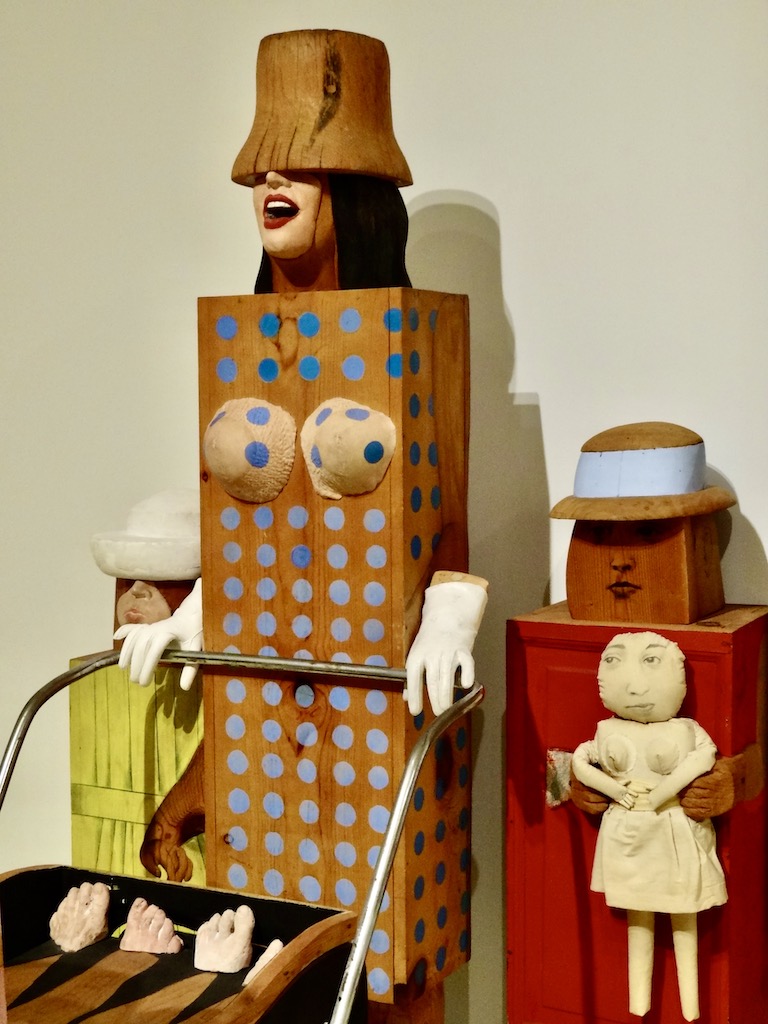
Marisol Escobar,The Family, 1963

“It is said that the reader of an American magazine was so disturbed by an article on the subject of smoking and cancer that he decided to give up reading.” (Anecdote cited by Tim Harford, 2025)

In the French tradition, Eleanor Kaufman (2007) points out, the synthesis of Marx and Freud reached a heightened pace between the years of 1968 and 1974, above all in the work of Lyotard, Deleuze and Guattari, Baudrillard, Lacan and Pierre Klossowski. The two most significant texts from this period are often thought to be Deleuze and Guattari’s Anti-Oedipus (1972) and Lyotard’s Libidinal Economy (1974).

Although Alain Badiou’s early work is deeply critical of French theories of libidinal economy that sought to synthesize Marx and Freud in the wake of May 1968, Kaufman (2007) argues that there is in fact a startlingly lucid nexus of arguments in these writings that can be summarised according to three broad thematics or chiasms: exchange value and use value; human desire and inhuman desire; temporal movement and atemporal inertia. 

Exchange Value and Use Value

The first thematic is the rethinking of the hierarchy of exchange value over use value, with emphasis on the desire structure proper to use value

Exchange value would seem to be something more abstract and more imbued with the complexity of money while use value would seem to refer to a presumably immutable quality of the object or thing in itself. This is particularly important for thinking about ‘designs’ of whatever complexity, from object to system, since one presumption has been that a primary focus of design is utility. Perhaps, or especially, even the notion of affordance remains tinged with utilitarianism.

However, as Jean Baudrillard (1981) writes in For a Critique of the Political Economy of the Sign, use value and indeed utility itself is a fetishised social relation, just like the abstract equivalence of commodities.

Thus, following Klossowski, Lyotard (1993: 82) proposes that both use and exchange value should be seen “as signs of intensity, as libidinal values (which are neither useful nor exchangeable), as pulsations of desire, as moments of Eros and death.”

Human and Inhuman Desire

The second thematic is that of a perverse, inhuman or machinic desire that transfuses the human being and transforms a relation of pure exploitation or revolt into something else. In this thematic, the boundaries of the human are explored through the death drive. The importance of this is to recognise that there is a logic of desire, often masochistic, that infuses all submission, and non-submission, to conditions of exploitation.

By way of example, Baudrillard (1981: 204) cites the following incident: “A group occupied and neutralized [a US Department] store by surprise, and then invited the crowd by loudspeaker to help themselves. A symbolic action! And the result? Nobody could figure out what to take – or else they took insignificant items they could easily have filched on any normal shopping day.”

Baudrillard’s point is that any attempt to liberate pure use value fails because use is always bound up in a logic of desire that is more rooted in the “desire of the code” than in the specificity of the object itself.

Lyotard’s (1981: 111) example focuses on the English proletariat, “at what capital, that is to say their labour, has done to their body. You will tell me, however, that it was that or die. But it is always that or die, this is the law of libidinal economy, no, not the law: this is its provisional, very provisional, definition in the form of the cry, of intensities of desire; … perhaps you believe that “that or die” is an alternative?!  … Death is not an alternative to it, it is a part of it, it attests to the fact that there is jouissance in it. The English unemployed did not become workers to survive, they – hang on tight and spit on me – enjoyed the hysterical, masochistic, whatever exhaustion it was of hanging on in the mines, in the foundries, in the factories, in hell, they enjoyed it, enjoyed the mad destruction of their organic body which was indeed imposed upon them, they enjoyed the decomposition of their personal identity, the identity that the peasant tradition had constructed for them, enjoyed the dissolution of their families and villages, and enjoyed the new monstrous anonymity of the suburbs and the pubs in the morning and evening.”

The basic insistence that capital conditions and thrives on the very desires that would seem to be at odds with it, and that one cannot think situations of oppression or hegemony without taking these desires into account is a lesson of Lyotard’s libidinal economy, Hegel’s dialectic of the master and the slave, Gramsci’s model of hegemony and Fanon’s analysis of colonialism.

The theorists of libidinal economy argue that not to consider economy through the lens of desire, disjuncture and perversion is to fail to understand it. In short, one must attend to the desires that undergird use value and hence capital.

A corollary of attending to the desires that undergird use value and capital is that one must similarly be attuned to desires in the very form and genre of Marxian analysis itself, in short, as Lyotard (1993: 95-154) puts it, “The desire named Marx?”

Lyotard argues that there are at least two Marxes: one who is a severe critic of capital (the Big Bearded Prosecutor Marx) yet unable to dispense with his fascination for it; and the other who is caught in a juvenile state of enrapture with capital (the Little Girl Marx) yet rejects its “prostitution under the name of alienated mediation” Lyotard, 1993: 136).

In this extreme if not obscene fashion, Lyotard raises the important question of the desiring-relation to capital of those who critique it.

What Badiou denounces as a ‘false window’ is precisely the point of entrance that the libidinal economy theorists would take, highlighting above all Lacan’s ‘involuntary’ theory of the party and the Marxists’ ‘unenlightened’ theory of desire.

The point of the libidinal economy analysis is to retain two poles of the equation, such as use value and exchange value, and to observe how the two exchange positions in chiasmic fashion: use takes on the affective currency of exchange, while exchange has a utilitarian dimension.

Badiou’s work from the 1980s and his more recent meditations on Marxism and psychoanalysis represent an extreme departure from the work of the libidinal economy theorists. Badiou maintains the significance of such terms as the party, the workers, the masses, and the subject. By contrast, thinkers such as Lyotard, Deleuze and Guattari, Baudrillard and Klossowski are more decisively bent on an overt undermining of these terms. Hence, they are determined to show that precisely where you think there is practice, there is theory; where you think there is the material, there is the ideal; and above all, where you think there is a body, there is also language in a chiasmic and dialectical relation to that body. 

If the libidinal economists seek to foreground the desiring mechanisms that underlie not only capital but their very attempt to write it, Badiou eschews such self-reflexivity.

Novelty-Movement and Radical Inertia

The third thematic is a thought of radical inertia. Badiou’s work is squarely at odds with the project of libidinal economy on multiple counts. Nevertheless, in different ways, both Badiou and the libidinal economy theorists come up against something that might be described as an atemporal force of inertia.

In libidinal economy theory there is clearly a premium on unstoppable libidinal flux and energetic machines. Even so, this thought also pushes towards its opposite: inertia. This can be witnessed in evocations of immobility at the end of Lyotard’s Libidinal Economy and in Deleuze and Guattari’s ‘body without organs’ coming up against the plane of consistency. At these points, there is an elusive yet radical inertia that rests at the limit point of such analyses, one that is not unlike Freud’s death drive. For Kaufman, it is the power of this radical inertia that is the greatest insight of the strain of thought that counts as the theory of the libidinal economic.

It would seem that Marxian thought and psychoanalytic thought are poised to discern in the problem of the new and mobile the simultaneous presence of the old and the immobile. Thinking the joint relation of inertia and stasis beyond simple mobility is, for Eleanor Kaufman, a central concern for our time.

Reference

Baudrillard, J. (1981) For a critique of the political economy of the sign. Translated by C. Levin. Candor, NY: Telos Press.

Harford, T. (2025) The resistant reader. Financial Times, 21 June, Weekend Magazine pp. 7-8

Kaufman, E. (2007) The Desire Called Mao: Badiou and the Legacy of Libidinal Economy, Postmodern Culture, 18(1), pp. 1–31.

Lyotard, J.-F. (1993) Libidinal economy. Translated by I. H. Grant. Bloomington, IN: Indiana University Press.

Mimesis and Diegesis

RELATED TERMS: Diégèse and Diegesis

Plato and Aristotle define literary and dramatic genres in terms of the form of enunciation. They distinguish between diegesis, reported speech which articulates the writer’s authorial voice, and mimesis, in which the writer speaks, as if directly, through the characters.

This sense of diegesis differs from that developed by Etienne Souriau and Gerard Genette, who gradually rework its meaning entirely so that it comes to refer to the world of the story in its entirety.

References

 Genette, G (1980) Voice, in Narrative Discourse: An Essay in Method. Ithaca, NY: Cornell University Press, 1980, pp.212-262.

Narrative environments – Celia Pearce

RELATED TERMS: Artifactuality and Actuvirtuality; Design of Narrative Environments; Narrative Environments

The following entry brings to attention a number of key themes for the design of narrative environments. They include: storytelling; social imaginaries; immersion; spatial narrative; experience design; illusion of authenticity; agency; identity; community; persistent community; participation; to live; to visit; guest; citizen; stranger; polity; synthetic and predesigned worlds; player-created and emergent worlds; interaction and narration; productive play.

A speculative chronology Part 1: From Lascaux to Disneyland

Celia Pearce (1997a: 329) uses the term ‘narrative environments’ to describe physical or virtual spaces that tell a story or provide an experience for particular audiences. She says that a narrative environment, simply put, is a space that facilitates a story. In her view, the first commercial attempts to create narrative environments as an entertainment form were developed by Walt Disney for Disneyland. Disney fused architecture and cinema and, for the first time, made environments that told a story.

Centuries before Disney created narrative environments for entertainment purposes, Pearce (1997a: 330-331) continues, they existed for religious and educational purposes. In the pre-literate days of medieval Roman Catholicism, for example, when the mass was recited in Latin, understood only by priests, monks and noblemen, the Biblical stories were articulated for the illiterate peasants through frescos, murals, statues, reliefs and stained-glass windows, in short, by pictorial-sculptural means in an architectural setting. The church interior, from this perspective, can be argued to constitute a narrative environment of a sort, articulating visual, pictorial narratives in space while working image into architecture.

Still further back historically, Pearce argues that more examples of the articulation of image and architecture can be found. She cites Ancient Egypt, where giant frescos were the preferred medium, and Mesopotamia, where visual narratives kept alive the lore, legend, history and myth of these civilisations. Yet further back historically, Pearce speculates that the cave paintings of Lascaux may be read as attempts to embed a chronicle of events within the cave dwellers’ environment, perhaps with pedagogic intent, conveying instructions concerning how to hunt certain animals. 

In sum, architectures, as environments, have functioned as a narrative medium for millennia.

A speculative chronology Part 2: Disneyland as creative erasure

As already noted, in 1955 Walt Disney opened Disneyland in Anaheim, California, which many regard as the first-ever theme park. A synthesis of architecture and story, it was a revival of narrative architecture, a style that had previously been reserved for religious, ritual functions, from the royal tombs of Mesopotamia and Egypt to the temples of the Aztecs to the great cathedrals of Europe.

In contrast to such highly controlled, ritual-oriented narrative spaces, cities might be said to have rich, emergent folk narratives of their own, one which articulates messy, unplanned stories of ad-hoc expansion (Mumford 1961, Brand 1994). However, such messy actuality can be given a narrative gloss, as in the case of Los Angeles. Through the combined machinations of Hollywood and efficient real estate, Los Angeles’ short and far-from-glamorous real-life history of immigration, agriculture and boosterism was supplanted by a mise en scène of movie backdrops, a ‘social imaginary’ of the fictional histories of Los Angeles (Klein 1997). This was the sociocultural milieu, at the crest of the 20th century, in which Disneyland was born, against the backdrop of a systematically de-historicised, increasingly sprawling, automobile-enraptured Southern California.

This might be taken as one key theme in the design of narrative environments: it is concerned with the creation of ‘social imaginaries’, to use Klein’s term. In other words, the design of narrative environments engages with processes of storytelling that engage with the actual, messy, multidimensional, spatio-temporal articulation of historical unfolding. It does so for some reason or purpose, perhaps to ‘demystify’ some aspects of existing dominant historiographies or, as Klein highlights, to erase memories of particular social histories and put in place a more glamorous story. This is one sense in which the design of narrative environments is engaged in ‘world building’.

To return to Pearce’s narration, she notes that rather than being a mecca for Disney animation, the vehicle for the first modern entertainment mega-brand and the prototype for transmedia, in its initial conception the theme park contained no references to Disney animation at all. It was envisioned as a kind of ‘locus populi’ of narrative space, a pedestrian haven for families, traversable only by foot or by train (Hench and Van Pelt 2003), representing a return to a more innocent past and perhaps a reaction against the suburban, freeway-interlaced sprawl that Southern California had become.

Cities like Paris, London and Athens, or even New York and Boston, are urban centres rich in history and interwoven with centuries of overlain narratives. In those contexts, there was no pressing need to create synthetic stories in the architecture. Cathedrals and castles structured the narratives of European cities. New York’s emergent stories are inscribed in the wrinkles of its weatherworn edifices. Disneyland, in contrast, was created to fill a vacuum that was uniquely regional and historical or, more accurately, ahistorical. 

In some sense, Disney was trying to re-historicize Southern California. It fulfils a deep need in contemporary mass culture, particularly in the United States, for a human-scale, pedestrian experience of immersion in a three-dimensional narrative. In Europe, and even in the northeastern United States, such immersion is commonplace; in Southern California, it is not.

This last paragraph brings to attention a second key theme in the design of narrative environments: the concept of immersion. In the example above, this is represented by Disneyland bringing to Southern California a kind of immersion which is commonplace in Europe and to some extent the northeastern USA: human-scale, pedestrian experience of immersion in a three-dimensional narrative. Such immersion is not ‘total’, in the sense that attention may be broken at any point by the continuous accidental character of pedestrian experience.

A speculative chronology Part 3: Video games

Thanks in part to the advent of 3D and eventually real-time 3D in the 1990s, video games have come increasingly to resemble theme parks in terms of both design and culture. Both can be classified as ‘spatial media’ (Pearce 1997).

Digital games, with their conventions of real-time 3D and highly spatialised storytelling techniques, can be viewed as one step in the development of narrative environments with their own unique poetic structures (Klastrup 2003).

In addition to making use of the major facets of theme park creation, that is, spatial narrative, experience design, illusion of authenticity and, as already mentioned, immersion, digital games and networks also introduce three new key dimensions to spatial media: agency, identity and (persistent) community. All of these concepts are crucial for the design of narrative environments.

While spatial gaming has its precursors in text-based adventures, i.e. MUDs (Multi-User Domains) and MOOs (MUDs Object-Oriented), it began to emerge in visual form in games like the Monkey Island series (1990-2000), the landmark Myst (1993) and creative masterpieces like Blade Runner (1997) and Grim Fandango (1998). In these, the illusion of authenticity and the integration of space and story are at their highest level of artistry.

In addition to extending the player agency of the earlier spatial games through features such as added navigation, interaction with non-player characters, quest-based gameplay and dynamically interactive battle scenes, the integration of a network into MMOGs (Massively Multiplayer Online Games) creates two additional dimensions of gameplay: identity and community.

Unlike at Disneyland where every visitor is a ‘guest,’ in MMOGs, every guest is a ‘resident,’ a citizen of the online world, if you will. Following a model more akin to Renaissance fairs and live action role-playing, players are not simply spectators, but rather take the roles of elves and orcs fully engaged with the narrative and conflicts of the game. Unlike at a costume party or on Halloween, however, these identities are ‘persistent,’ meaning the player maintains the same role over time.

One game that has tried to walk the line between players having a ‘role’ and playing ‘themselves’ is the recently relaunched Myst Online: Uru Live (2003/2007). This kind of persistent identity is a prerequisite for the last and final game dimension created by digital networks: Community.

While Disneyland has generated a fan community, it does not fully realise Walt Disney’s aspiration to recapture the small town of his youth. One key reason for this is the lack of a persistent identity amongst visitors. Community arises when agency blends with persistent and recurrent attendance and an ongoing sense of participation, neither of which is afforded by the infrequent visitation scheme of theme parks. 

By moving players beyond the role of spectator and towards the role of a full participant in the narrative, MMORPGs (Massively Multiplayer Online Role Playing Games) allow players to ‘live’ in their magical worlds as (fellow) citizens, rather than simply to visit them as guests, or strangers, once or twice a year.

This brings to attention a fourth dimension emerging in new virtual worlds such as There (2003) and Second Life (2003). In such worlds, players are not merely citizens of someone else’s fantasy world. Rather, they have a hand in constructing the fantasy themselves in what might be called ‘productive play,’ where play merges with creative production (Pearce 2006a/2006b).

For example, in There, players can design their own houses, vehicles and fashions, which then become part of the world and can be acquired by other players; while in Second Life, virtually everything in the world is created by the players.

These ‘co-constructed’ worlds merge MMOGs with user-created content such as that seen on websites like MySpace and YouTube. Yet they go beyond the scope of these latter sites by combining all player creations within a single, contiguous virtual world.

An interesting confluence of synthetic and predesigned worlds and player-created and emergent worlds, Pearce notes, is the emergence of an Uru fan culture within the player-created worlds of There and Second Life. When Uru closed in early 2004, not wishing to see their communities destroyed, players from the game migrated en masse into other virtual worlds where they began to re-create numerous cultural artefacts of their former ‘home.’  Thus, members of the ‘Uru diaspora’ in Second Life created a near-exact replica of Uru, while another group of Myst fans created a totally original Myst-style game. In There, players continue to create Uru and Myst-inspired artefacts and environments, such as a recreation of the ‘Channelwood Age,’ a game level) from the original Myst game.

A speculative chronology Part 4: Theme Parks, Cities, Massively Multiuser Online games … Theme-park-city-online-game: narrative-environment as polity

Pearce poses the question of whether MMOGs are the new theme parks or the new cities? Perhaps, she responds, in some respects, they are both. They provide the human-scale pedestrian fantasy of Disneyland, a respite from the modern, homogenous, standardised reality of automobile-based suburbia. Yet they also provide the level of ongoing participation and contribution afforded by pedestrian-friendly cities. 

Furthermore, when players can contribute to the world itself, they become more like ‘theme-park-cities’ or ‘theme-park-polities’ in which players bring their own fantasies to bear on the environments. 

Pearce concludes that, irrespective of whether they are highly synthetic and predesigned, like World of Warcraft, or player-created and emergent, like Second Life and There, these virtual ‘theme-park-cities’ or ‘theme-park-polities’ appear to respond to a longing that parallels Walt Disney’s initial inspiration in the mid-20th century: the desire to be part of a ‘small town,’ a community to which one can belong and, in the case of digital virtual worlds, potentially contribute creatively. In other words, a vision of a comprehensible ‘polity’, a ‘political’ vision, even if a vitally confused or paradoxical one that intermixes politics and entertainment; small scale and large scale; heterogeneity and homogeneity; and simplicity and complexity.

Narration and Interaction

Pearce (1997b) comments that, traditionally, interactive narrative has been synonymous with ‘nonlinear storytelling,’ or branching, video-based genres. Virtual reality seems to offer a more interactive alternative, which might be called ‘omnidirectional storytelling.’ However, this poses a challenge: the more interactivity, the more difficult it becomes to facilitate the story. Does relinquishing this control mean that an entirely new paradigm for story structure must be created?  Can the seeming contradiction between ‘interaction’ and ‘narration’ be resolved?

References

Hench, J. and Van Pelt, P. (2003). Designing Disney: Imagineering and the Art of the Show. New York, New York. Disney Editions.

Klastrup, L. (2003) A Poetics of virtual worlds, Proceedings of the Fifth International Digital Arts and Culture Conference, pp. 100–109. Available at: https://citeseerx.ist.psu.edu/document?repid=rep1&type=pdf&doi=812f7bbf5f347366591aa425dd535567b9b4c5de (Accessed: 30 December 2022).

Klein, N. M. (1997) The History of forgetting: Los Angeles and the erasure of memory. London, UK: Verso.

Pearce, C. (1997a) The Interactive book: a guide to the interactive revolution. Indianapolis, IN: Macmillan Technical Publishing.

Pearce, C. et al. (1997b) Narrative environments: Virtual reality as a storytelling medium [panel], Proceedings of the 24th Annual Conference on Computer Graphics and Interactive Techniques, SIGGRAPH 1997, pp. 440–441. doi: 10.1145/258734.258901.

Pearce, C. (2006a) Productive Play: Game Culture from the Bottom Up, Games and Culture, 1 (1), 17-24.

Pearce, C. (2006b) Playing ethnography: A study of emergent behaviour in online games and virtual worlds, Ph.D. Thesis, SMARTlab Centre, Central Saint Martins College of Art and Design, University of the Arts London.

Pearce, C. (2007) ‘Narrative Environments: from Disneyland to World of Warcraft’, in Borries, F. von, Walz, S. P., and Böttger, M. (eds) Space, Time, Play: Computer Games, Architecture and Urbanism: The Next Level. Basel, CH: Birkhauser, pp. 200–205. doi: 10.1007/978-3-7643-8415-9_3.

Other Resources

Celia Pearce Lecture: Virtual Reality and architecture as a narrative art (1996), SCI-Arc Media Archive

Whiteness Studies

RELATED TERMS: Black Studies; Intersectionality; Native Studies

Use for: Critical Whiteness Studies

Jiro Yoshihara, White Painting, 1958

Kenan Malik (2022) discusses the work of American historian Tyler Stovall, particularly his final book, White Freedom, a book, Malik says, that while demonstrating the significance of his work also exhibits the confusions that plague contemporary thinking about race. 

For Stovall, liberty and racism are inextricably linked, because ideals of freedom and liberty assumed the exclusion of non-whites. In so doing, Stovall concludes, freedom and liberty bear the “stamp of whiteness and white racial ideology”.

While it must be conceded that many thinkers who helped to shape modern ideas of freedom and liberty, such as Locke, Kant, the revolutionaries in France who proclaimed the Declaration of the Rights of Man and Abraham Lincoln, held racist views and supported exclusionary practices, nevertheless, Malik points out, Stovall’s own work shows that the struggle over the meaning of freedom was more complex than can be captured by a notion such as ‘white freedom’.

Malik argues that it was not primarily racial concerns but rather political considerations, particularly fears of social disorder, that led to demands for certain groups be excluded from the benefits of freedom. Stovall shows that throughout the 19th century France was torn between “the radical vision of democracy championed by … the sans-culottes of the French Revolution” and the liberal desire to “not endanger private property”, a struggle which provoked the revolutions of 1830 and 1848 and the 1871 Paris Commune. The institutionalisation of more restricted notions of freedom followed on from the crushing of these revolutionary challenges. This tension, which goes back to the 17th century, continued into the 20th century. 

The language of race, by providing a means of casting inequalities as natural and inevitable, became the justification for enslavement, the brutal treatment of colonial subjects and the denial of rights to non-white peoples both in Europe and America. It was also the justification for suppressing working-class rights since, In the 19th century, the working class was viewed as a distinct and inferior race.

Racial divisions thus came to serve as a means to dismantle challenges to the ruling order by persuading white workers that their interests lay in their ‘whiteness’, not in their status as workers. In the American south, for example, so-called ‘Jim Crow’ laws that imposed apartheid-style segregation were mainly enforced at the turn of the 20th century in response to the ‘Fusion’ movements, which brought together black workers and poor white farmers, to challenge the established order and, in North Carolina, win power. The Democrats, the ousted ruling party, launched a violent ‘white supremacy campaign’ to rupture the coalition, win white working-class support for treating blacks as outcasts and regain political control.

Malik contends that this complex relationship between liberties, race, class and whiteness is ill-served by a concept such as ‘white freedom’. This is not just an issue of only historical significance because the notion of ‘whiteness’ has become fetishised today both by racists and by many anti-racists. The former claim that all white people have a common set of interests. The latter reframe racism as ‘white privilege’. In so doing, both, in different ways, obscure the political and structural reasons for racism, on the one hand, and the social problems facing the working class, on the other. This makes it more difficult to challenge either racial discrimination and violence and class oppression and alienation.

According to Andrew Hartman (2014), the best work in the field of whiteness studies is Alexander Saxton’s The Rise and Fall of the White Republic. Saxton, Hartman writes, was one of the first scholars to publish an explicit examination of whiteness. He anticipated the criticism of those, such as Eric Arneson and Peter Kolchin, who argued that, “whiteness studies has been plagued by three deficiencies: a problem of definition; assertions that immigrant groups such as the Irish had to become white on arrival; and the use of whiteness as a psychological wage” (Hartman, 2014: 23). Historical investigations of whiteness should be measured against The Rise and Fall of the White Republic, a work, Hartman suggests, that is so good and so far ahead of its time that it will render obsolete the very thing that it sought to build: whiteness studies.

References

Baum, B. (2011) On the history of American whiteness [a review of The History of White People by Nell Irvin Painter, Reviews in American History, 39(3), pp. 488–493. Available at: https://www.jstor.org/stable/23014351 (Accessed: 3 November 2022).

Engles, T. (ed.) (2006) Towards a Bibliography of Critical Whiteness Studies. Urbana, IL: Center on Democracy in a Multiracial Society, University of Illinois at Urbana-Champaign.

Hartman, A. (2004) The rise and fall of whiteness studies, Race and Class, 46(2), pp. 22–38. doi: 10.1177/0306396804047723.

Kolchin, P. (2009) Whiteness studies, Journal de la Société des américanistes, 95(1), pp. 117–163. Available at: https://www.jstor.org/stable/24606420 (Accessed: 3 November 2022).

Malik, K. (2022) We talk a lot about freedom – but not enough about whose freedom is at stake, Observer, p. 47. Available at: https://www.theguardian.com/commentisfree/2022/jan/02/race-class-freedom-liberty-and-work-of-historian-tyler-stovall (Accessed: 10 January 2022).

Painter, N. I. (2010) The History of white people. New York, NY: W W Norton.

Ethnomethodology

RELATED TERMS: Actor-Network Theory; Anthropology; Ethnography; Method and methodology; Sociology; Participants

Ethnomethodology is an approach within sociology initiated by Harold Garfinkel (1984, 1967). It seeks to uncover the methods and social competence that people, as members of social groups, employ in constructing their sense of social reality.

Ethnomethodology is mentioned by Bruno Latour (2005, fn. 54, p. 54) in a footnote in Reassembling the Social, as being one of the sources of actor network theory. Latour writes, “It would be fairly accurate to describe ANT as being half Garfinkel and half Greimas …”

References

Garfinkel, H. (1984, 1967). Studies in ethnomethodology. Cambridge, UK: Polity

Jary, D. and Jary, J. (2000). [Harper Collins Dictionary ofSociology, 3rd ed.. Glasgow: HarperCollins

Latour, B. (2005). Reassembling the Social: An Introduction to Actor-network-theory. Oxford: Oxford University Press.

Agency

RELATED TERMS: Actantiality; Actor-Network Theory; Post-Humanism;

De-centring the subject, situating the subject and distributing agency across a network

From the perspective of design practice, the interest in ‘agency’ lies in how it may be conceived so that the action of designs over a prolonged period of time can be comprehended, once they have become part of material culture. One opening for developing a notion of such extended, distributed or networked agency is through Peircean semiotics and structuralist-poststructuralist thought, which de-centre the sovereign subject of the modern epoch, but without effacing human agency. Similarly to such poststructuralists as Michel Foucault and Jacques Derrida, although they would not characterise themselves in such terms, C. S. Peirce is as much interested in situating or contextualising subjectivity as he is in de-centring it. Peirce’s writings exhibit a grasp of human beings as somatic, semiotic and social actors caught up in processes over which they have very limited control and about which they have only fragmentary, fallible and distorted, often very distorted, understandings (Colapietro, 2007).

It is this set of shifts. i.e., de-centring and situating the human, without erasing human agency, which partly motivates the use of the terminology of ‘actant’ and ‘actantiality’ in respect to how designs act, terms which have a high degree of resonance with Peirce’s concept of the ‘interpretant’. This enables the recognition that agency is not necessarily, or even usually, a property exercised by specific people. Instead, agency can be distributed across time and space, between or among sub-individual and supra-individual units, and over types of entities, such as humans, non-humans and more-than-humans (Ahearn, 2007).

Paul Kockelman (2007), for example, theorises agency in terms of flexibility and accountability, on the one hand, and knowledge and power, on the other. His theory seeks to allow one to study the distribution of agency in and across real-time social, semiotic and material processes.

Laura Ahearn (2001), alternatively, provisionally defines agency as “the socioculturally mediated capacity to act.” She comments that this means that two concepts, ‘free will’ and ‘resistance’, often assumed to be synonyms for agency, can no longer be taken to be so. Ahearn is particularly concerned to understand language use as a form of social action.

In addition to, or instead of, ‘agency’, some sociologists prefer to use the term ‘practice’ or ‘praxis’, the latter drawing on and redefining the Marxist term, perhaps restoring some of the senses attached to the term in Ancient Greek distinctions among praxis (doing), poiesis (making) and theoria (reflection on universals). Two influential theorists within sociologically-oriented practice theory are Pierre Bourdieu and Anthony Giddens.

Shaun Gallagher discusses the phenomenological ambiguity involved in having a sense of agency. The phenomenological distinction that needs to be considered, he suggests, is between pre-reflective, or non-reflective, and reflective aspects of self-consciousness, a distinction that applies to our actions and to the sense of agency.

Gallagher further notes that reflective self-consciousness can be further distinguished into ‘introspective reflection’ and ‘situated reflection’. Introspective reflection can be a reflective consideration of whether I should engage in one or another action, prospective deliberation; or a retrospective evaluation of what I have done already, retrospective attribution or evaluation). Such considerations may involve a metacognitive stance in which the subject might reflect on whether she is taking the right strategy to accomplish her goal; or she might ask whether what she intends to do, or has done, is consistent with her beliefs, desires, and her other activities. This kind of reflection may be relatively detached from current action.

Situated reflection, in contrast, is embedded in an ongoing contextualized action. It involves the type of activity that I engage in when someone asks me what I am doing, or when I am deciding what is the next step in my ongoing course of action. In situated reflection, I do not necessarily frame my answers to such questions in terms of beliefs, desires, or strategies. Rather, I may reference the immediate environment and what needs to be accomplished.

Agency in Actor Network Theory

In actor-network theory (ANT), all entities, whether they are living or inorganic, human or non-human, are capable of contributing to the performance or fulfilment of actions, at different scales. They are therefore said to have ‘actantiality’, a denomination that does does exclude human ‘agency’, nevertheless an agency that is de-centred and situated.

To illustrate his conception of an actor-network, John Law (2007) cites the example of Thomas Edison’s electricity supply network for New York City, as discussed by Thomas Hughes (1983). Edison’s network system was “an artful combination of transmission lines, generators, coal supplies, voltages, incandescent filaments, legal manoeuvres, laboratory calculations, political muscle, financial instruments, technicians, laboratory assistants and salesmen” (Law, 2007).

 This system worked because Edison engineered the bits and pieces together. As Hughes emphasises, the architecture of the system was the key. “Its individual elements, people or objects, were subordinate to the logic of that architecture, created or reshaped in that system” (Law, 2007).

In order to emphasise this shift in how we perceive agency, ANT scholars use the term actant, borrowed from the narrative semiotics of A. J Greimas. An actant essentially is that which has agency, which should be seen as the ability to change a situation, perhaps profoundly. An actant can be anything at all, for example, a human being, a scallop, a certain know-how, a given technology or a bacteria.

In this context, agency is not limited humans or non-humans. Rather agency arises from whatever groups or networks these entities constitute and partake in. The network, then, is where heterogeneous corporeal entities, such as things, objects and people, and incorporeal entities, such as fictional characters, concepts, theories, methods or know-how, come together to form a seemingly coherent whole, allowing for each participatory member to act and be acted upon.

An important point here is that these networks organise and bundle together heterogeneous entities in order to sustain themselves. They ‘interiorise’ them or, rather, they bring them into the network operation. They could not exist without this process of bringing into the network of what was initially exterior to them. This is a characteristic of open systems or networks.

Agency in Architecture

A good place to begin to consider the notion of agency in architecture is the Spring 2009 issue, number 4, of the Footprint online periodical. Its theme is ‘Agency in Architecture: Reframing Criticality in Theory and Practice’.

The issue’s framing editorial text argues that current debates in architecture cannot avoid the notion of agency. It crops up in several contexts: critiques of the architect’s societal position; the role of people in the design’s material realisation over time; conceptualisation of the performative dimension of the architectural object; and considerations of the effects of theory for architecture at large.

Even though it is fundamental to architecture as practice and material culture, the notion of agency is often taken for granted. The contributors to this issue of Footprint propose to rethink contemporary criticality in architecture, by explicating the notion of agency in three major directions:

  • questions of multiplicity and relationality;
  • questions relating to location, mode and vehicle; and
  • questions of effect, raising the relation of intentionality to consequentiality.

The notion of agency is crucial for discussions of the architect’s societal position, whether understood as autonomous creator; self-interested professional; victim of market forces; resistive agent; or enabler and urban catalyst. It is also crucial for discussionsof the role of the ‘user’, whether this figure is understood as empowered citizen, producer of urban space, self-organizing entity or everyday bricoleur.

In addition, recent preoccupations with its material and performative dimensions have led to new ways of understanding agency in architecture.

Non-Human Agency

Since the innovations in thinking about agency derived from science and technology studies and actor-network theory, research has continued into the senses in which non-human entities have agency. One example is the research of Jones and Cloke (2002). Their discussion of varying types of agency confirms that trees act upon as well as being acted upon. As part of their research into the interconnections between trees and places, they propose four ways in which trees and, by extension, other non-humans, might be regarded as having ‘agency’. In identifying these four strands, they are not arguing that trees possess the particular and extraordinary capabilities of humans in these respects. However, they suggest, trees do possess very significant forms of active agency, which have usually been assumed to exist only in the human realm. 

These four aspects of agency, that is, routine action, transformative action, purposive action and non-reflexive action, are particularly important for understanding the prolonged actions of designs as part of material culture.

First, agency may be taken as routine action. In Jones and Cloke’s example, trees are associated with a series of ongoing processes of existence which enable them to grow, reproduce, bear fruit, spread, colonise and so on. While such processes may be associated with human interventions, for example, planting, pruning and cutting down, the tree nevertheless transcends the passive role often allocated to nature’s subjects.

Second, agency may be taken as transformative action. For example, trees can be seen to make new directions and formations. “They are active in the creation and folding fields of relations, which in turn is often bound up with the transformation of places. Trees can act autonomously in seeding themselves and growing in unexpected places and in unexpected forms and when remixed with the social aspect, these actions can have creative transformative effects” (Jones and Cloke, 2002: 81).

Third, agency may be taken as purposive action. As Jones and Cloke (2002: 81) state, “intentionality is a key threshold by which agency is often limited to the social realm. Indeed, ascribing intentionality to non-human agents can lead to dangerous forms of reductionist essentialism. However, non-humans do exercise a kind of purposive agency, for example, in the way that trees are able to influence future courses of action; their DNA clearly entertains a plan which purposes particular forms of being and becoming – an implicit blueprint with instructions for its construction and physiological functioning (Gordon, 1997). The skill of trees is, then, to have a means of executing embedded purposeful agency, which is capable of exploiting myriad circumstances and thereby influencing place production.”

Fourth, agency may be taken as non-reflexive action. “[T]he socio-ecological world exhibits significant creativity and creative potentials and non-agents such as trees participate fully in creative being and becoming. In particular, trees have a capacity to engender affective and emotional responses from the humans who dwell amongst them – to contribute to the haunting of place via exchanges between the visible present and the starkly absent in the multiple and incomplete becoming of agency” (Jones and Cloke, 2002: 81).

References

Ahearn, L.M. (2001). Agency and language. Annual Review of Anthropology, 30, 28–48.

Ahearn, L. M. (2007) Comment on Kockelman, P., Agency: the relation between meaning, power, and knowledge. Current Anthropology, 48 (3), 375–401. Available from http://www.jstor.org/stable/10.1086/512998 [Accessed 9 December 2016].

Ainsworth, T. (2016). “Form vs. Matter”, The Stanford Encyclopedia of Philosophy. Available at https://plato.stanford.edu/archives/spr2016/entries/form-matter/ [Accessed 5 February 2019].

Colapietro, V. (2007) Comment on Kockelman, P., Agency: the relation between meaning, power, and knowledge. Current Anthropology, 48 (3), 375–401. Available from http://www.jstor.org/stable/10.1086/512998 [Accessed 9 December 2016].

Emirbayer, M. and Mische, A. (1998). What Is agency? The American Journal of Sociology, 103 (4), 962–1023. Available from http://www.jstor.org/stable/2782934 [Accessed 16 October 2015].

Gallagher, S. (2012). Multiple aspects in the sense of agency. New Ideas in Psychology, 30 (1), 15–31. Available from http://dx.doi.org/10.1016/j.newideapsych.2010.03.003 [Accessed 10 October 2015].

Hughes, T. P. (1983) Networks of power: electrification on Western society, 1880-1930. Baltimore, MD: Johns Hopkins University Press.

Jones, O. and Cloke, P. (2008) Non-Human Agencies: Trees in Place and Time, in Knappett, C. and Malafouris, L. (eds) Material agency: towards a non-anthropocentric approach. New York, NY: Springer, pp. 79–96.

Kockelman, P. (2007). Agency: the relation between meaning, power, and knowledge. Current Anthropology, 48 (3), 375–401. Available from http://www.jstor.org/stable/10.1086/512998 [Accessed 9 December 2016].

Latour, B. (1996). The trouble with actor-network theory. Available at: http://www.bruno-latour.fr/sites/default/files/P-67%20ACTOR-NETWORK.pdf. Accessed 9 May 2009.

Latour, B. (2005). Reassembling the Social: An Introduction to Actor-network-theory. Oxford: Oxford University Press.

Latour, B. (2008). A Cautious Prometheus? a few steps toward a philosophy of design (with special attention to Peter Sloterdijk). Available at http://www.bruno-latour.fr/articles/article/112-DESIGN-CORNWALL.pdf. Accessed 27 January 2009.

Law, J. (2007). Actor network theory and material semiotics. version of 25 April 2007. Available at http://heterogeneities.net/publications/Law2007ANTandMaterialSemiotics.pdf . Accessed 27 November 2008.

Law, J. and Urry, J. (2003). Enacting the social. Lancaster: Department of Sociology and the Centre for Science Studies, Lancaster University. Available at http://www.lancs.ac.uk/fass/sociology/papers/law-urry-enacting-the-social.pdf. Accessed 9 March 2007.

Actor

RELATED TERMS: Actant; Actantiality; Actor-Network Theory;

Actors are to be distinguished from actants.

Actors are the concrete characters of a story or the dramatis personae of a play. The notion of actant, on the other hand, offers an inventory of classes of entities in a narrative, which are defined by their relations to one another.

Thus, A. J. Greimas distinguishes between actants, which belong to narrative syntax, and actors, which are recognisable in the particular discourse in which they are manifested (Greimas 1987: 106). In simple terms, actors are the things in a narrative that have names, such as the King, Tom, Excalibur, while actants are the narrative units they manifest and which have a functional role in the narrative, such as helper, opponent, sender and receiver.

Continue reading “Actor”

Symbiocene

RELATED TERMS: Anthropocene – Capitalocene – Chthulucene; Plantationocene

Glenn Albrecht (2021) argues that we must rapidly exit the Anthropocene, an era marked by its non-sustainability, its perverse resilience, its authoritarianism and its corrupt and destructive political economy. There can be no ‘good’ Anthropocene, he insists. 

To break with the Anthropocene, Albrecht suggests that a new foundation, built around a new meme, is needed. He proposes the term Symbiocene for the next era in human history, derived from the Greek sumbioun, to live together. It also invokes the notion of ‘symbiosis’, that is, living together for mutual benefit. As a core element of ecological thinking, symbiosis affirms the interconnectedness, or we might say entanglement, of all living things.

Characteristic of this new era, Albrecht argues, will be human intelligence that replicates the symbiotic and mutually reinforcing life-reproducing forms and processes found in living systems. Human development will arise through creative actions using the best of biomimicry and symbiomimicry alongside other eco-industrial, eco-technological, eco-agricultural and eco-cultural innovations.

As the Symbiocene is built, a new political system, which Albrecht calls sumbiocracy will emerge. Albrecht defines sumbiocracy as political rule or governance committed to the types and totality of mutually beneficial or benign relationships in a given socio-[techno-]biological system at all scales.

Reference

Albrecht, G. (2021) Enter the symbiocene, Next Nature. Available at: https://nextnature.net/magazine/visual/2021/symbiocene (Accessed: 24 November 2022).

Narrative Environments – Environmental Psychology in Architecture

RELATED TERMS: Design of Narrative Environments; Narrative Environments

William Kentridge

Jan Golembiewski is an architect and neuroscientist working at Psychological Design, an architecture practice based in Sydney, Australia. His research investigates the psychodynamic significance of environmental action. He suggests that design, at all scales, from cities to buildings to interiors, down to the objects in them, prompt, motivate and ground human behaviour. In other words, design provides ‘affordances’ for human behaviour, human interaction and human community. Design, in this sense, is not the sole remit of ‘the designer’. We all practice design decision making in our homes whenever we make aesthetic choices. 

Human-environmental interaction has been explored by cognitive science and environmental psychology. The work of John Bargh and James Gibson, for example, explores the insight that perception and action are completely intertwined. Perception is not a passive or reactive reception of data. Rather, it is an active, projective scanning of, and engagement with objects, people and environments. We attend to our surroundings selectively, acting on some aspects while ignoring others. We also adapt to our environments and use conditionally what is on offer. Design, by changing the features and arrangements of the environment, is capable of altering that attention and use. 

Continue reading “Narrative Environments – Environmental Psychology in Architecture”