A critical, creative and reflexive design practice could benefit from an understanding of the issues raised by Guy Debord in his book, Society of the Spectacle, published in 1967. It is a manifesto of 221 theses on capitalist culture in France in the two decades between the end of World War Two in 1945 and the mid-1960s.
Developed from Marx’s theories of reification and alienation, Debord defines the spectacle as a passive, individualistic, quasi-visual (ocular-centric, perhaps) relation to the social world. The individual, divorced from the collective praxis that constructs the social world, is reduced to consuming corporate-supplied entrancing narratives.
Kaplan (2012) suggests that this critique, while valuable in offering a salient, potentially illuminating, description of people’s increasingly commodity-saturated, mass-mediated, image-dominated and corporate-constructed world, with all its conspicuous irrationalities, is nonetheless flawed. Its most serious defect, Kaplan argues, is Debord’s rejection of the necessary intermediation of social life by culture and communication. His analysis assumes a notion of mass society, in which people are culturally denuded, divorced from community and thereby subject to the imposition of false needs.
Against the profound alienation of post-World War Two capitalism, Debord opposes the utopian vision of a communist society of transparent, direct human action and community. One must choose either revolutionary socialism or prolong continued acquiesce to barbarism, Debord argues. Both the alienated masses and the revolutionary collective, however, Kaplan suggests, depend implicitly on the framework of liberal individualism, which abstracts individuals from the cultural traditions and social relations in which they are embedded.
References
Debord, G. (1983). Society of the spectacle. New York, NY: Zone Books.
Kaplan, R.L. (2012). Between mass society and revolutionary praxis: the contradictions of Guy Debord’s Society of the Spectacle. European Journal of Cultural Studies, 15 (4), 457–478. Available from http://ecs.sagepub.com/cgi/doi/10.1177/1367549412442208 [Accessed 10 August 2012].
Design practices would do well to be sociologically informed, particularly in relation to micro-sociological studies.
The decades from the 1960s to the 1980s saw an increase in micro-social studies and methodology. The 1980s saw an attempt to bridge the gap between the more recent micro- studies and the older macro-social studies and methodologies. Some authors began to reconstruct macrosociological phenomena based upon a micro-sociological foundation, while others developed new macro-social perspectives, such as neofunctionalism or neo-Marxism, that addressed and incorporated micro-level phenomena.
The challenge posed by micro-sociological approaches can be seen in two distinctive but interlocking developments: the move from a normative notion of social order to that of a cognitive order, and the rejection of both methodological collectivism and individualism in favour of methodological situationalism. Both developments call into question the dimensions in terms of which the micro-macro problem has traditionally been posed, such as the juxtaposition of individual and collectivity or of individual action and social structure. In the end, they point towards a reconstruction of macro-social theory and methodology based upon an integration of micro-sociological results.
One approach which emerged is actor-network theory, which highlights the actant as a phenomenon that exists at both the micro-social and the macro-social, forestalling the opposotion between the indvidual and the collective. Through networked, distributed agency, the collective runs through the individual and the individual runs through the collective and both run through the materiality of the worlds that they co-constitute.
Prior to the invervention of the micro-sociological studies, two conceptions of social order had dominated Western social philosophy since its beginnings: the integration theory of society, which conceives of social structure as a functionally integrated system regulated by normative consensus, as articulated by Durkheim and Parsons; and the coercion theory of society, which views social structure as a form of organization held together by force and constraint transcended in an unending process of change, as articulated by Marx.
References
Knorr-Cetina, K. and Cicourel, A. V. (eds) Advances in social theory and methodology: towards an integration of micro- and macro-sociology. London: Routledge & Kegan Paul.
RELATED TERMS: Modernism and avant-garde art practice
Vid Simoniti points out that the work of politically committed artists has radically shifted since the mid-1990s. A new generation of artists has sought not just to represent social reality, but to change it, by blending art with activism, through social regeneration projects, and even by oursuing violent political action. This form of contemporary art prompts a rethinking of theories of artistic value. These works, Simoniti contends, make a convincing case for a pragmatic view of artistic value, a view which is often dismissed. The pragmatic view, when properly applied, sets the bar very high indeed. Within this view, art that tries to change society should be considered ‘good’ art only when it succeeds in making tangible differences.
Thus, for socially engaged art, there is a critical difference between an art that engages in the politics of representation and the art institutions, and an art that engages in wider political practices. Socially engaged art has tended to follow particular patterns: it has focused on communities defined by place; artists have usually been in a strong position relative to the human community or environnment that forms the subject; and it has been assumed that there is a clear distinction between the work of artists, who are able to give voice to disadvantaged communities, and the actions of business which has tended to ignore these voices.
References
Simoniti, V. (2018) ‘Assessing socially engaged art’, Journal of Aesthetics and Art Criticism, 76(1), pp. 71–82. doi: 10.1111/jaac.12414.
Photograph: Rainer Lück http://1RL.de – 17 July 2009 – Used under CC BY-SA 3.0 licence
“Humanity becomes a political concept. Its members are no longer travellers on the ship of fools that is abstracted universalism, but workers on the consistently concrete and discrete project of a global immune design.” (Couture, 2016: 73)
The work of German philosopher Peter Sloterdijk (1947-) has direct relevance for design practices. As with all theorists, his work may be considered to constitute a particular kind of text-based narrative as well as a particular kind of environmental discourse: discourse about the spatio-temporal environment; and environment as discourse and as apparatus [1].
Sloterdijk argues, following through on the initial Heideggerian insight, that Dasein, literally there-being or here-being, as ‘being thrown into the world’, is to be thrown into an envelope of some kind. To define humans, for Sloterdijk, is to define the envelopes, the life support systems, that make it possible for them to breathe, to live. Furthermore, all of the envelopes or life support systems into which people are born (‘thrown’) are artificial, constructed, designed. These envelopes are called ‘spheres’ by Sloterdijk and the study of them he calls spherology.
It would be very fruitful, from the point of view of design practices, to engage with Sloterdijk’s theory of spheres, bubbles and foam, that is, different scales of envelope, as processes of environing, immersing and insulating (from hostility and danger) which are folded and/or embedded into one another, potentially in the form of a knot or a torus or a “strange loop” (Hofstadter, 1979) – an entanglement of some kind.
Sloterdijk also suggests that human beings oscillate between the desire to be embedded (immersed, insulated) and the desire to break free (transgress, flow, mingle). Nevertheless, for Sloterdijk, this ‘breaking free’ can never be more than a process of moving from one envelope to another, wherein may be found further or other life support systems.
It could also prove fruitful to relate Sloterdijk’s enfolded-spheres to Gerard Genette’s notion of diegetic levels in a narrative, which also implies processes of framing or embedding, in order to complement narrative complexity with environmental complexity: nested stories running through nested environments, not necessarily inn parallel.
This may also yield an interesting way of exploring the processes of metalepsis [2], wherein the boundaries or borders between levels, spheres or ‘worlds’ of narratives and of environments are transgressed, so that one level, sphere or world, which does not seem to belong there, emerges or appears within another in a disruptive manner. This may also enable a development of the argument, as expressed for example by Ryan (2006), that there are two main types of metalepsis: rhetorical, as discussed by Genette; and ontological, as discussed by Brian McHale.
Notes
[1] For a lengthier discussion of Sloterdijk and narrative environments, see Parsons (2016, 28 Feb)
[2] For a comprehensive discussion of metalepsis, see Pier (2013).
Hofstadter, Douglas (1979). Gödel, Escher, Bach: an Eternal Golden Braid. New York: Basic Books.
Latour, B. (2009a). A Cautious Prometheus ? A few steps toward a philosophy of design (with special attention to Peter Sloterdijk ). In: Hackney, F., Glynne, J., and Minto, V., eds. Networks of design: proceedings of the 2008 Annual International Conference of the Design History Society. Boca Raton: Universal Publishers. Available from http://www.bruno-latour.fr/sites/default/files/112-DESIGN-CORNWALL-GB.pdf [Accessed 10 August 2012].
Latour, B. (2009b). Spheres and networks: two ways to reinterpret globalisation. Harvard Design Magazine, 30 138–144.
Of particular interest to design practices, in the context of the relations among art practices, aesthetic practices and everyday action, is the Situationist International and its forerunner, the Lettriste International.
Bonnet (1992: 76) considers that the most determined challenge to the categories of art and everyday space, and their potential interrelationships, has come from the Situationist International, founded in 1957, and its principal forerunner, the Lettriste International, founded 1952.
The Lettriste International was formed as a splinter group of the Lettristes, a surrealist movement formed in Paris in the late 1940s. Its interest lay in developing forms of poetry, painting, and music based on the alphabetical letter.
The members of the Lettriste International were dissatisfied with the conservatism and aesthetism of the Lettristes. Guy Debord was the intellectual leader of both the Lettriste International and the Situationist International. The other main theorist in the Situationist International was Raoul Vaneigem. The two key texts by these radical thinkers, both originally published in French in 1967 are:
Debord, G. (1983). Society of the spectacle. New York, NY: Zone Books.
Vaneigem, R. (2001). The revolution of everyday life. London, UK: Rebel Press.
From the perspectives of urban design and the design of narrative environments, Situationism, or the Situationist International, may be said to encode two premises, as a specific theory of the urban environment as a series of situations.
First, it encourages wandering in the urban environment, responding in unplanned and unanticipated ways to the opportunities (‘affordances’) that the specific environment offers (the derive). It assumes that one is led by environmental objects and structures, appearing as phenomena in experience that draw attention to themselves, rather than being led by a plan (pre-defined route) or an intention (predefined goal or purpose). It therefore recommends an experiential openness to environmental clues as to where one should proceed and an openness as acceptance to where one ends up (both as destination and as telos or goal). The aim is to experience the phenomena of the urban experience more fully, rather than overriding and ignoring them by adhering to a plan or an intention.
Second, while acknowledging the value of being open to the urban environment, it argues that the urban environment is largely occupied by ‘spectacles’ that deliberately vie for one’s attention. Such ‘spectacles’ are deigned to draw our attention to opportunities for buying and being entertained. Being open to the environment, then, is a troubled experience. If one simply accepted the affordances being offered by the urban environment, one would be trapped in a consumerist and spectator mode of experience. Wandering is curtailed and constrained: it becomes an acceptance of someone else’s plan and intention. The aim here is to critically assess the phenomena of the urban experience, rather than accepting the prevailing spectacles that seek to dominate one’s perception and experience (the detournement).
The two aims are not necessarily compatible.
The Situationist approach may be seen as a response, firstly, to the urban experience in the early 20th century in France, informed by a certain Surrealist understanding of experience – the openness aspect; and, secondly, to the commercialisation and Americanisation of the urban environment in the post-World War Two period after 1945 – the critical aspect. The first Surrealist period is informed by insights borrowed psychoanalysis. The second critical period is informed by insights borrowed from Marxism. As responses to the urban environment, they are specific in many ways to the European experience from the 1940s to the 1970s.
Sources
Bonnett, A. (1989). Situationism, geography, and poststructuralism. Environment and Planning D: Society and Space, 7 (2), 131–146.
Bonnett, A. (1992). Art, ideology, and everyday space: subversive tendencies from Dada to postmodernism. Environment and Planning D: Society and Space, 10 (1), pp.69–86.
Semiotics can be of great value in design practices, especially in the ways in which material semiosis can be understood to be an active constituent of the networks of social practice.
Umberto Eco (1979: 7) has an interesting approach to defining what a comprehensive programme for a general semiotics would be. He suggests that this can be understood through a ‘theory of the lie’. As he explains,
“Semiotics is concerned with everything that can be taken as a sign. A sign is everything which can be taken as significantly substituting for something else. This something else does not necessarily have to exist or to actually be somewhere at the moment in which a sign stands in for it. Thus semiotics is in principle the discipline studying everything which can be used in order to lie. If something cannot be used to tell a lie, conversely it cannot be used to the truth: it cannot in fact be used ‘to tell’ at all.”
Umberto Eco (1979: 7)
Eco (1979: 14) notes that two scholars foretold the official birth and scientific organisation of semiotics as an academic discipline: Ferdinand de Saussure and Charles Sanders Peirce. For Saussure, semiology is the science which studies the life of signs in social life. His notion of a sign is a two-fold entity, signifier (sign-vehicle) and signified (meaning). In this view, the sign is implicitly regarded as a communication device taking place between two human beings intentionally aiming to communicate or express something. Semiotic system as conceived by Saussure are intentional, conventionalised systems of artificial signs.
Given Saussure’s preferences, Eco considers that Peirce offers a more comprehensive and fruitful definition of semiotics. Peirce states, as cited by Eco (1979: 15) that,
“By semiosis I mean an action, an influence, which is, or involves, a cooperation of three subjects, such as a sign, its object and its interpretant, this tri-relative influence not being in anyway resolvable into actions between pairs.”
(Eco, 1979: 15)
According to Peirce (1931-1958: 2.228), then, a sign is “something which stands to somebody [or, indeed, another something, as ‘interpretant’] for something in some respects or capacity”.
Eco points out that Peirce’s approach does not demand as part of the definition of a sign, as does Saussure’s, the qualities of being intentionally emitted and artificially produced. In this way, the Peircean triad can also be applied to phenomena that do not have a human emitter, provided that [eventually, through the processes called, by way of shorthand, the interpretant] they do have a human receiver, such as is the case with meteorological symptoms or any sort of index.
Eco (1979: 16) argues that those theorists who reduce semiotics to a theory of communicational acts cannot considers symptoms as signs, nor can they accept as signs any other human behavioural feature from which a receiver infers somethings about the situation of the sender even though the sender is unaware of sending something to someone.
In the context of design practice, it is Peircean semiotics, rather than Saussurean semiology, that may prove more useful. His notion of ‘interpretant’ is linked to that of ‘actant’ (and, indeed, ‘passant’). An interpretant need not be understood necessarily to be human. It can be any actant-entity, such as, for example, a piece of computer code, that is capable of generating a relation between a ‘sign’ and an ‘object’. Like Peirce, however, the context of semiosis is taken to be ‘pragmatic’ or praxeological, that is, to be related to action and agency, or as we might say to actantiality and passantiality, as a field of ‘traces’ or ‘differences’ that form an entangled and entangling web. In other words, they form a tangled hierarchy, in Hofstadter’s terms.
References
Eco, U. (1979). A Theory of semiotics. Bloomington, IN: Indiana University Press.
Peirce, C. S. (1931-1958). Collected papers of Charles Sanders Peirce. Cambridge, MA: The Belknap Press of Harvard University Press
Designed artefacts, while being environmental and situational, are not, in any simple or straightforward sense, architecture nor landscape. Nor, furthermore, are they sculpture. Yet they bear some relation to all of these forms of spatial practice: architectural design, landscape design and sculpture. Such fields of spatial practice can be brought into relation to one another in what Rosalind Krauss calls an ‘expanded field’.
Krauss’ (1979) article, “Sculpture in the expanded field”, which is summarised below, highlights the possible utility of structuralist and poststructuralist thinking for design practices.
Krauss outlines three eras of sculptural practice: a traditional period in which sculpture adheres to the logic of the monument, a commemorative representation that bears a close relation to the place where it sits; a modernist period in which sculpture loses its relation to place and becomes instead an autonomous artefact, one that is, however, siteless, homeless or nomadic; and a post-modernist period in which sculptural practice develops within a field of differential relationships, whether of contrariety, contradictoriness, paradoxicality, negation or implication.
The shift from modernist to post-modernist sculptural practice marks a movement from discrete thinking about the predefined properties of an entity or a category to relational thinking about the existing entity and the emerging set of possibilities to which it can give rise, that is, from a practice of making in a craft mode of production, whether for a site or for a series of nomadic locations, to a practice of selecting, placing and relating, that may involve some making but, more centrally, involves innovating in the form of making differences.
Krauss (1979) points out that a number of surprising works were produced in the late 1960s to the late 1970s under the name of sculpture. Unless this category can be made to become infinitely malleable, Krauss argues, nothing would seem to give this motley collection of works the right to lay claim to be considered sculpture. Although the extension of this term is performed in the name of a vanguard aesthetics, an ideology of the new, of innovation, Krauss argues that its covert message is that of historicism. The challenge of these diverse productions, their unfamiliarity and uncomfortableness, is rendered comfortable by being made familiar. They are made comprehensible, in an act of recuperation, by being said to have evolved gradually from the forms of the past.
No sooner had minimal sculpture appeared on the horizon of aesthetic experience in the 1960s than art criticism began to trace a paternity for it, through a set of constructivist fathers who could legitimise and authenticate the strangeness of these phenomena, in the form of the ghosts of Gabo, Tatlin and Lissitzky. This paternity was established despite the content of the one, constructivism, being the contrary of the other, minimalism. For example, as Krauss explains, it was not considered important that constructivist forms were intended as visual proof of the mutable logic and coherence of universal geometrics, while their seeming counterparts in minimalism were demonstrably contingent, denoting a universe, or perhaps better polyverse, held together by guy wires, glue or simply the accidents of gravity, and not by a Universal Mind.
The process of historicisation swept these distinctions, and potential objections, aside as unimportant or negligible.
As the 1960s turned into the 1970s, these processes of historicisation became harder to perform. Under the heading of ‘sculpture’, could now be included piles of thread waste on the floor, sawed redwood timbers rolled into the gallery or stockades of logs surrounded by fire pits. Rather than remaining within the horizon of the 20th century, the critics-historians began to construct genealogies from the data of millennia rather than decades, tracing the paternity of minimalism back to Stonehenge, the Nazca lines and Indian burial mounds. Indeed, anything at all was hauled into the court of criticism-historicism to bear witness to the connection between the work under consideration and its historical precedents, thereby legitimising its status as ‘sculpture’. When the links proved weak, a variety of primitivising work from the earlier part of the 20th century was called upon to mediate between the extreme past and present, a notable example being Constantin Brancusi’s “Endless Column”.
In constructing these paternities and genealogies, the term which was to be given salvation, ‘sculpture’, became obscured. The aim had been to use a universal category to authenticate a group of particulars. However, the category was forced to cover such a heterogeneity that it was in danger of collapsing.
Yet it is widely known that ‘sculpture’ is not a universal category but a historically-bounded one. As a conventional construct, and a conventional field of practice, sculpture has its own internal logic and its own set of rules which are not open to very much change. Krauss argues that the logic of sculpture appears inseparable from the logic of the monument, by virtue of which a sculpture is a commemorative representation that speaks symbolically about the meaning or use of the place wherein it sits.
It is because they function in relation to the logic of representation and marking, Krauss continues, that sculptures are usually figurative and vertical, their pedestals mediating between site-place and representation-sign.
However, since this was a convention and is not immutable, this logic began to fail. In the late 19th century, the logic of the monument began to fade, a process that can be witnessed in an examination of two works by August Rodin, “The Gate of Hell” and his statue of Balzac. With these two sculptural projects, Krauss argues, the threshold of the monument is crossed and a space entered which could be called its negative condition and which could be understood as a kind of sitelessness, placelessness or homelessness. Krauss proposes that this marks the modernist period of sculptural production, a mode of production that operates in relation to this loss of site or of ground. The monument is produced as abstraction, the monument as pure marker or base, functionally placeless and self-referential for the most part.
Modernist sculpture, Krauss concludes, is thus nomadic. The sculpture reaches downward to absorb the pedestal into itself an away from actual place. Through the representation of its own materials or the process of construction, the sculpture depicts its own autonomy. Brancusi’s work is taken by Krauss to be exemplary in this respect.
If this is the case, Krauss proceeds, in being the negative condition of the monument, modernist sculpture had a kind of ideal space to explore, cut off from temporal and spatial representation, a domain that could, for a while, be profitably mapped out but which by 1950 began to be exhausted.
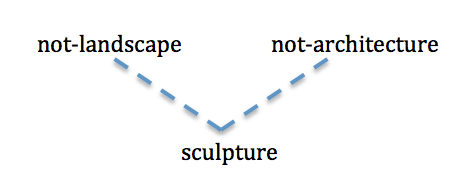
In short, it began to be experienced increasingly as pure negativity. Sculpture became something that was possible to locate only in terms of what it was not. By the 1960s, sculpture was what was on or in front of a building that was not the building, or what was in the landscape that was not the landscape, such as exemplified by works by Robert Morris in the early 1960s. Sculpture had ceased to be a positivity and was now the category that resulted from the addition of the not-landscape to the not-architecture:
These terms, the not-landscape and the not-architecture, express a strict opposition between the built and the not-built, the artificial and the natural, between which the production of sculpture seemed to be suspended.
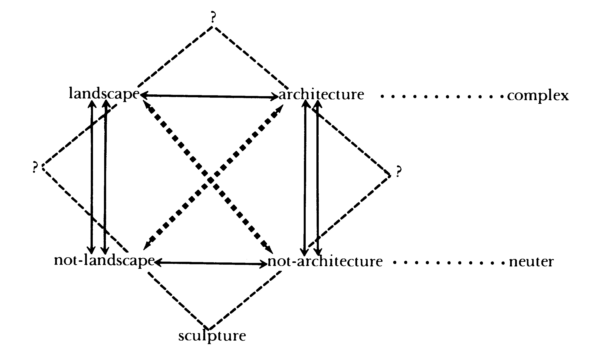
These terms can be transformed by a simple inversion into the same polar opposites but this time expressed positively, i.e. the not-architecture is another way of expressing the term landscape, according to the logic of a certain kind of expansion, and the not-landscape is another way of expressing the term architecture. This expansion, Krauss explains, is called a Klein group in mathematics and a Piaget group in the structuralist-inspired human sciences. [This expansion is also, it should be added at this point, called a semiotic square in Greimas’ semantics and narratology, a notation that bears some relationship to the Aristotelian logic square, as diagrammed by Apuleius. Furthermore, such notations are developed by Jacques Lacan in the context of psychoanalysis in the form of the Schema-L.] [Note also that Krauss, similarly to Donna Haraway, mis-interprets the logic of opposition as diagrammed by Apuleius and the semiotic square as diagrammed by Greimas in which the contradictions of landscape/not-landscape and of architecture/not-architecture are expressed as diagonals in the square]
By means of this logical expansion, binaries are transformed into a quaternary field:
Krauss analyses the dimensions of this structure as follows:
1) there are two relationships of pure contradiction which are termed axes (and further differentiated into the complex axis and the neuter axis) and are designated by the solid arrows (see diagram); 2) there are two relationships of contradiction, expressed as involution, which are called schemas and are designated by the double arrows; and 3) there are two relationships of implication whicht are called deixes and are designated by the broken arrows.
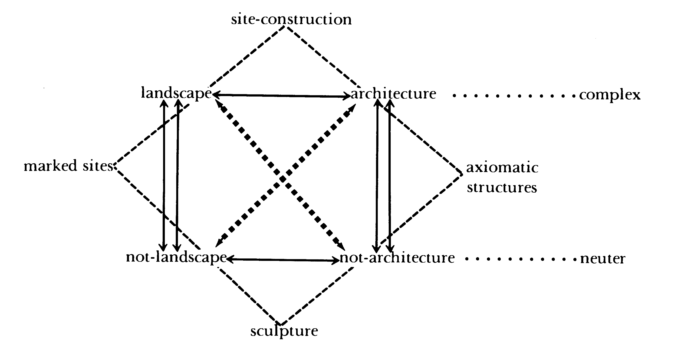
This expanded field is generated by problematising the oppositions between which the modernist category of sculpture is suspended. Once this expansion has begun, three other categories can be envisioned logically, all of which are a condition of the field itself. Sculpture becomes one term on the periphery of a field:
Historically, it seems that the permission, or perhaps the pressure, to think the expanded field of sculpture was felt in the USA in the years 1968-1970. By 1970, with the “Partially Buried Woodshed” at Kent State University, Ohio, Robert Smithson had begun to occupy the position that might be termed ‘site construction’, i.e. landscape + architecture. The term ‘marked sites’ could be used to refer to work that was landscape + not-landscape, a position occupied by Robert Smithson’s “Spiral Jetty”, for example, a category that includes both the actual physical manipulations of sites and other forms of marking, such as the application of impermanent marks or the use of photography.
The combination of architect + not-architecture might be termed axiomatic structures, in which there is some kind of intervention into the real space of architecture, for example, through partial reconstruction, drawing, photography or the use of mirrors. The possibility explored in this category is a process of mapping the axiomatic features of the architectural experience, i.e. the abstract conditions of openness and closure, onto the reality of a given space.
During the 1970s, many artists found themselves occupying, in a sequence or succession, different positions within the expanded field. This contradicted the demand of art criticism that was still in the thrall of modernism for the purity and separateness of the various media and thus the specialisation of a practitioner within a given medium.
However, from within the conditions of the post-modern, practice is not defined in relation to a given medium, e.g. sculpture, but rather in relation to the logical operations on a set of cultural terms, for which any specific medium, such as photography, books, lines on walls, mirrors, or, indeed, sculpture itself, might be used.
The expanded field provides for, or affords, an expanded but finite set of related positions for a given artist to occupy and explore and for an organisation of work that is not dictated by the conditions of a particular medium.
The logic of the space of post-modern practice is no longer organised around the definition of a given medium or the grounds of a given material or the perception of the material. It is organised instead through the universe of terms that are felt to be in opposition within a cultural situation, or as it might be expressed, the agonistic field in question.
Thus, within any one of the positions generated by the given logical space, many different media might be employed. Also, any given artist might occupy, successively, any one of the positions.
References
Krauss, R.E. (1979). Sculpture in the expanded field. October, 8, 30–44. Available from http://www.jstor.org/stable/778224 [Accessed 10 February 2016].
RELATED TERMS: Paradigm; Method and Methodology; Research Methodologies
The term science has come to refer to a set of practices whereby knowledge is obtained through observation and experiment, critically tested and brought under general principles.
Scientific method in the natural or physical sciences is a three-step process: careful observation of some aspect of nature; speculation about how to explain it, if not already well understood; and finding a way or ways to test those speculations.
There are many debates in the history and philosophy of science, such as the disagreement between Karl Popper and Thomas Kuhn, by means of which understanding of science changes.
Like Karl Popper, Thomas Kuhn rejects the idea that science grows by accumulation of eternal truths, takes his main inspiration from Einstein’s overthrow of Newtonian physics and his main problem is scientific revolution. However, according to Popper, science is permanently in a state of revolution and criticism is the heart of the scientific enterprise. For Kuhn, on the contrary, revolution is exceptional, and in fact extra-scientific, and criticism, in ‘normal times’, is anathema. For Kuhn, the transition from criticism to commitment marks the point where progress, and ‘normal’ science, begins.
Lakatos argues that Kuhn fails to understand that aspect of Popper’s programme in which he replaces the central problem of classical rationality, the old problem of foundations, with the new problem of growth, and begins to elaborate objective and critical standards of growth.
Note: Kuhn introduced the phrase ‘paradigm shift’ into academic discourse.
References
Lakatos, I. (1968) ‘Criticism and the methodology of scientific research programmes’, Proceedings of the Aristotelian Society, New Series, 69, pp. 149–186. Available at: http://www.jstor.org/stable/4544774 (Accessed: 18 March 2021).
“Thirty spokes are joined together in a wheel, but it is the center hole that allows the wheel to function. We mold clay into a pot, but it is the emptiness inside that makes the vessel useful. We fashion wood for a house, but it is the emptiness inside that makes it livable. We work with the substantial, but the emptiness is what we use.” Lao Tzu, Tao te Ching
The Zen Buddhist principles of emptiness, space and tranquility may be relevant for, and could be deployed in, the design of particular kinds of narrative environment. Such principles have already served as inspiration in the arts. For example, as Ellen Pearlman (2012) shows, Buddhism, particularly Zen Buddhism, was a significant source of inspiration for the arts in New York City from the early 1940s to the early 1960s.
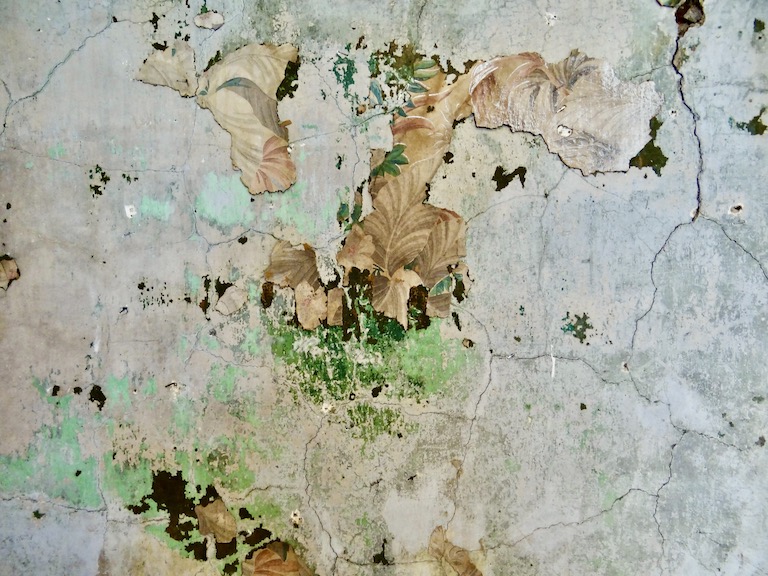
The Zen Buddhist aesthetic of sabi is better known as wabi-sabi. Wabi is the yearning for simplicity, even ugliness or absence of obvious beauty. The wabi tea room, from which the term derives, was rustic and small. Sabi is an aching solitude coupled with imperfection and historical profundity. Sabi also means rust; and sabi-ya means loneliness. (Pearlman, 2012: 118)
Wabi and sabi, as expressions of the Japanese virtues of selflessness, modesty and humility, mean that Japanese art undoubtedly reflects the philosophy of life of Zen. However, Nyozekan Hasegawa argues in his 1938 book, Nihonteki Seikaku, that while the profound influence of Zen on Japanese art is undeniable, Japanese artists’ love for the imperfect, the asymmetrical and the simple dates back to a period earlier than the arrival of Zen in Japan (Dumoulin, 1940: 324), for example, to the Heian era (794-1185) when Japan, revitalising its embrace of the unpredictable fluctuations of the natural world, adopted a sensitivity to and appreciation for nature (Prusinski, 2012). [1]
According to Nancy Moore Bess, “[s]abi refers to the natural wear that comes with aging and daily use, for instance the patina of a naturally aged bamboo ceiling in an old villa, where the once green bamboo has mellowed to a range of soft grays and golden browns. (p.74)” (Quoted by Doordan, 2002: 78).
Arthur Erickson (1973: 328) claims that the qualities of wabi and sabi and shibui (‘aristocratic simplicity’) are untranslatable into English because there are no equivalent words, and furthermore the feelings they express, the closest evocations being melancholy, sombreness and restraint, are not readily recognisable, and are certainly not highly valued, in an English-language-inflected sensibility. Inasmuch as the qualities can be defined, Kondo (1985) suggests, sabi is the beauty of the imperfect, the old, the lonely (aloneness-loneliness, but not in a sentimental sense); while wabi is the beauty of simplicity and poverty.
The life of wabi, as practiced by the master Sen no Rikyu, was in a sense a training based on original enlightenment, a “disclosure of the Buddha-mind” in the naturalness and commonness of everyday life. “There is no need to look for transcendental meanings behind ordinary forms, according to Rikyiu, nor is there any need to escape from ordinary life. Nirvanic realization in life, as in the tea ceremony, takes place in the austere simplicity and commonness of daily life.” (Ludwig, 1974: 49)
Thus, “ … the Buddha-reality which people seek is really nothing but the real world of our daily experience” (Ludwig, 1974: 49). For Han (2022: 10), “The freedom of the ‘everyday mind’ consists rather in not kneeling down in awe. Its mental attitude is better expressed as ‘sitting unmovable like a mountain’”.
Similar insights guide the approach to design practices in Incomplete …, an approach which accepts the impermanence, imperfection and incompleteness of the world. The complicating factor taken into account, however, is that the ‘real world of our daily experience’ is pervaded by existing designs which, in the way that they ‘show up’ or ‘show themselves’ to us, may contradict or contravene acceptance of the ‘austere simplicity’ of the flawed, the faulty and the weathered. Instead, they may seek to instil in our decision making over whether to act or not to act, of what to acknowledge or relinquish in our continual inter-actions, a desire for ‘the beauty of perfection’ that engages us in a passage to an elsewhere, an anywhere-but-here-now, perhaps towards the seeming safety of an absolute grounding or origin (arche) or a final destination (telos).
The question that arises for design practices is how our aesthesis, or our way of sensing, perhaps definable as a sensibility of synaesthesia dominated by the ocularcentric, determines our way of being, suspended and extensible in inter-action with the other and in otherness.
Notes
[1] Lauren Prusinski (2012), citing Antanas Andrijauskas (2003), points out that most of the Japanese aesthetic sensibility originated from Japan’s indigenous Shinto religion, with its emphasis on an awe-inspired deification of nature. However, while Shinto provided the basis in which ancient aestheticism is grounded, Andrijauskas argues that Buddhist, Taoist, Confucian, Tantric, and Ch’an have modified and enriched it with new ideas. Nevertheless, the roots of Japanese aesthetics have remained grounded in the celebration and consciousness of nature, Prusinski contends.
References
Andrijauskas, A. (2003). Specific Features of Traditional Japanese Aesthetics, Dialogue and Universalism, 13 (1-2):199-220.
Bess, N. M. (2001). Bamboo in Japan. Tokyo: Kodansha International.
Cheyne, P. (ed.) (2023) Imperfectionist aesthetics in art and everyday life. New York, NY: Routledge.
Doordan, D. (2002).Bamboo in Japan by Nancy Moore Bess. Design Issues, 18 (2), 78-79 Available from http://www.jstor.org/stable/1512045 [Accessed 31 May 2016].
Dumoulin, H. (1940). Zen Buddhism and its influence on Japanese culture by Daisetz Teitaro Suzuki [Review]. Monumenta Nipponica, 3 (1), 323–325. Available from http://www.jstor.org/stable/2382420 [Accessed 31 May 2016].
Erickson, . (1973). The Classical tradition in Japanese architecture. Modern versions of the Sukiya style. Pacific Affairs, 46, (2), 327-328.
Han, B.-C. (2022) The Philosophy of Zen Buddhism. Translated by D. Steuer. Cambridge, UK: Polity.
Kondo, D. (1985). The Way of tea: a symbolic analysis. Man, 20 (2), 287–306. Available from http://www.jstor.org/stable/2802386 [Accessed 1 June 2016].
Ludwig, T.M. (1974). The Way of tea: a religio-aesthetic mode of life. History of Religion, 14 (1), 28–50. Available from http://www.jstor.org/stable/1061891 [Accessed 31 May 2016].
Pearlman, E. (2012). Nothing and everything: the influence of Buddhism on the American avant-garde, 1942-1962. Berkeley, CA: Evolver Editions.
Prusinski, L. (2012) Wabi-sabi, mono no aware, and ma: tracing traditional Japanese aesthetics through Japanese history, Studies on Asia, Series IV, 2(1), pp. 25–49.
RELATED TERMS: Avant-garde movements; Multimodal research; Method and methodology
Two major research philosophies or methodologies have been identified in the Western tradition of science: positivist or scientific, which is quantitative in character; and interpretivist or anti-positivist, which is qualitative in character. In the context of design practices, a third, performative, paradigm is relevant, which is active, generative and dialogic in character. In recent years, a fourth paradigm might be said to have emerged, post-qualitative research, in which the researcher cannot avoid discussing their implication in the ‘object’ of research, implying a necessary self analysis and relational analysis.
Positivist paradigm
Positivists believe that:
reality is stable and can be observed and described from an objective viewpoint, without interfering with the phenomena being studied;
phenomena should be isolated and that observations should be repeatable; and
predictions can be made on the basis of the previously observed and explained realities and their inter-relationships. (Davison, 1998)
Interpretivist paradigm
Interpretivists contend that only through the subjective interpretation of and intervention in reality can that reality be fully understood. The study of phenomena in their natural environment is key to the interpretivist philosophy, together with the acknowledgement that scientists cannot avoid affecting those phenomena they study. They admit that there may be many interpretations of reality, but maintain that these interpretations are in themselves a part of the scientific knowledge they are pursuing. (Davison, 1998).
Performative paradigm
Under the performative paradigm, perception takes place in the midst of social cognition. The performative paradigm assumes an enactive intersubjectivity. Social cognition emerges from embodied social interaction or, in Merleau-Ponty’s term, from intercorporeality (cf). (Fuchs, 2009).
While the representational idiom of the sciences of modernity is an epistemological enterprise geared towards the production of theory, the performative paradigm of cybernetics is instead a practice, including theory and other kinds of account, which looks at the diversity of its components and actors and constructs a view of the world capable of accounting for such motley assemblages. (Fazi, 2011)
The performative paradigm incorporates an enactive approach. From an enactive point of view, organisms do not passively receive information from their environment which they then translate into internal representations. Rather, they actively participate in the generation of meaning. Thus, a cognitive being’s world is not a pre-given external realm represented by the brain; it is the result of a ‘dialogue’ between the sense-making activity of an agent and the ‘responses’ from its environment (Fuchs, 2009) or ‘affordances’ in the environment, as discussed by J.J. Gibson.
Post-Qualitative paradigm
This might also be termed the ‘ontological turn’. It is not simply about the researcher knowing about something but about the researcher being embedded within the apparatus by means of which knowledge is generated and validated. Patti Lather (2016) suggests that this kind of research is about the nature of the real and how to recover footing in a mind-independent reality where things talk back (DeLanda, 2010: 47).
For examples of performative research in art and design, see:
Haseman, B. 2006. A Manifesto for performative research. Media International Australia, (118), pp.98–106. Available at: http://eprints.qut.edu.au/3999/1/3999_1.pdf. Accessed on 18 April 2013.
Markussen, T. 2005. Practising performativity: transformative moments in research. European Journal of Women’s Studies, 12 (3), pp.329–344. Available at: http://ejw.sagepub.com/cgi/doi/10.1177/1350506805054273. Accessed March 25 2013.
For a discussion of the performative methodology in practice, in this case an examination of a healthcare team, see:
Davison, R.M. (1998). Research methodology. In An Action Research Perspective of Group Support Systems: How to Improve Meetings in Hong Kong [PhD Thesis]. Hong Kong: City University of Hong Kong. Available at: http://www.is.cityu.edu.hk/staff/isrobert/phd/ch3.pdf
DeLanda, Manuel. (2010). Deleuze: History and science. New York, NY: Atropos Press
Fuchs, T. and Jaegher, H., (2009). Enactive intersubjectivity: participatory sense-making and mutual incorporation. Phenomenology and the Cognitive Sciences, 8(4), pp.465–486. Available at: http://www.springerlink.com/index/10.1007/s11097-009-9136-4
Lather, P. (2016). Top Ten+ List: (Re)Thinking Ontology in (Post)Qualitative Research. Cultural Studies ↔ Critical Methodologies, 16 (2), 125–131. Available from http://journals.sagepub.com/doi/10.1177/1532708616634734 [Accessed 18 July 2017].
 Incomplete ...