Psychogeography

RELATED TERMS: Defamiliarisation; Derive; Detournement; Situationist International; Methodology and method; Alienation effect (Verfremdungseffekt)

In the practice of the Situationist International, psychogeography is defined as the study of the specific effects of the geographical (and topographical) environment, whether consciously organised or not, on people’s emotions and behaviour.

Debord and his Situationist International colleagues proposed a set of cultural strategies to combat and subvert the commodification of everyday life under contemporary capitalism, of which psychogeography was part. Psychogeography draws attention to the emotional or psychic aspects of urban experience, and to the spontaneous encounter with and reflection on this experience.

Debord associates two key strategies with psychogeographical practice: ‘derive’ and ‘detournement’.

The figure of the psychogeographer has obvious affinities with the earlier idea of the urban flaneur and draws also on the ideas of the surrealists on the modern city, as explored, notably, in Louis Aragon’s Paris Peasant (1926) and Andre Breton’s Nadja (1928), both set in Paris. (Brooker, 2003: 2010)

The film below presents a portrait of Timothy ‘Speed’ Levitch, a tour guide whose embodiment of ‘cruising’ enacts the spirit of psychogeography.https://www.youtube.com/embed/IOeXcXUzyPU

References

Bonnett, A. (1992). Art, ideology, and everyday space: subversive tendencies from Dada to postmodernism. Environment and Planning D: Society and Space, 10 (1), pp.69–86.

Brooker, P. (2003). A Glossary of Cultural Theory, 2nd ed. London, UK: Arnold.

Coverley, M. (2006) Psychogeography. Harpenden, Herts, UK: Pocket Essentials.

Ellard, C. (2015) Places of the heart: the psychogeography of everyday life. New York, NY: Bellevue Literary Press.

Richardson, T. (ed.) (2015) Walking inside out: contemporary British psychogeography. London, UK: Rowman & Littlefield International.

Protagonist

RELATED TERMS: Actantial model – Greimas; Agon; Antagonist; Epic theatre – Brecht; (The) Heroic; Narratology; New Materialism; Theatre

The protagonist may sometimes be referred to as the main character, the focal character or the hero. In one sense, it is the actantiality around which the unfolding of the narrative unfolds: its movements and actions giving rise to counter-movements and counter-actions, creating a centre or point of return for the specific actantial dynamics and also, in many respects, the narrative’s deictic centre. For design practices, taking into account Greimas’ and Latour’s actantial theory, the actant by means of which the action centrally unfolds may not be a human ‘character’ but rather a place, an atmosphere, an institution, an organisation or a non-human life form which has agency in some respect.

For example, while Lear is clearly the protagonist in Shakespeare’s King Lear, it could also be said, taking into account the way agency is distributed by the plotting of the play, that the the force of nature, as embodiment of ‘the gods’ and their will, is the protagonist. In more contemporary examples, concerning ecological and environmental narratives and assuming a non-theological perspective, the protagonist might be the world’s oceans and their circulations, the atmosphere’s air and its flows or the earth’s oceanic and continental plates and their movements. These types of environments open up to the kind of thinking that takes place under the heading of ‘new materialism’, in which matter is not assumed to be passive and inert but active and ‘vital’, a problematic term which, in turn, opens up debates about what is meant by ‘material vitality’ (Bennett, 2010).

From another perspective, the protagonist is the character with whom the audience is intended to share the most empathy.

Empathy is a pivotal moment in engaging a reader, viewer or audience in the sequence of action in a narrative. The question of whether such emotional engagement is conjoined with an accompanying intellectual engagement or is treated as an end in itself, as part of an emotional catharsis, is key to the debate that Brecht, in establishing the ground for his ‘epic theatre’, develops with the Aristotelian view of tragic theatre.

The protagonist, while sometimes referred to as the “good guy”, in a pre-feminist or a pre-gender-neutral formulation, may be the clear villain or antihero of the piece.

Further discussion

In an interesting discussion of kinds of fictions, relevant for notions of the protagonist in design practices, Northrop Frye (2000: 33-34) argues that it is possible to classify fictions or narratives by the hero’s, heroine’s or protagonist’s power of action, which may be greater than, less than or roughly the same as that of the reader, viewer or audience.

Thus, in Frye’s scheme, if the protagonist is superior in kind both to other humans and to the environment of other humans, they are a divine being, and the story about this protagonist will be a myth in the common sense of a story about a god.

If the protagonist is superior in degree to other humans and to the environment, the hero/ine is that of romance, whose actions are marvellous but who is nonetheless a human being. The hero/ine of romance moves in a world in which the ordinary laws of nature are partly, but not wholly, suspended.

If the protagonist is superior in degree to other humans but not to the natural environment, the hero/ine is a leader. While this protagonist has authority, passions, and powers of expression far greater than the reader, viewer or audience, what they do is subject both to social criticism and to the order of nature. This is the hero/ine of the high mimetic mode, of most epic and tragedy, and is the kind of tragic hero/ine that Aristotle had in mind.

If the protagonist is superior neither to other humans nor to the environment, the hero/ine is one of us. The reader, viewer or audience responds to a sense of their common humanity, and the world conforms to our own experience. This is the hero/ine of the low mimetic mode, of most comedy and of realistic fiction. It may be difficult to retain the word ‘hero/ine’ for this type of protagonist, while such a character may not attain to the degree of becoming an anti-hero/ine.

If the protagonist is inferior in power or intelligence to the reader, viewer or audience, so that there is a sense of looking down on a scene of bondage, frustration or absurdity, the hero/ine belongs to the ironic mode. This remains the case when the reader, viewer or audience feels that s/he is or might be in the same situation, as the situation is being judged by the norms of a greater freedom.

References

Bennett, J. (2010) Vibrant matter: a political ecology of things. Durham, NC: Duke University Press.

Frye, N. (2000). Historical criticism: theory of modes. In: Anatomy of criticism: four essays. Princeton, NJ: Princeton University Press.

Product Design and Industrial Design

RELATED TERMS:

The terms product design and industrial design are often used interchangeably. Industrial designers, emerging during the Industrial Revolution beginning the mid-1700s, sought to generate new ideas within an industry. At a later time, product designers shifted the emphasis within industrial design away from how to make a product towards including questions about why to make it and for whom.

Product design covers all the work from the initial idea of a product all the way through to the point where the customers have the product in their hands. An industrial design may be a part of product design or it may be product design all on its own. Industrial design, however, generally applies only to industrial products. Thus, while a fashion designer or a software developer uses product design to develop their concepts, industrial design is used only when the final product has to be built or produced as an marketable entity. Where product design focuses on study or professional activity that involves the more technical roles involved in new product development, mostly using scientific methods, engineering design seems to be a more appropriate designation.

Victor Papanek, writing in the early 1970s proposed that,

“There are professions more harmful than industrial design, but only a very few of them. And possibly only one profession is phonier. Advertising design, in persuading people to buy things they don’t need, with money they don’t have, in order to impress others who don’t care, is probably the phoniest field in existence today. Industrial design, by concocting the tawdry idiocies hawked by advertisers, comes a close second.”

Since that time, product design has addressed many of the concerns which Papanek expressed. Critical product design, for example, focuses on maintenance, repair and upgradability of products to foster new modes of ownership that transgress fashion and trends and to contribute to the future design of more sustainable products.

Even so, one should be very aware, however, of the paradoxes inherent in practising design in the 21st century, as outlined by Rodgers, Inella and Bremner (2017). For example, they argue that, “Design’s Devotion to Sustainability is Unsustainable”.

References

Papanek, V (1973) Design for the real world: human ecology and social change. Toronto, CA: Bantam Books.

Rodgers, P. A., Innella, G. and Bremner, C. (2017) ‘Paradoxes in design thinking’. The Design Journal, 20(sup1), pp. S4444–S4458. doi: 10.1080/14606925.2017.1352941.

Present-at-Hand (Vorhanden) and Ready-to-Hand (Zuhanden)

RELATED TERMS: Dasein; Phenomenology; Heidegger

Present-at-Hand

Some design discourses have made use of the terms ‘present-at-hand’ and ‘ready-to-hand’, derived from Martin Heidegger, to discuss artefacts, entities, interactions and systems such as, for example, in human computer interaction (HCI), interaction design, game design and systems design (Ferris, 2003; Dourish, 1999; Dourish, 2001; Martin, 2012; Karlstrom, 2007; Tanenbaum, Antle and Bizzocchi, 2011). In using such terms, one has to bear in mind the difficulties of extracting concepts from the context of one particular mode of thought and translating them to other contexts, particularly in the case of Heidegger’s thought.

Heidegger defines present-at-hand and ready-to-hand as modes of being, in contrast to Dasein, which is by existing as a self-related being for whom its own Being is at issue as it goes about inhabiting the world.

Thus, for Heidegger, what it means for a present-at-hand entity to be, that is, to become or come into existence as a temporal, historical being, is to be given as an object to a theoretical gaze (Fried and Polt, 2014: xii). This includes both the ‘objects’ of science and the ‘objects’ of everyday perception.

A ready-to-hand entity, such as a tool, is, that is,, becomes or comes into existence as a temporal, historical being, when it fits into a meaningful network of purposes and functions, in other words, when it becomes part of a world of practice.

This means that such entities do not exist in some essential, a-temporal, a-historical or universal way as present-at-hand or ready-to-hand but have a temporal, historical, inter-active or relational mode of being. Thus, as Paul Dourish (1999) explains, Heidegger argued that the ontological structure of the world is not a given, already there to be found, discovered or revealed, but arises through interaction, through unfolding. To explain Heidegger’s position Dourish considers the example of the computer mouse.

Once one has learned to use it, the mouse, in a sense, ‘disappears’ from conscious attention. One acts ‘im-mediately’ through the mouse as an extension of one’s hand as one selects objects, operates menus, navigates pages, and so on. The mouse is, in Heidegger’s terms, ready-to-hand, i.e. it fits ‘seamlessly’ into a meaningful network of actions, purposes and functions. In being part of one’s action, it becomes part of ‘oneself’, ‘one’s body’, part of a domain of ‘ownness’ or ‘mineness’.

However, on occasions such as when the mouse ceases to function, for example, because of a failure of the connection between mouse and computer, one’s orientation towards the mouse changes. The mouse ‘reappears’ to conscious attention. One becomes conscious of the mouse mediating one’s action. One moves from a sense of im-mediacy and seamless connectivity to one of mediacy and failure of connectivity. The mouse becomes problematic, as one acts to solve or resolve the problem. When one acts on the mouse in this way, being mindful of it as an object of my activity, as an objector a theoretical (problem-solving) gaze, the mouse is present-at-hand.

Dourish (1999: 10) points out that,

“Heidegger’s concern with this distinction is not simply to observe that one has different ways of orienting towards objects; his observation is more radical. He argues that the mouse exists as a mouse only because of the way in which it can become present-at-hand. The origin of ontology, and the existence of entities, lies precisely in the way those moments make objects apparent.”

Dourish, 1999: 10)

Otherwise, the mouse is invisible or imperceptible because it immediately and seamlessly is part of one’s flow of actions and inter-actions.

However, when an entity becomes present at hand, for example because problematic in relation to one’s actions and inter-actions, it is not simply that it is revealing itself, or as if it was waiting there all along to be discovered. Rather, it is through this moment of becoming present-at-hand that the object takes on an existence as an entity, whose meaning is determined by the character of the theoretical gaze to which it is subjected. This happens through involved, embodied action, and thus changes its relation to Dasein, the way in which one acts an handles ’things’. In this way, it can be recognised that action is constitutive of ontology, of determining what exists and how it exists, not independent of it.

References

Dourish, P. (1999). Embodied interaction: exploring the foundations of a new approach to HCI [Unpublished draft paper]. Available from http://www.dourish.com/embodied/embodied99.pdf [Accessed 28 August 2016].

Dourish, P. (2001). Where the action is: the foundations of embodied interaction. Cambridge, MA: MIT Press.

Ferris, T.L.J. (2003). Exploration of the application of ‘ready-to-hand’ and ‘present-to-hand’ in the design of systems. In: Australia and New Zealand Systems Society Conference, 2003. Available from http://www.anzsys.org/anzsys03/yis3000061_2.pdf [Accessed 28 August 2016].

Fried, G. and Polt, R. (2014). Translators’ introduction to the second edition. In: Introduction to metaphysics, 2nd ed., by Martin Heidegger. New Haven, CT: Yale University Press.

Karlstrom, P. (2007). Existential phenomenology and design – Why ‘ready-to-hand’ is not enough. Workshop for Interaction Design in Pedagogical Practice, Södertörn University College, Haninge, Sweden. Available from http://petter.blogs.dsv.su.se/files/2011/02/Existential_phenomenolgy-and-HCI.pdf [Accessed 28 August 2016].

Martin, P. (2012). A phenomenological account of the playing-body in avatar-based action games. In: Sixth Philosophy of Computer Games Conference, Medialab-Prado, Plaza de las Letras, C/ Alameda, 15 Madrid. Available from http://gamephilosophy.org/download/philosophy_of_computer_games_2012/Martin 2012 -A-phenomenological-account-of-the-playing-body-in-avatar-based-action-games.pdf [Accessed 28 August 2016].

Tanenbaum, K., Antle, A.N. and Bizzocchi, J. (2011). Understandings narrative and embodied interactions with ‘present-at-mind’. In: The 29th ACM International Conference on Human Factors in Computing Systems, 88–91. Available from http://www.antle.iat.sfu.ca/chi2011_EmbodiedWorkshop/Papers/KarenTanenbaum_CHI11EIWkshp_PresentAtMind.pdf [Accessed 28 August 2016].

Praxis

RELATED TERMS: Poeisis; Reflexivity and Reflection

The term praxis is one of Aristotle’s three main categories action, alongside poiesis and theoria. Praxis is taken to mean doing or acting, rather than making (poiesis) or thinking (theoria), although ‘thinking’ here is restricted to thinking about ‘universals’. Each form of action is associated with a characteristic form of knowing: theoria with episteme (knowledge of universals); poiesis with techne (technical knowledge, knowing how to make); and praxis with phronesis (practical wisdom, knowing what to do).

For Marx and later Marxist writers, praxis is contrasted with wage labour. Praxis is free, conscious, creative human activity, which alone is capable of generating knowledge and creating change in the social order.

Interesting contributions to the concept of praxis have been made by Jurgen Habermas and, particularly, Hannah Arendt, who revises Aristotle’s and Marx’s categorisations in her discussion of labour, work and action.

The questions that arise here for design practices concern whether design is considered a form of praxis, in the Marxian sense, and what acts designs, once in the world, may be said to perform. This extends the Arendtian sense of praxis beyond doing through words and deeds to doing through designs. Further questions arise in the context of whether such conceptions of praxis are humanist, which may limit the understanding of action and agency, or as fields of actantiality in which human ‘agency’, human bodily acts and discurive acts, are understood in the context of interaction in and with the built, constructed world and the natural world.

Further reading

Dunne, J. (1997). Back to the rough ground: practical judgment and the lure of technique. Notre Dame, IN: University of Notre Dame Press.

Melaney, W. D. (2006), Arendt’s Revision of Praxis: On Plurality and Narrative Experience. Analecta Husserliana90, pp. 465-479.

Pilario, D.F. (2005). The Adventures of praxis: a critical encounter of three traditions. In: Back to the rough grounds of praxis: exploring theological method with Pierre Bourdieu. Leuven, Belgium: University of Leuven Press, 1–97.

Practice

RELATED TERMS: Apparatus – Dispositif; Design Practice and Functionalism; Ontological Turn; Reflexivity and Reflection; Theoretical Practice;

The ‘practice’ approach to social phenomena is very important for design, as it underlies the conceptualisation of designs as forms of spatio-temporal (social) practice. The notion of practice is a way of understanding the co-implication and entanglement of environments, discourse (including narrative discourse) and human activity in a design. All of the following approaches may have value in thinking through what may be said to happen in a design, as a field of (social, spatial, temporal) practice, and what designs may be said to do (how designs, once designed and in use, continue to design).

Emergence of the ‘practice turn’

In seeking to convey the significance of the term ‘practice’, Theodrore Schatzki states that while thinkers once spoke of ‘structures’, ‘systems,’ ‘meaning,’ ‘life world,’ ‘events,’ and ‘actions’, when seeking to define the primary generic social entity, many theorists in more recent times would give ‘practices’ a comparable primacy (Schatzki, Knorr Cetina and Von Savigny, 2001: 10).

Calvert-Minor (2014: 124) points out that the ‘linguistic turn’ disclosed that our languages and concepts play constitutive roles in knowledge claims. The ‘social turn’ revealed that what we take as known or take to be rationally justified is a function of social and cultural contexts. In more recent times, many social epistemologists, sociologists of knowledge and science studies practitioners recognise that what lies at the heart of knowledge production are not individuals or communities, but practices. This is the ‘practice turn’ in epistemology that maintains the constitutive importance of language and society in epistemology but shifts the centre of epistemological inquiry to practices.

Similarly, Reckwitz (2002) considers that after the ‘interpretative turn’ of the 1970s, ‘practice theories’ or ‘theories of social practices’ formed a conceptual alternative that seemed attractive to those dissatisfied with classically modern and high-modern types of social theories. Nevertheless, this praxeological approach, emphasising practice, Reckwitz notes, has never been systematically elaborated. Elements of a theory of practice can be found across a spectrum of social theorists in the last third of the 20th century.

Of greatest significance in this respect for Reckwitz are Pierre Bourdieu whose praxeological project carries a trace of structuralism, Anthony Giddens, who developed a ‘theory of structuration’, heavily influenced by late Wittgenstein, and Michel Foucault, who pursued diverse theoretical options between structuralism, post-structuralism and a Nietzschean theory of the body, arriving at a framework of analysing the relations among bodies, agency, knowledge and understanding. Although not mentioned by Reckwitz, the work of Henri Lefebvre should be included in this context as being particularly important for design practices, as he developed an explicit concept of ‘spatial practice’ and of the rhythms of daily activity through his concept of rhythmanalysis into which designs may be said to intervene.

Furthermore, Reckwitz continues, in empirical sociology, cultural studies and anthropology works in the wake of Harold Garfinkel’s ethnomethodology, Judith Butler’s performative gender studies and Bruno Latour’s science studies can be understood as members of the praxeological family of theories. In social philosophy, Charles Taylor’s neo-hermeneutical model of embodied agency and the self-interpreting animal follows a praxeological path. Of this group of thinkers, particularly Garfinkel and Butler, and to the extent that Garfinkel’s influence can be detected in Latour, one might legitimately talk of a ‘performative turn’.

However, it was not until Theodore Schatzki published Social Practices. A Wittgensteinian Approach to Human Activity and the Social in 1996 that a social philosophy explicitly focused on the practice concept emerged, Reckwitz argues.

For Schatzki (2001), as Postill (2010) notes, there are four main types of practice theorists: philosophers, such as Wittgenstein, Dreyfus and Taylor; social theorists, such as Bourdieu, de Certeau and Giddens; cultural theorists such as Foucault and Lyotard; and theorists of science and technology, such as Latour, Rouse and Pickering.

These theorists may be considered as the first generation or wave of practice thinkers who laid the foundations of practice theory. The second generation, who are testing those foundations and building new extensions to the theoretical edifice, include Sherry Ortner (1984) [1], Schatzki, Knorr Cetina, von Savigny, Reckwitz and Warde (Postill, 2010).

One of the traditions of thought to which Schatzki refers above, which talked of structures and systems, is Marxism. This tradition does not fit easily within Postill’s characterisation of two generations of practice theorists, but Ortner (1984) is well aware of the threading of Marxist influences through the first generation’s thought. Another approach to ‘practice’ can be seen to emerge from this Marxist lineage by way of Arendt’s, and subsequently Habermas’, re-conceptualisations of Aristotle’s categories of action, i.e. theoria, praxis and poiesis (very roughly translated as reflective/systemic thinking, doing and making, respectively), and accompanying modes knowing, i.e. episteme, phronesis and techne (again very roughly translated as systemic knowledge, practical (ethical and political) knowledge and technical knowledge, respectively). Both Arendt and Habermas offer a critique of Marx’s appropriation of Aristotle’s categories. For Arendt’s, Marx over-emphasises ‘labour’ (in her terms ‘work’) to the detriment of ‘action’ (in her terms, ‘politics’).

Dimensions of ‘practice’; Practices and material arrangements

Sarah Pink (2012) notes that, in the context of the ‘practice turn’ in contemporary thinking, practices have come to be defined, loosely, as sets of human actions that can be associated with each other in some way and that can form a category for sociological analysis. Given this looseness, it becomes possible to refer to local, micro-scale phenomena such as washing up, doing the laundry or gardening and activities which are less defined by location, such as digital photography and social media activism, as forms of practice. As a result, theories of practice and the uses to which they have been put remain diverse, meaning that there is no unified practice approach.

Schatzki (2011), for example, approaches the study of large social phenomena as bundles of practices and material arrangements. Such bundles of practices and material arrangements make up sites of the social, which may be termed sociotechnical regimes. By ‘practices’ Schatzki intends spatially-temporally dispersed, open sets of doings and sayings organised by common understandings, teleologies (ends and tasks), and rules. By material arrangements he means links among people, organisms, artefacts and things of nature.

Practices and arrangements are interlinked in that, firstly, practices effect, alter, use, and are inseparable from arrangements; while, secondly, arrangements channel, prefigure, and facilitate practices. An important feature of practice-arrangement bundles, and thereby of social phenomena, is interwoven time-spaces: interwoven teleologies and motivations that govern, and place-path contexts in which the activities composing bundles and social phenomena take place.

Schatzki explains that the activities, entities, rules, understandings, and teleologies that are at work in any local situation are elements of phenomena, i.e. practices, arrangements, and bundles thereof, that stretch out over time and space beyond such proximate situations. Indeed, these items come to be at work in local situations because they are components of practice-arrangement bundles. Elements of local situations also often come from elsewhere to be part of them, as Latour (2005) discusses in his chapter “Redistributing the Local”. For this reason, the ontology of practice must be distinguished from those of ethnomethodology and phenomenology, which highlight local (proximate) situations.

Notes

[1] Ortner argues in 1984 that “a new key symbol of theoretical orientation is emerging, which may be labeled “practice” (or “action” or “praxis”). This is neither a theory nor a method in itself, but rather … a symbol, in the name of which a variety of theories and methods are being developed.”

Bibliography

Calvert-Minor, C. (2014). Epistemological misgivings of Karen Barad’s ‘posthumanism’. Human Studies, 37 (1), 123–137. Available from http://link.springer.com/10.1007/s10746-013-9285-x [Accessed 14 January 2016].

Ortner, S.B. (1984). Theory in anthropology since the sixties.Comparative Studies in Society and History, 26 (1), 126–166. Available from http://www.jstor.org/stable/178524?seq=1#page_scan_tab_contents [Accessed 4 October 2015].

Pink, S. (2012). Theorising the familiar: practices and places. In: Situating everyday life practices and places. Los Angeles, CA: Sage, 14–30. Available from http://dx.doi.org/10.4135/9781446250679 [Accessed 19 January 2016].

Postill, J. (2010). Theorising media and practice. Oxford, UK: Berghahn.

Reckwitz, A. (2002). Toward a theory of social practices: a development in culturalist theorizing. European Journal of Social Theory, 5 (2), 243–263. Available from http://est.sagepub.com/cgi/doi/10.1177/13684310222225432 [Accessed 28 January 2016].

Schatzki, T.R. (1996). A Wittgensteinian approach to human activity and the social. Cambridge, UK: Cambridge University Press.

Schatzki, T.R. (2011). Where the action is (on large social phenomena such as sociotechnical regimes ). Sustainable Practices Research Group Working Paper, 1-31. Available from http://www.sprg.ac.uk/uploads/schatzki-wp1.pdf [Accessed 27 January 2016].

Schatzki, T.R., Knorr Cetina, K. and von Savigny, E., eds. (2001). The Practice turn in contemporary theory. London, UK: Routledge.

Poststructuralism

RELATED TERMS: Postmodernism; Semiotics; Structuralism; Theoretical practice; Method and methodology

In as far as it signifies an intense engagement with language and writing and it practices a non-reductionist, relational mode of thinking, poststructuralism may be of great value in considering the language components of narrative as they are articulated in specific design practices.

Metaphorically, but with difficulty, poststructuralist thinking could be translated to other contexts that involve notions of structure or structuring, as in, for example, the endeavour to apply deconstruction to architecture. [It should be noted immediately that deconstruction, while an example of poststructuralist thinking, is a mode of practice that resists being ‘applied’ or being reduced to an application or method].

In the mid- to late-1960s in France, structuralism gave birth to poststructuralism, although, some argue, the later developments were already inherent in the earlier movement. From this vantage point, poststructuralism could seem a fuller working-out of the implications of structuralism, a reinterpretation of the main assumptions about language and society as signifying systems.

For example, Verena Conley (1997: 5), contrary to some received ideas, argues that poststructuralism as a current of thought grows from the sociopolitical and environmental awareness that structuralism established. Questioning the plenitude of the human subject, structuralism led to the renewed consideration of the ethical side of the relation between the human subject and the world into which he or she was born

However, since poststructuralism also seeks to deflate the scientific pretensions of structuralism, such as in, for example, the work of Ferdinand Saussure and Claude Levi Strauss, this idea of a simple transition or unfolding is itself unsatisfactory.

In the course of a root-and-branch questioning of traditional modes of philosophical and linguistic theorising, poststructuralists also challenged other major social theories, notably Marxism. The main intellectual figures associated with poststructuralism are Michel Foucault and Jacques Derrida, but Roland Barthes and Jacques Lacan may also be included under this rubric.

The writings of Derrida in particular pose a challenge to what he regards as Saussure’s presuppositions about the (human) subject and about language. Thus, firstly, Derrida questions the view that language expresses or ‘encodes’ a subject or, more specifically, expresses the (pre-formed) intention of a subject, an intention which the receiver (listener, reader) of the expression can simply ‘de-code’ (a particular conception of ‘communication’). Secondly, Derrida disputes that speech is a primary or more originary mode of expression of this intention than writing, which is thereby seen as secondary and derivative. Thirdly, Derrida argues that writing, as a body of texts or a literature, does not in any simple sense provide a grounding for objectivity or culture.

Derrida works through these arguments in his early writings, some of which borrow techniques from avant-garde art practices, as practical demonstrations of how difference operates in and through language, leading him to coin such terms as differance (with an ‘a’) and trace and to propose that his writing performs a deconstruction, which is neither a simple critique nor a destruction (or, indeed, annihilation) of the texts with which he is engaged.

Much of the energy of poststructuralism, then, goes into tracing the insistent activity of the signifier as it forms chains and cross-currents of meaning with other signifiers and defies the orderly requirements of a pre-ordained signified.

A useful place to begin to grasp the relationship between structuralism and poststructuralism is Derrida’s (1978) essay, ‘Structure, sign and play in the discourse of the human sciences’.

References

Conley, V.A. (1997). Ecopolitics: the environment in poststructuralist thought. London, UK: Routledge.

Derrida, J. (1978). Structure, sign and play in the discourse of the human sciences. In: Writing and difference. London: Routledge, 351-370.

Jary, D. and Jary, J. (2000). Collins dictionary [of] sociology, 3rd ed. Glasgow, Scotland: HarperCollins.

Selden, R., Widdowson, P. and Brooker, P. (2005). A Reader’s guide to contemporary literary theory, 5th ed. Harlow, UK: Pearson Longman.

Postmodernism

RELATED TERMS: Critical thinking; Cultural Studies; Design Practice and Functionalism; Feminism and Materialism; Metanarrative; Methodology and Method; Modernism; Poststructuralism; Theoretical Practice;

The cosmetic is the new cosmic …

Koolhaas (2002: 190)

One question for design practices may be to consider whether any particular design might benefit from orienting itself toward the debates generated by the term postmodernism; and whether particular concepts and vocabulary from postmodern debates are adopted to think through and explain the design process. Depending on what decisions are made in this respect, a number of theoretical-practical avenues and horizons may be opened or closed.

Christine Brooke-Rose (1991), for example, suggests that, “Postmodern artists are said to write metafiction, that is fiction about fiction; to accept the aporia of significant form; or to use ‘suspensive’ irony as opposed to the Modernist ‘disjunctive’ irony; or to be facing ontological (or ‘postcognitive’) questions as opposed to an epistemological (Modernist) crisis; or again, what they have given up is all idea of achieving overall meaning or ‘totalization’, and both these versions are clearly if not explicitly linked to the fracture of the subject as stable interpreter of the real; to write ‘neocosmic’ and ‘anticosmic’ fiction as opposed to ‘cosmic’.

As John Protevi (1999) makes clear, in English-language polemics, the term postmodernism is a pejorative used against French or French-inspired thought. As a pejorative, postmodernism is used to imply that certain French intellectuals, perversely bored with reason and unwilling to use it to join the struggle for the freedom of others less privileged than themselves, frivolously embraced the rapid turnover and endless repetition of late, but still modern, capitalism, and named the age postmodern. In this way, the polemic insists, they are simply mirroring the culture industry that they supposedly take ironic pleasure in analysing, by endlessly seeking to be the latest, most fashionable, theorist with the most arcane vocabulary.

The question of postmodernism concerns the specificity of the era unfolding since the end of World War Two (post-1945). The central issue is whether capitalism has moved so far that the conceptual schemes of its early, i.e. modern, period, 1600-1945, are now outdated and in need of replacement; or whether the contemporary post-1945 world just more of the same, perhaps a bit quicker paced and more widespread, but a world nevertheless requiring only modifications of the basic concepts inherited from the modern period.

If not taken as a pejorative, postmodern thinking in France may be said to have developed through two distinct strands. One might be called ‘historical-libidinal materialism’, which developed from the thought of Marx, Nietzsche, and Freud. The other might be called a ‘post-phenomenological philosophy of radical difference’, which developed from the work of Kant and Hegel, via the German phenomenologies of Husserl and Heidegger, and the French phenomenologies of Jean-Paul Sartre, Maurice Merleau-Ponty and Simone de Beauvoir.

In the following generation, the thinkers placed under the banner of postmodernism are Jean Baudrillard (thinking about the simulacrum), Jean-Francois Lyotard (thinking about the differend), the feminist thinkers Helene Cixous, Luce Irigary and and Julia Kristeva, and the deconstructionism of Jacques Derrida (thinking about differance). In this litany may be included the genealogy of Michel Foucault (from disciplinarity via discursive practice to the apparatus or dispositif). At the outer edges of this grouping may be placed the Marxism of Louis Althusser and the psychoanalysis of Jacques Lacan. All of these thinkers may also be implicated in the intellectual developments discussed under the headings of structuralism and poststructuralism.

Alone among the most well-known French philosophers of the period since the 1960s, only Jean-Francois Lyotard uses the name postmodernism in his endeavour to define a “Post-modern Condition” in which techno-economic forces drove the West beyond the conditions that birthed the ‘modern’ thought forms of humanism, methodological individualism, rationalism, secular moralism and progressivism.

Tuija Pulkkinen, in contrasting the modernist with the postmodernist view, takes postmodernism to be non-foundational in its orientation in thinking. Thus, unlike the modern, she argues, the postmodern is not concerned to uncover the origin, the basic level, the true essence, or the pure core of the phenomena that it studies. Modern thought may be understood as seeking to expose an authentic level of reality. The postmodern, on the contrary, takes the view that there is no ultimate foundation to be unveiled.

Understood in this way, rather than concentrating on the process and possibility of unveiling, a postmodern thinker pays attention at the constructed nature of the layers in phenomena and the decisive role that action and power plays in their construction (Borren, 2010: 4-5). This approach is sympathetic to notions of emergence, inauguration and instauration in understanding beginnings and renewals, and therefore of potentially great value in understanding narrative propulsion and the emergence of different realities through the act of narration, especially those incorporated into specific design configurations.

References

Borren, M. (2010). Amor mundi: Hannah Arendt’s political phenomenology of world [PhD thesis]. University of Amsterdam. Available from https://pure.uva.nl/ws/files/937172/79478_diss_totaal.pdf [Accessed 15 April 2017].

Brooke-Rose, C. (1991) Whatever happened to narratology?, in Stories, theories and things. Cambridge, UK: Cambridge University Press, pp. 16–27.

Koolhaas, R. (2002) Junkspace, October, 100, pp. 175–190. Available at: http://links.jstor.org/sici?sici=0162-2870%28200221%29100%3C175%3AJ%3E2.0.CO%3B2-M (Accessed: 22 March 2024).

Protevi, J. (1999). Some remarks on Modernity and Post-modernism and/or Post-structuralism [Webpage]. Available at: http://www.protevi.com/john/DG/PDF/Remarks_on_Modernity_and_Post-Modernism.pdf [Accessed 24 September 2013].

Pulkkinen, T. (2001), Hannah Arendt zur Identität. Zwischen Moderne und Postmoderne, in: Kahlert, Heike und Claudia Lenz (eds.) (2001), Die Neubestimmung des Politischen (Königstein: Ulrike Helmer), 47-76.

Posthumanities

RELATED TERMS: Posthumanism; Postanthropocentrism; Posthuman;

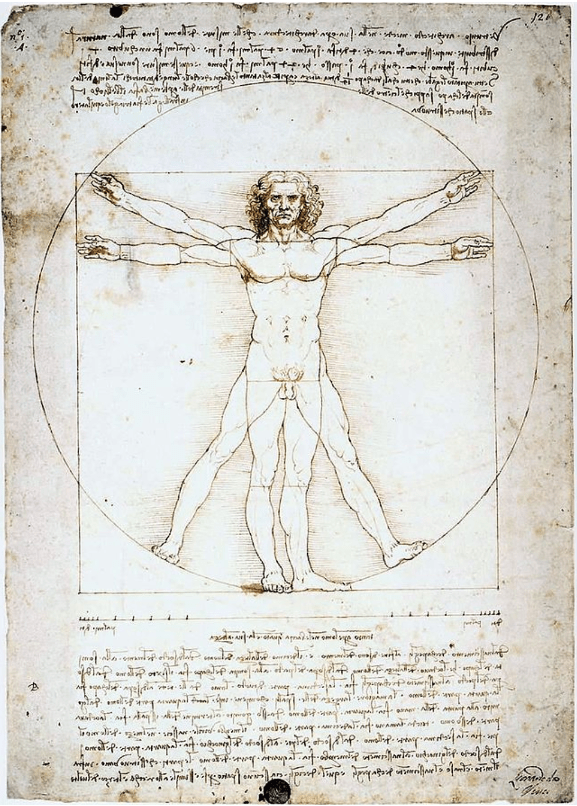
According to Rosi Braidotti (2019), critical posthumanities is an emergent field of enquiry based on the convergence of posthumanism and postanthropocentrism. Posthumanism develops a critique of the humanist ideal of ‘Man’: Vitruvian ‘Man’ as the allegedly universal measure of all things. Postanthropocentrism criticizes species hierarchy and human exceptionalism.

Vitruvian Man, Leonardo da Vinci

Post-Humanism names a critical awareness of the limitations of humanist ‘Man’. As Rosi Braidotti (2013: 1) notes, some of us are not even considered fully human in the 21st century, let alone at previous moments of Western social, political and scientific history. This exclusion occurs if by ‘human’ we mean that figure familiar to us from the Enlightenment and its legacy, that is to say, the Cartesian subject of the cogito or the Kantian “community of reasonable beings”. In more sociological terms, this is the subject as citizen, rights-holder, property-owner, and so on.

References

Braidotti, R. (2013) The Posthuman. Cambridge, UK: Polity.

Braidotti, R. (2019) ‘A Theoretical framework for the critical posthumanities’, Theory, Culture and Society, 36(6), pp. 31–61. doi: 10.1177/0263276418771486.

Posthumanism

RELATED TERMS: Actant; Anthropo-Scenes; Anthropocene – Capitalocene – Chthulucene; Plantationocene; Humanism; Object-Oriented Ontology; PostanthropocentrismPosthuman; Realism; Speculative Realism

Similarly to the term postanthropocentrism, the value of the concept of posthumanism for design practices is that it invites a reconsideration of the relationships among the narrative, the environmental and the human aspects of the overall design. That is, the notion of posthumanism enables the narrative and the environmental dimensions of a design to be seen as integral parts of being human, as a living system and as mutual life support systems, in Sloterdijk’s terms, not as supplements or additions to an essentialist mode of human being.

Karen Barad (2007: 32) argues that her agential realist framework provides a posthumanist and performative account of techno-scientific and other natural-cultural practices. By using the term posthumanist, she seeks to bring to attention the crucial recognition that non-human actants play an important role in natural-cultural practices, including everyday social practices, scientific practices, as well as practices that do not include humans.

Beyond this, her use of posthumanism marks a refusal to take the distinction between ‘human’ and ‘non-human’ for granted, and a refusal to found analyses on this presumably fixed and inherent set of categories. Any such hardwiring precludes a genealogical investigation into the practices through which ‘humans’ and ‘nonhumans’ are delineated and differentially constituted.

A posthumanist and performative account, if it is to be of value, must also avoid cementing the nature-culture dichotomy into its foundations, thereby enabling a genealogical analysis of how these crucial distinctions are materially and discursively produced (Barad, 2007: 32).

Rossini (2006) explains that the term posthumanism first appeared on the academic stage in the late 1960s, primarily in literary departments of North America, as a part of postmodernist anti-humanist movements of thought and poststructuralist theory. Its philosophical roots, Rossini suggests, can be traced back to German philosophy of the late 19th and early 20th centuries, in the form of the thought of Friedrich Nietzsche and Martin Heidegger.

After Nietzsche’s proclamation of the death of God in Die fröhliche Wissenschaft (The Gay Science, 1882), Heidegger’s Brief über den Humanismus (Letter on Humanism, 1947) in particular can be seen as the initiator of the posthumanism debate. This debate received a new and powerful impetus from the work of Michel Foucault, who proposed in the final sentence of his book Les Mots et les Choses (1966), translated as The Order of Things (1974), that the figure of “man would be erased, like a face drawn in sand at the edge of the sea.”

Critical Posthumanism

While posthumanism is a theoretical or philosophical movement that deals with the idea of post-anthropocentrism, that is, a worldview according to which the human or humanity no longer occupy a central position, critical posthumanism, specifically, aims to create awareness of the different positions that now exist within philosophical posthumanism. These include

  • a continued engagement with, and a radicalisation of, poststructuralism and deconstruction;
  • actor-network theory, with its call for a ‘post-critique’ (Latour, 2005);
  • new systems theory or second-order cybernetics (Clarke, 2014); 
  • object-oriented ontology (Harman 2018); 
  • feminist new materialisms and new realisms; and
  • bio-semiotics and cyber-semiotics, zooanthropology and decolonial and post-Anthropocene ecocriticism (Herbrechter, 2025).

References

Barad, K. (2007). Meeting the universe halfway: quantum physics and the entanglement of matter and meaning, Durham: Duke University Press.

Foucault, M. (1974) The Order of things: an archaeology of the human sciences. London, UK: Tavistock Publications.

Herbrechter, S. (2025) Critical posthumanism, in Live Handbook Environmental Humanities. Berlin, DE: J.B. Metzler. doi: 10.1007/978-3-662-70886-6_28-1.

LaGrandeur, K. (2014) What is the difference between posthumanism and transhumanism. Institute for Ethics and Emerging Technologies https://archive.ieet.org/articles/lagrandeur20140729.html [Accessed 17 June 2021]

Rossini, M. (2006). To the dogs: companion speciesism and the new feminist materialism. Kritikos, 3 (September). Available at: http://intertheory.org/rossini

Wolfe, C. (2010) What is posthumanism? Minneapolis, MN: University of Minnesota Press.