Snippet Methodology: Authoring-Curating [Snippets 4]

RELATED TERMS: Collage, Montage, Assemblage and Bricolage

Thrownness, Givenness, Foundness

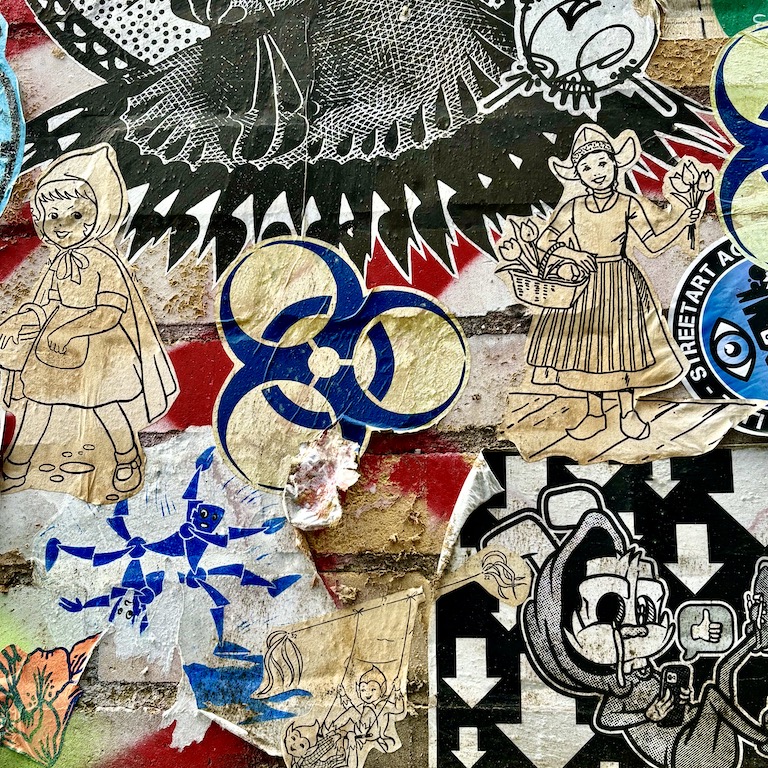
In his book Reality Hunger (2010), part of David Shields’ argument is that non-fiction is better adapted than fiction to address the realities of the modern world (Morrison, 2019). In the book, he defended his habit of quoting authors without attribution as a principled stand against copyright laws, but he also now links it to masochism: it was a way to be bad and therefore to be punished.

In The Trouble With Men (2019), the basic method remains the same. His argument is set out through a collage of thematically linked fragments. He is both author and curator. However, in this later book, the writers he draws on are given their due in square brackets.

Continue reading “Snippet Methodology: Authoring-Curating [Snippets 4]”

Narratives of Willpower; Narratives of Disease [Snippets 3]

RELATED TERMS:

“We’re transitioning from the personal failure, lacking willpower, lacking self-control narrative, to this narrative that says ‘Obesity is a disease, you need a prescribed cure’ … so we can sell weight-loss medication”.

(Marquisele Mercedes, quoted in Kuchler, 2022).

The context for this quote from Marquisele Mercedes, a doctoral student in public health at Brown University in Providence, Rhode island, is a discussion of what might be called the ‘obesity crisis’: by 2030, nearly 50% of Americans are expected to be obese; worldwide, rates of obesity have tripled since 1975, such that there were 650 million obese adults in 2016, according to the World Health Organisation. The Organisation for Economic Co-operation and Development (OECD) concluded in 2019 that developed countries’ plans to tackle obesity were, for the most part, failing.

Continue reading “Narratives of Willpower; Narratives of Disease [Snippets 3]”

Investing, Narration, Theorisation [Snippets 2]

RELATED TERMS:

A narrative of the ‘past’ is taking shape in the ‘present’ in contrast to which other narratives of the ‘future’, in the form of ‘bets’, are developing. The historical or hindsight narrative suggests that the 30 years from the 1990s to the early 2020s constituted a ‘golden’ age, a period of steady growth and stable inflation. The futuristic or foresight narrative suggests that what is coming is an era of instability. A simple duality is orders this transition: from stability to instability.

However, instability narratives which can serve as the basis for investing are difficult to sustain, as Martin comments:

“The horror show in stocks is dragging on to its third consecutive quarter, and the stories fund managers tell themselves to try to understand the world (‘narratives’, to use the grander term) are just constantly failing to stick. Rabobank describes it as ‘the maddening market pendulum’.”

(Martin, 2022)

Thus, a ‘bet’ on a coming recession in the United States in 2022, itself a replacement for a failed ‘bet’ on inflation having peaked, has already come ‘unstuck’, to use Martin’s metaphorical vocabulary.

Continue reading “Investing, Narration, Theorisation [Snippets 2]”

Politics, Reality, Narrativity [Snippets 1]

RELATED TERMS:

Unending Discourse

The entries in this Snippets series are cut from larger texts. Although not explicitly focused on design practices, they operate as discourse-collage elements that aim to provoke broader discussions about the potential ethico-political value of what might otherwise be taken solely as the aesthetic value of design practices, particularly those that incorporate narrative strategies. To paraphrase Timothy Garton Ash (2022), they are simply elements that need to be embedded in a larger theory.

Politics, Reality, Narrativity

“Since these are merely incremental steps, they must be embedded in a larger narrative. The politics of the past decade, including those that led to the vote for Brexit, reminds us that a compelling narrative is as important as what technocrats call reality. In fact, a good narrative helps create a political reality.”

(Garton Ash, 2022)

The context for this quote is a discussion of what would be an appropriate agenda for the resetting of the relationship between the post-Johnsonian, post-Brexit UK and the European Union. Garton Ash in this article also evokes Jean Monnet, one of the primary architects of European integration. Monnet suggested that, when facing an apparently irresolvable problem, one move would be to broaden the context. Parallels might be drawn here between ‘broadening the context’ and ‘widening the narrative’ by, for example, introducing a meta-narrative, on the one hand; and ‘changing the frame’, on the other hand, by altering the perspective or taking multiple perspectives.

Continue reading “Politics, Reality, Narrativity [Snippets 1]”

Mono No Aware and Ma

RELATED TERMS: Sabi and Wabi Sabi

The human-environmental interactive dimensions of the design of narrative environments may be enhanced by a consideration of Japanese aesthetics expressed through design principles. Beginning in the Heian era (794-1185), the Japanese developed a distinct sense of aesthetic perception, including such experiences as mono no aware, ma and wabi sabi. Each of these notions carries a sense of understated aesthetic experience which guide perceptions and feelings toward the natural and the cultural environment or, dare we say, the ‘technological’ environment, as that which supplements the natural – both takes the place of (supplants) and adds to (augments). Furthermore, each of these aesthetics relies upon the participants’ keen sense of their surroundings, their mindful perception of their (own and shared) experience and the dynamic relationships between them. 

Continue reading “Mono No Aware and Ma”

Narrative Environments

RELATED TERMS: Design of Narrative Environments; Narrative Environments – Celia Pearce; Narrative Environments – Environmental Psychology in Architecture

Cuyahoga River, Cleveland, 2024

A narrative environment is a many-dimensional, orientational interface. In one direction, it makes the world comprehensible and navigable. In another direction, it opens up to the challenges that the world  presents or harbours. It may explain, but in doing so it also questions; it may settle yet it also unsettles; it may ground but it also un-grounds and re-grounds. It is here, there and elsewhere; it is now, then and of other times. Another way of seeking to understand its status is to say that a narrative environment is an argument about the real, in the real.

Continue reading “Narrative Environments”

Iconic Designs and Iconic Designers

RELATED TERMS: Design History; Iconic Designs, Critical Designs

“Kenya Hara is a design icon.” (Design Intaba, 2004)

Design is often spoken of in terms of ‘iconic’ designs[1] and ‘iconic’ designers. ‘Iconic’ designs are discussed frequently in terms of individual entities – ‘things’. ‘Iconic’ designers are individual, named designers – ‘persons’. 

‘Iconic’ designs are most often product designs, fashion designs or architectural designs but now also include services and entire business practices or processes (Lees-Maffei, 2014; Bentley, 2020) [2]

‘Iconic’ designers are most often fashion designers, product designers and, more recently, digital interaction-experience designers, as listed, for example, in McDowell (2020), Abbattista (2018), Altrum (2023) and London Daily News (2024)[3].

Continue reading “Iconic Designs and Iconic Designers”

Technology, Writing, Design

RELATED TERMS: Design, Entwurf, Entwerfen

One area to be explored and developed in understanding design practices in the 21st century are the relationships among the notions of writing, technology and design. To what extent is the understanding of designing and designs aided by considering them as practices of writing and as bodies of writing, on the one hand, and as practices of technologising and ecologies of technologies, on the other hand. Equally, how are the understandings of writing and of technology aided or transformed by construing them as (forms of) designs and designing.

The contention is that much of what is discussed under the notion of technology and much of what is discussed under the notion of writing are issues that are of great significance for discussions of design practices; and, indeed, vice versa, discussions of technology and writing could be transformed by considering them in the light of issues that are pertinent to design practices.

Continue reading “Technology, Writing, Design”

Deutscher Werkbund

RELATED TERMS: Arts and Crafts Movement; Bauhaus; Gesamtkunstwerk; Hochschule fur Gestaltung

The Deutscher Werkbund was founded founded in Munich in 1907. It sought to bring together designers, manufacturers, writers and others in a progressive organisation that promoted modern design. The major difference between the Deutscher Werkbund and the Arts and Crafts movement was that the Werkbund, rather than simply rejecting machine production, sought to combine promotion of craft alongside industry. Acknowledging that craft and design influenced people’s lives, the Werkbund embraced technology in order to design objects and buildings that fulfilled the changing needs of society.

Continue reading “Deutscher Werkbund”

Promptography

RELATED TERMS: Artificial Intelligence (AI); Hypomnesis, Hypermnesis and Anamnesis; Large Language Models; Photography; Pseudomnesia; Remembering: Mnemonics, Mnemotechne and Memory; [Historical Trauma; Intergenerational Trauma; Hauntology – Psychoanalysis]

Boris Eldagsen is a major proponent of a practice that he calls ‘promtography’ [1]. It differs from photography because, as Eldagsen explains, photography is writing with light and image creation with artificial intelligence is writing with verbal prompts that draw out digital visual content and visualisation techniques from prior image-making practices. Through his ‘promtography’, Eldagsen plays with the notion of pseudomnesia, a word formed from the Greek terms pseudes, meaning false, a-, meaning without, mnasthai, meaning to remember, and -ia, indicating a condition or a quality.  

Continue reading “Promptography”