Poststructuralism

RELATED TERMS: Postmodernism; Semiotics; Structuralism; Theoretical practice; Method and methodology

In as far as it signifies an intense engagement with language and writing and it practices a non-reductionist, relational mode of thinking, poststructuralism may be of great value in considering the language components of narrative as they are articulated in specific design practices.

Metaphorically, but with difficulty, poststructuralist thinking could be translated to other contexts that involve notions of structure or structuring, as in, for example, the endeavour to apply deconstruction to architecture. [It should be noted immediately that deconstruction, while an example of poststructuralist thinking, is a mode of practice that resists being ‘applied’ or being reduced to an application or method].

In the mid- to late-1960s in France, structuralism gave birth to poststructuralism, although, some argue, the later developments were already inherent in the earlier movement. From this vantage point, poststructuralism could seem a fuller working-out of the implications of structuralism, a reinterpretation of the main assumptions about language and society as signifying systems.

For example, Verena Conley (1997: 5), contrary to some received ideas, argues that poststructuralism as a current of thought grows from the sociopolitical and environmental awareness that structuralism established. Questioning the plenitude of the human subject, structuralism led to the renewed consideration of the ethical side of the relation between the human subject and the world into which he or she was born

However, since poststructuralism also seeks to deflate the scientific pretensions of structuralism, such as in, for example, the work of Ferdinand Saussure and Claude Levi Strauss, this idea of a simple transition or unfolding is itself unsatisfactory.

In the course of a root-and-branch questioning of traditional modes of philosophical and linguistic theorising, poststructuralists also challenged other major social theories, notably Marxism. The main intellectual figures associated with poststructuralism are Michel Foucault and Jacques Derrida, but Roland Barthes and Jacques Lacan may also be included under this rubric.

The writings of Derrida in particular pose a challenge to what he regards as Saussure’s presuppositions about the (human) subject and about language. Thus, firstly, Derrida questions the view that language expresses or ‘encodes’ a subject or, more specifically, expresses the (pre-formed) intention of a subject, an intention which the receiver (listener, reader) of the expression can simply ‘de-code’ (a particular conception of ‘communication’). Secondly, Derrida disputes that speech is a primary or more originary mode of expression of this intention than writing, which is thereby seen as secondary and derivative. Thirdly, Derrida argues that writing, as a body of texts or a literature, does not in any simple sense provide a grounding for objectivity or culture.

Derrida works through these arguments in his early writings, some of which borrow techniques from avant-garde art practices, as practical demonstrations of how difference operates in and through language, leading him to coin such terms as differance (with an ‘a’) and trace and to propose that his writing performs a deconstruction, which is neither a simple critique nor a destruction (or, indeed, annihilation) of the texts with which he is engaged.

Much of the energy of poststructuralism, then, goes into tracing the insistent activity of the signifier as it forms chains and cross-currents of meaning with other signifiers and defies the orderly requirements of a pre-ordained signified.

A useful place to begin to grasp the relationship between structuralism and poststructuralism is Derrida’s (1978) essay, ‘Structure, sign and play in the discourse of the human sciences’.

References

Conley, V.A. (1997). Ecopolitics: the environment in poststructuralist thought. London, UK: Routledge.

Derrida, J. (1978). Structure, sign and play in the discourse of the human sciences. In: Writing and difference. London: Routledge, 351-370.

Jary, D. and Jary, J. (2000). Collins dictionary [of] sociology, 3rd ed. Glasgow, Scotland: HarperCollins.

Selden, R., Widdowson, P. and Brooker, P. (2005). A Reader’s guide to contemporary literary theory, 5th ed. Harlow, UK: Pearson Longman.

Postmodernism

RELATED TERMS: Critical thinking; Cultural Studies; Design Practice and Functionalism; Feminism and Materialism; Metanarrative; Methodology and Method; Modernism; Poststructuralism; Theoretical Practice;

The cosmetic is the new cosmic …

Koolhaas (2002: 190)

One question for design practices may be to consider whether any particular design might benefit from orienting itself toward the debates generated by the term postmodernism; and whether particular concepts and vocabulary from postmodern debates are adopted to think through and explain the design process. Depending on what decisions are made in this respect, a number of theoretical-practical avenues and horizons may be opened or closed.

Christine Brooke-Rose (1991), for example, suggests that, “Postmodern artists are said to write metafiction, that is fiction about fiction; to accept the aporia of significant form; or to use ‘suspensive’ irony as opposed to the Modernist ‘disjunctive’ irony; or to be facing ontological (or ‘postcognitive’) questions as opposed to an epistemological (Modernist) crisis; or again, what they have given up is all idea of achieving overall meaning or ‘totalization’, and both these versions are clearly if not explicitly linked to the fracture of the subject as stable interpreter of the real; to write ‘neocosmic’ and ‘anticosmic’ fiction as opposed to ‘cosmic’.

As John Protevi (1999) makes clear, in English-language polemics, the term postmodernism is a pejorative used against French or French-inspired thought. As a pejorative, postmodernism is used to imply that certain French intellectuals, perversely bored with reason and unwilling to use it to join the struggle for the freedom of others less privileged than themselves, frivolously embraced the rapid turnover and endless repetition of late, but still modern, capitalism, and named the age postmodern. In this way, the polemic insists, they are simply mirroring the culture industry that they supposedly take ironic pleasure in analysing, by endlessly seeking to be the latest, most fashionable, theorist with the most arcane vocabulary.

The question of postmodernism concerns the specificity of the era unfolding since the end of World War Two (post-1945). The central issue is whether capitalism has moved so far that the conceptual schemes of its early, i.e. modern, period, 1600-1945, are now outdated and in need of replacement; or whether the contemporary post-1945 world just more of the same, perhaps a bit quicker paced and more widespread, but a world nevertheless requiring only modifications of the basic concepts inherited from the modern period.

If not taken as a pejorative, postmodern thinking in France may be said to have developed through two distinct strands. One might be called ‘historical-libidinal materialism’, which developed from the thought of Marx, Nietzsche, and Freud. The other might be called a ‘post-phenomenological philosophy of radical difference’, which developed from the work of Kant and Hegel, via the German phenomenologies of Husserl and Heidegger, and the French phenomenologies of Jean-Paul Sartre, Maurice Merleau-Ponty and Simone de Beauvoir.

In the following generation, the thinkers placed under the banner of postmodernism are Jean Baudrillard (thinking about the simulacrum), Jean-Francois Lyotard (thinking about the differend), the feminist thinkers Helene Cixous, Luce Irigary and and Julia Kristeva, and the deconstructionism of Jacques Derrida (thinking about differance). In this litany may be included the genealogy of Michel Foucault (from disciplinarity via discursive practice to the apparatus or dispositif). At the outer edges of this grouping may be placed the Marxism of Louis Althusser and the psychoanalysis of Jacques Lacan. All of these thinkers may also be implicated in the intellectual developments discussed under the headings of structuralism and poststructuralism.

Alone among the most well-known French philosophers of the period since the 1960s, only Jean-Francois Lyotard uses the name postmodernism in his endeavour to define a “Post-modern Condition” in which techno-economic forces drove the West beyond the conditions that birthed the ‘modern’ thought forms of humanism, methodological individualism, rationalism, secular moralism and progressivism.

Tuija Pulkkinen, in contrasting the modernist with the postmodernist view, takes postmodernism to be non-foundational in its orientation in thinking. Thus, unlike the modern, she argues, the postmodern is not concerned to uncover the origin, the basic level, the true essence, or the pure core of the phenomena that it studies. Modern thought may be understood as seeking to expose an authentic level of reality. The postmodern, on the contrary, takes the view that there is no ultimate foundation to be unveiled.

Understood in this way, rather than concentrating on the process and possibility of unveiling, a postmodern thinker pays attention at the constructed nature of the layers in phenomena and the decisive role that action and power plays in their construction (Borren, 2010: 4-5). This approach is sympathetic to notions of emergence, inauguration and instauration in understanding beginnings and renewals, and therefore of potentially great value in understanding narrative propulsion and the emergence of different realities through the act of narration, especially those incorporated into specific design configurations.

References

Borren, M. (2010). Amor mundi: Hannah Arendt’s political phenomenology of world [PhD thesis]. University of Amsterdam. Available from https://pure.uva.nl/ws/files/937172/79478_diss_totaal.pdf [Accessed 15 April 2017].

Brooke-Rose, C. (1991) Whatever happened to narratology?, in Stories, theories and things. Cambridge, UK: Cambridge University Press, pp. 16–27.

Koolhaas, R. (2002) Junkspace, October, 100, pp. 175–190. Available at: http://links.jstor.org/sici?sici=0162-2870%28200221%29100%3C175%3AJ%3E2.0.CO%3B2-M (Accessed: 22 March 2024).

Protevi, J. (1999). Some remarks on Modernity and Post-modernism and/or Post-structuralism [Webpage]. Available at: http://www.protevi.com/john/DG/PDF/Remarks_on_Modernity_and_Post-Modernism.pdf [Accessed 24 September 2013].

Pulkkinen, T. (2001), Hannah Arendt zur Identität. Zwischen Moderne und Postmoderne, in: Kahlert, Heike und Claudia Lenz (eds.) (2001), Die Neubestimmung des Politischen (Königstein: Ulrike Helmer), 47-76.

Posthumanities

RELATED TERMS: Posthumanism; Postanthropocentrism; Posthuman;

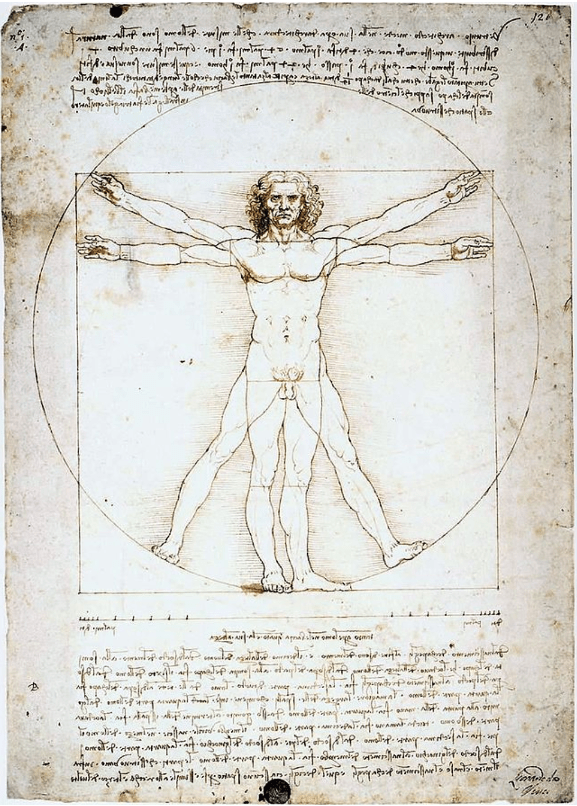
According to Rosi Braidotti (2019), critical posthumanities is an emergent field of enquiry based on the convergence of posthumanism and postanthropocentrism. Posthumanism develops a critique of the humanist ideal of ‘Man’: Vitruvian ‘Man’ as the allegedly universal measure of all things. Postanthropocentrism criticizes species hierarchy and human exceptionalism.

Vitruvian Man, Leonardo da Vinci

Post-Humanism names a critical awareness of the limitations of humanist ‘Man’. As Rosi Braidotti (2013: 1) notes, some of us are not even considered fully human in the 21st century, let alone at previous moments of Western social, political and scientific history. This exclusion occurs if by ‘human’ we mean that figure familiar to us from the Enlightenment and its legacy, that is to say, the Cartesian subject of the cogito or the Kantian “community of reasonable beings”. In more sociological terms, this is the subject as citizen, rights-holder, property-owner, and so on.

References

Braidotti, R. (2013) The Posthuman. Cambridge, UK: Polity.

Braidotti, R. (2019) ‘A Theoretical framework for the critical posthumanities’, Theory, Culture and Society, 36(6), pp. 31–61. doi: 10.1177/0263276418771486.

Posthumanism

RELATED TERMS: Actant; Anthropo-Scenes; Anthropocene – Capitalocene – Chthulucene; Plantationocene; Humanism; Object-Oriented Ontology; PostanthropocentrismPosthuman; Realism; Speculative Realism

Similarly to the term postanthropocentrism, the value of the concept of posthumanism for design practices is that it invites a reconsideration of the relationships among the narrative, the environmental and the human aspects of the overall design. That is, the notion of posthumanism enables the narrative and the environmental dimensions of a design to be seen as integral parts of being human, as a living system and as mutual life support systems, in Sloterdijk’s terms, not as supplements or additions to an essentialist mode of human being.

Karen Barad (2007: 32) argues that her agential realist framework provides a posthumanist and performative account of techno-scientific and other natural-cultural practices. By using the term posthumanist, she seeks to bring to attention the crucial recognition that non-human actants play an important role in natural-cultural practices, including everyday social practices, scientific practices, as well as practices that do not include humans.

Beyond this, her use of posthumanism marks a refusal to take the distinction between ‘human’ and ‘non-human’ for granted, and a refusal to found analyses on this presumably fixed and inherent set of categories. Any such hardwiring precludes a genealogical investigation into the practices through which ‘humans’ and ‘nonhumans’ are delineated and differentially constituted.

A posthumanist and performative account, if it is to be of value, must also avoid cementing the nature-culture dichotomy into its foundations, thereby enabling a genealogical analysis of how these crucial distinctions are materially and discursively produced (Barad, 2007: 32).

Rossini (2006) explains that the term posthumanism first appeared on the academic stage in the late 1960s, primarily in literary departments of North America, as a part of postmodernist anti-humanist movements of thought and poststructuralist theory. Its philosophical roots, Rossini suggests, can be traced back to German philosophy of the late 19th and early 20th centuries, in the form of the thought of Friedrich Nietzsche and Martin Heidegger.

After Nietzsche’s proclamation of the death of God in Die fröhliche Wissenschaft (The Gay Science, 1882), Heidegger’s Brief über den Humanismus (Letter on Humanism, 1947) in particular can be seen as the initiator of the posthumanism debate. This debate received a new and powerful impetus from the work of Michel Foucault, who proposed in the final sentence of his book Les Mots et les Choses (1966), translated as The Order of Things (1974), that the figure of “man would be erased, like a face drawn in sand at the edge of the sea.”

Critical Posthumanism

While posthumanism is a theoretical or philosophical movement that deals with the idea of post-anthropocentrism, that is, a worldview according to which the human or humanity no longer occupy a central position, critical posthumanism, specifically, aims to create awareness of the different positions that now exist within philosophical posthumanism. These include

  • a continued engagement with, and a radicalisation of, poststructuralism and deconstruction;
  • actor-network theory, with its call for a ‘post-critique’ (Latour, 2005);
  • new systems theory or second-order cybernetics (Clarke, 2014); 
  • object-oriented ontology (Harman 2018); 
  • feminist new materialisms and new realisms; and
  • bio-semiotics and cyber-semiotics, zooanthropology and decolonial and post-Anthropocene ecocriticism (Herbrechter, 2025).

References

Barad, K. (2007). Meeting the universe halfway: quantum physics and the entanglement of matter and meaning, Durham: Duke University Press.

Foucault, M. (1974) The Order of things: an archaeology of the human sciences. London, UK: Tavistock Publications.

Herbrechter, S. (2025) Critical posthumanism, in Live Handbook Environmental Humanities. Berlin, DE: J.B. Metzler. doi: 10.1007/978-3-662-70886-6_28-1.

LaGrandeur, K. (2014) What is the difference between posthumanism and transhumanism. Institute for Ethics and Emerging Technologies https://archive.ieet.org/articles/lagrandeur20140729.html [Accessed 17 June 2021]

Rossini, M. (2006). To the dogs: companion speciesism and the new feminist materialism. Kritikos, 3 (September). Available at: http://intertheory.org/rossini

Wolfe, C. (2010) What is posthumanism? Minneapolis, MN: University of Minnesota Press.

Posthuman

RELATED TERMS:  Anthropo-Scenes; Anthropocene – Capitalocene – Chthulucene; Plantationocene; Humanism; Object-Oriented Ontology; PostanthropocentrismPosthumanism;

Ferrando (2013) states that the term ‘posthuman’ has become a key term in contemporary academic debate. It addresses an urgent need for an integral redefinition of the notion of the human, following the onto-epistemological as well as scientific and bio-technological developments of the twentieth and twenty-first centuries. Like posthumanism and postanthropocentrism, posthuman is a valuable term with which to engage when considering the design and interpretation of how the narrative, the environmental and the human aspects of designs interact. [1]

Ferrando warns that the terms posthuman, posthumanism and transhumanism are confusedly intertwined. She argues that the following distinction should be kept in mind:

“for some transhumanists, human beings may eventually transform themselves so radically as to become posthuman, a condition expected to follow the current transhuman era. Such a take on the posthuman should not be confused with the post-anthropocentric and post-dualistic approach of (philosophical, cultural, and critical) posthumanism.”

(Ferrando, 2013)

According to N. Katherine Hayles (2006: 160-161), whereas, since the Enlightenment, the ‘human’ has been associated with rationality, free will, autonomy and a celebration of consciousness as the seat of identity, the posthuman in its more mischievous forms is construed as “an informational pattern that happens to be instantiated in a biological substrate”.

There are, however, more benign forms of the posthuman that can serve as effective counterbalances to the liberal humanist subject, in which, rather than as untrammeled free will, agency is recognised to be always relational and distributed. This also enables a correction of an over-emphasis on consciousness, so that a more valuable view of cognition can be developed, in which cognition is recognised as being embodied, distributed throughout the human body, and extended into the social and technological environment (Hayles, 2006: 160-161). These insights are especially valuable for the ways in which agency can be understood in designed systems and entities which intertwine narrative, environmental and human actantiality or modes of performativity.

It is usually Donna Haraway’s (1991) ‘Cyborg Manifesto’ that is credited with critically embracing the ambiguous potential that ‘becoming posthuman’ might bring, both liberating and regressive, Stefan Herbrechter (2013: 3) suggests. However, this debate really takes off with N. Katherine Hayles’s How We Became Posthuman (1999), in which she attacks the transhumanist fantasies underpinned by cybernetics that want to digitalise the body by merely repressing the old Christian and Cartesian mind-body dualism problem.

In doing so, Hayles contends, they continue a humanist, idealist and universalist tradition that occludes material differences. Rosi Braidotti, and other materialist, posthuman feminists such as Karen Barad (2003, 2007) or Vicki Kirby, for example, instead focus on the material effects of changes to human embodiment. An early version of this emphasis can be found in Halberstam and Livingston’s Posthuman Bodies of 1995.

An account of medical and cultural approaches to the posthuman can be found in Andy Miah’s (2007) chapter “Posthumanism: A critical history”.

Posthuman and Transhumanism

Kevin LaGrandeur (2014) notes two significant differences between transhumanism and the posthuman. Firstly, the posthuman focuses on information and systems theories, i.e. cybernetics. Consequently, the posthuman has a primary relationship to digital technology. Secondly, the posthuman emphasises systems, such as humans, as distributed entities, in other words, as systems comprised of, and entangled with, other systems.

Transhumanism does not emphasize either of these things.

The transhuman as a project seeks to modify the human species via any kind of emerging science, including genetic engineering, digital technology and bioengineering. Prosthetics and other modifications are used to enhance, rather than compensate for, normal human functions (LaGrandeur, 2014).

Notes

[1] Adalaide Morris (2006: 4) suggests that: “Although the term “posthuman” has been defined in various ways, the common element in its use is a synergy between human beings and intelligent machines.”

Morris (2006: 35) further notes that the term “intelligent machine” first gained currency in Alan Turing’s landmark essay “Computing Machinery and Intelligence,” in which he proposed the imitation game as a test for machine intelligence. Katherine Hayles uses ‘intelligent machine’ to denote machines performing tasks that require cognition. The example she gives are neural nets performing sophisticated decisions, expert systems making judgments, information-filtering ecologies selecting data, genetic programs designing electrical circuits. Morris argues that any entity that can perform these tasks should prima facie be considered as thinking or intelligent and uses the term to mean any digital device capable of processing data and acting on the basis of that data.

What is of more interest for design practices is not machine intelligence per se, but how human, machine, intelligent machine and variously constituted environments, from built environments to soundscapes and atmospheres to ambiences, are enfolded and interact to form what might be called adaptive living systems with emergent (not simply embodied or programmed) intelligence.

References

Barad, K., (2003). Posthumanist performativity: toward an understanding of how matter comes to matter. Signs: Journal of Women in Culture and Society, 28 (3), pp.801–831. Available at: http://www.jstor.org/stable/10.1086/345321

Barad, K. (2007). Meeting the universe halfway: quantum physics and the entanglement of matter and meaning, Durham: Duke University Press.

Braidotti, R. (2013). The Posthuman. Cambridge, UK: Polity.

Braidotti, R. and Hlavajova, M. (eds) (2018) Posthuman glossary. London, UK: Bloomsbury Academic.

Ferrando, F. (2013). Posthumanism, transhumanism, antihumanism, metahumanism, and new materialisms: differences and relations. Existenz, 8 (2), 26–32.

Haraway, D.J. (1991). A Cyborg manifesto: science, technology, and socialist-feminism in the late twentieth century. Chapter 8 in Simians, cyborgs, and women: the reinvention of nature. New York, NY: Routledge, 149-181.

Halberstam, J. and Livingston, I. (1995). Introduction: Posthuman bodies. In: Posthuman Bodies, edited by J. Halberstam and I. Livingston. Bloomington, Indiana: Indiana University Press.

Hayles, N.K. (2006). Unfinished work: from cyborg to cognisphere. Theory, Culture & Society, 23 (7-8), pp.159–166. Available at:http://tcs.sagepub.com/cgi/doi/10.1177/0263276406069229

Hayles, K. (1999). How we became posthuman: virtual bodies in cybernetics, literature, and informatics. Chicago Ill.: University of Chicago Press.

Herbrechter, S. (2013). Rosi Braidotti (2013) The Posthuman. Cambridge: Polity Press. ISBN : 978-0-7456-4158-4 [Book review]. Culture Machine, (April). Available at: http://www.culturemachine.net/index.php/cm/article/viewFile/495/516

LaGrandeur, K. (2014) What is the difference between posthumanism and transhumanism. Institute for Ethics and Emerging Technologies https://archive.ieet.org/articles/lagrandeur20140729.html [Accessed 17 June 2021]

Miah, A. (2007). Posthumanism: A critical history. In: Medical Enhancements and Posthumanity. New York, NY: Routledge, 1–29.

Morris, A. (2006). New media poetics: as we may think/how to write. In: New media poetics: contexts, technotexts, and theories. edited by A. Morris, and T. Swiss. Cambridge, MA: MIT Press, 1-46.

Wolfe, C. (2010) What is posthumanism? Minneapolis, MN: University of Minnesota Press.

Postanthropocentrism

RELATED TERMS: Anthropo-Scenes; Anthropocene – Capitalocene – Chthulucene; Plantationocene; Humanism; Object-Oriented Ontology; Posthuman; PosthumanismSpeculative Realism

The idea of ‘postanthropocentrism’, which questions the human exceptionalism and methodological individualism of certain strands of humanist traditions, is a key focus of posthumanist thinking. It is a rethinking the human in its necessary relations to the nonhuman others, such as animals, machines, objects, systems, environments, for example, that form a necessary, but generally unrecognised, part of ‘being human’. (Herbrechter, 2013: 3)

The value of the concept of postanthropocentrism for design practices is that it invites a reconsideration of the relationships among the discursive, the narrative, the environmental and the human dimensions of the overall design, conceived as a field of actantiality. The narrative and the environmental are not supplements or additions to human being but are integral parts of an extended life/support system, in Sloterdijk’s terms, of which the human is part.

References

Braidotti, R. (2013) The Posthuman. Cambridge, UK: Polity.

Herbrechter, S. (2013). Rosi Braidotti (2013) The Posthuman. [Book review]. Culture Machine, (April). Available at: http://www.culturemachine.net/index.php/cm/article/viewFile/495/516

Politics and the Political

RELATED TERMS: Agonistic politics – Mouffe; Dissensus – Ranciere; Distribution of the sensible; Biopolitics and Biopower; Arendt; Heidegger; Lefebvre

Specific narrative environments, whether explicitly designed or not, may be said to be ‘political’ or to have political effects in some sense. In order to define more clearly what might be meant by this kind of assertion and to understand how a narrative environment might be said to act ‘politically’, it is worth pondering the distinction often made by contemporary political theorists between ‘politics’ and ‘the political’.

Politics or policy (la politique in French, Politik in German), refers to concrete policy-making, decisions and actions, the struggle for power and its exercise; while ‘the political’ (le politique in French, das Politische in German) refers to the frame of reference within which ‘politics’ occurs, implying the notion of polity or political unity. This distinction, awkward in English, has made its way into Anglo-American political theory via European philosophy.

Oliver Marchart (2007) traces the history of this ‘political difference’ in Ricoeur, Arendt, Schmitt and Mouffe, through to Nancy and Lacoue-Labarthe, with diversions into Wolin, Sartori and others.

The theoretical differentiation between politics and the political occurs for the first time in German political thought with Carl Schmitt, while the habit of differentiating between these two concepts started in French thought in 1957, with Paul Ricœur’s essay ‘The Political Paradox’. This led Jean-Luc Nancy and Philippe Lacoue-Labarthe to adopt the differentiation which, in turn, motivated other theoreticians such as Claude Lefort and Alain Badiou to reformulate their own theory in terms of the political difference.

Ricoeur was responding to the failed Hungarian revolution of 1956. He was shocked by the unexpectedness of the Budapest uprising and the severity of its suppression by Soviet troops. In his view, the event demonstrated the autonomy of the political as a domain of human experience, distinct from other domains such as the moral, economic or aesthetic. The political domain has own particular problems, dynamics, modes of action and normative criteria (Schaap, 2013).

The concept of the political is frequently invoked by post-Marxists and theorists of radical democracy. Reacting against the Marxist view of politics, both Schmitt and Arendt, as does Ricoeur, insisted on the autonomy of the political. French post-Marxists, including Claude Lefort, Étienne Balibar and Jacques Rancière, have drawn on these debates about the political to critically appraise the liberal human rights consensus that emerged in the wake of the Cold War as a basis for examining how human rights might be mobilised for an emancipatory politics (Schaap, 2013).

For Lefebvre, the difference between le politique and la politique enables a distinction (i.e. not a disassociation nor a separation) between the thinking of the political and political action.

In the work of Chantal Mouffe, ’the political’ refers to the dimension of antagonism that can take many forms and can emerge in different social relations. ‘Politics’, she takes to refer to the ensemble of practices, discourses and institutions that seek to establish a particular order and to organise human co-existence in conditions which are always potentially conflicting, because they are affected by the dimension of ‘the political’.

References

Chambers, S.A. (2011). Jacques Ranciere and the problem of pure politics. European Journal of Political Theory, 10 (3), 303–326.

Marchart, O. (2007). Post-foundational political thought: political difference in Nancy, Lefort, Badiou and Laclau. Edinburgh, Edinburgh University Press.

Ricoeur, P. (1965). The Political Paradox. In: History and Truth, translated by. Charles A Kelby. Evanston, Ill: Northwestern University Press, 247-270.

Schaap, A. (2013). Human rights and the political paradox. Australian Humanities Review, 55, 1–22.

Poiesis

RELATED TERMS: Philosophy; Praxis;

Poiesis is a Greek term that means making, producing, creation, creative power or ability. Poiesis is contrasted with praxis, which means ‘doing’ or ‘acting’, by Plato and Aristotle. Excellent making requires techne, skill, while excellent doing requires arete, virtue.

The question for design practices is whether the design process and the design outcome are modes of production or modes of action or, indeed, a mixture of both.

The Aristotelian distinction between poiesis and praxis is developed by Hannah Arendt, through a re-reading of Heidegger’s Being and Time, when she distinguishes among labour, work and action (or labour, work, action and thinking). For Arendt, labour simply reproduces the labourer and leaves no trace in the world; it is through work that the world is made and re-made in its material form; while it is through action that the political and the ethical dimensions of social existence are realised as spheres of human practice.

The important question to pose of a design is how it takes part in the work of (re-)making the world and how it acts ethically and politically (and upon whom or what)?

References

Arendt, H. (1998) The Human condition. 2nd edn. Chicago, IL: University of Chicago Press.

Placemaking

RELATED TERMS: World-Building

Placemaking is about the collaboration between all elements which make the whole, coming to life through its use. It is our experience of place that gives it meaning. Placemaking is the art of creating public ‘places of the soul,’ that uplift and help us connect to each other; “making a Public Space a Living Space.”

According to Markusen and Gadwa (2010),

“In creative placemaking, partners from public, private, non-profit, and community sectors strategically shape the physical and social character of a neighborhood, town, city, or region around arts and cultural activities. Creative placemaking animates public and private spaces, rejuvenates structures and streetscapes, improves local business viability and public safety, and brings diverse people together to celebrate, inspire, and be inspired.”

References

Markusen, A. and Gadwa, A. (2010) Creative placemaking. Washington, DC: National Endowment for the Arts. Available at: http://www.nea.gov/pub/CreativePlacemaking-Paper.pdf.

Place, Space, Placiality, Spatiality

RELATED TERMS: Body; Khora or Chora; Phenomenology; Time

Place

Places are events; they ‘take place’ over extended periods of time. Places are sensible, perceivable by the senses, and intelligible, existing in thought, in the imagination and in the memory. They also constitute a third order, khôra or chora, an interval between the sensible and the intelligible. Such an interval, it is contended, permits or enables designs to ‘take place’ as neither simply sensible nor intelligible, thus allowing for the in-vention, the in-coming of the other: a ‘being-with’, a sharing, rather than a self-contained or discrete ‘being’ or a self-possessed identity. That is to say, while designs are pre-conceived in terms of intention and telos, they may exceed that conception, potentially opening to (a new, radical) inception in the ways in which they continue to act and be acted upon in the world. In their end (telos), so to speak, is their beginning (in praxis).

‘Place’ institutes a complicated, multi-perspectival, dialogical phenomenology.

From the perspective of design practices, place is intimately related to bodily forms and to the differentiations, according to the deictic, associative and affective orientations and horizons of bodies, among ‘my’ places, ‘your’ places, ‘our’ places and ‘their’ places, all of which form complex topological spaces, whose boundaries are often marked by designed artefacts and environments.

As Cecena Alvarez (2015) notes, “A place is not a portion of space. Place is the lived expression of the spatial apprehension of reality.”

Continue reading “Place, Space, Placiality, Spatiality”