Econarratology

RELATED TERMS: Narratology

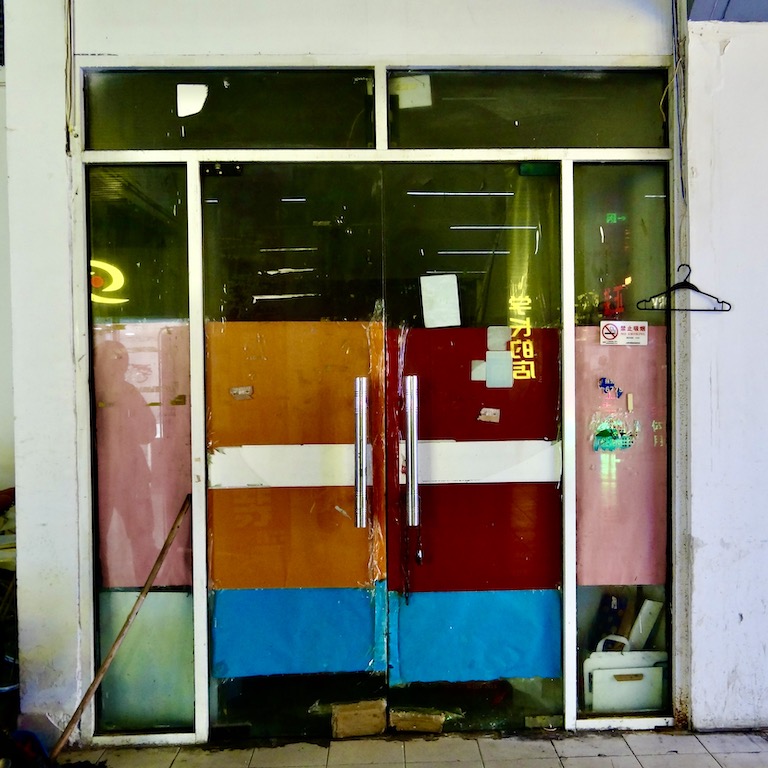
What does this image ‘say’?; and how does it ‘say’ it: What does this image ‘show’?

The question underlying this post is the issue of what an adequate narratology would be for the practice of the design of narrative environments, an approach to designing that emphasises the (necessary) inter-relationships among people, narratives and environments.

In this context, the potential value of econarratology can be seen in three respects.

Firstly, it is an example of postclassical, contextualist narratology, which relates the formal, material and media elements of a narrative discourse to environmental, cultural and social systems to generate situated, meaning-creating interactions and interpretations; in short, people, narrative and environment are all brought into play in econarratology. 

Secondly, it takes account of the cognitive dimensions of the narrative-environment interaction. This allows for the possibility of bringing into play the 4E cognition paradigm that the design of narrative environments acknowledges, in which cognition, learning, intelligence and interaction are seen to be embodied, extended, embedded and enactive. 

Continue reading “Econarratology”

Burnout Society

RELATED TERMS: Disciplinary Societies and Societies of Control

The question underlying this post is whether design practices are carried along by the shift proposed by Byung-Chul Han (2015), the impetus coming from elsewhere, or are they highly active proponents and drivers of the change, providing the materials for depressive evaluations of oneself, compulsive inattentiveness or hyper-attention as a scattered mode of awareness, and creative and productive burnout. Aside from this, there remains the question of how well this depicts societal processes in the period since the 1990s and whether the occurrence of Covid 19 might alter the characterisation of societal organisation so that it accommodates, perhaps in contradictory ways, the articulation of immunological and hyperpositive responses to disease and unease, a movement reinforced by the confused interaction of globalisation (hybridisation) and nationalist protectionism (immunological defence) evident in the mid-2020s.

From Immunological Organisation and Defence to the Violence of Positive Sameness

Byung-Chul Han (2015), the Korean-German philosopher, argues that the 20th century was an immunological age, an epoch in which distinctions between inside and outside, friend and foe and self and other were of paramount importance. However, in his view, a little-acknowledged paradigm shift has been underway for some time, beginning around the time of the ending of the Cold War in 1989-1991. In this emerging paradigm, contemporary society increasingly escapes the immunological scheme of organisation and defence and instead is marked by the lessening in importance of the categories of otherness and foreignness.

Continue reading “Burnout Society”

Technology, Process Knowledge, Temporality and Design

RELATED TERMS: Hypomnesis, Hypermnesis and Anamnesis; Methodology and Method; Practice

The process of piling, in expectation of … re-using? … discarding? … re-processing? …

Dan Wang (2025: 71) distinguishes among three meanings of technology. The first is technologies as tools, for example, the pots, pans, knives, ovens and so on required to prepare a meal. Second, technologies can operate as explicit means of instruction, for example, the recipes, blueprints or patents that can be written down, followed and passed on. Third, and for Wang the most important, is technologies as process knowledge, that is, the proficiency gained from practical experience. This last is often discussed in terms of know-how, institutional memory and tacit knowledge, as Wang (2025: 74) notes.

To explore the value of his position, Wang brings to attention the specificity of Chinese process knowledges in the context of the history of architecture. He notes that builders across the world, from the Ancient Egyptians to medieval Europeans and more recently, have sought to arrest the erosion that affects buildings through time by using durable materials, such as stone, which endow the building with a degree of longevity and endurance, if not permanence. However, as discussed by Simon Leys in his 2009 book The Hall of Uselessness, In China builders have embraced the passage of time by using exceedingly perishable, often fragile, materials. By building temples out of wood, with panelling sometimes made of paper, Chinese architecture had a built-in obsolescence. This means that the buildings, if they are to be preserved, demand frequent renewal. Rather than employing the strongest, most durable materials, making the building last, Chinese builders instead embraced transient materials as a means towards the prolongation of designs whose goals are spiritual, by making the process of (re-)building the persistent element.

Continue reading “Technology, Process Knowledge, Temporality and Design”

Governance, Politics and Design

RELATED TERMS: Politics and the Political

That forms of governance are ‘designed’ is often acknowledged only in passing. For example, the trend towards authoritarianism in the politics of the USA is recognised by some to have accelerated under Trump rather than to have begun with him. To argue that US authoritarianism began with Trump, Abdelrahman ElGendy (cited in Roth, 2025) comments, is to assume that the USA was a healthy, functioning democracy that faltered, which ElGendy thinks is not the case. He continues,

“When a democracy is designed with this capacity for authoritarianism you’re never more than one election away from its reappearance. That’s not an accident, that’s a design flaw.” (ElGendy, cited in Roth, 2025)

Reference

Roth, A. (2025) Has Trump succeeded in normalising American autocracy?, Guardian, 31 August. Available at: http://www.theguardian.com/us-news/2025/aug/31/trump-american-autocracy-authoritarianism (Accessed: 31 August 2025).

World as Geoeconomics and Geopolitics [Snippets 10]

RELATED TERMS: World; World-Building; Design, the Buddhisms, Geo-Politics and Geo-Economics

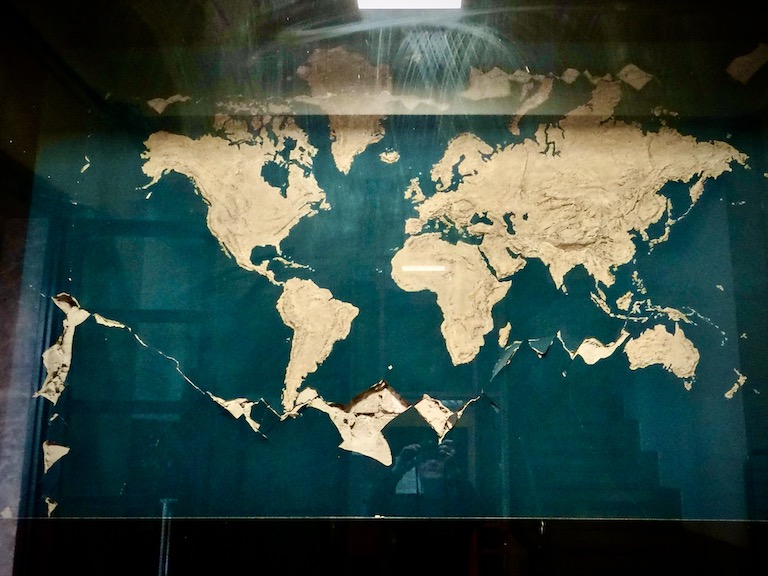
Cracked and Peeling World Map

The context for design practices in the 2020s, the macro framing ‘world’ or the macro framing narrative environment in which they operate, might be described as a period in which the existing world order is in transition. Many of the practices and verities of neoliberal globalisation are being rejected or are falling apart. As a Guardian (2025) editorial puts it, “The postwar order stood on three pillars: US dominance, hydrocarbons and open trade. Today, all three are cracking…” 

This current situation can be seen in the light of an economic-financial history of the 20th century, such as the one outlined by Gillian Tett (2025). The narrative path begins in the late 19th century with imperialist globalisation; it passes through the protectionist, nationalist populism of the 1918-1939 period; on to the welfarism and international co-operation of the post-1945 period; and through to the neoliberal globalisation of the 1980s to 2008. The narrative then moves back towards protectionist, state-interventionist, nationalist populism, beginning in the post-2008 financial crisis and intensifying in the Covid-19 period and its aftermath. 

Where do design objects, services and strategies, as, in effect, our media-material perceptual ecosystem that enables us to ‘see’ and to ‘feel’ this enframing world, stand in this shifting terrain, a question that cleaves most closely to that of what are their (assumed) political-ideological stances in relation to their (actual) performativities or actantialities: what designs do, how they do what they are doing and whether they are capable of acting otherwise? Taking note of the discussion in Design, the Buddhisms, Geo-Politics and Geo-Economics do design practices find themselves in the 2020s in an analogous position to the liberal activists in the USA in the 1980s in that they are playing a role in a morality play designed to help solidify the USA’s global political and economic domination, even while they may be critical of that aspiration. A major difference, however, is that the drama has in the meantime dropped any illusion of there being the possibility of occupying a moral high ground, opting instead for a narrower geo-psycho-drama in which domination is assured solely through force.

Continue reading “World as Geoeconomics and Geopolitics [Snippets 10]”

(The) Common (World)

RELATED TERMS: (The) Everyday and Design; World; Worldlessness

USE FOR: Shared World; World in Common

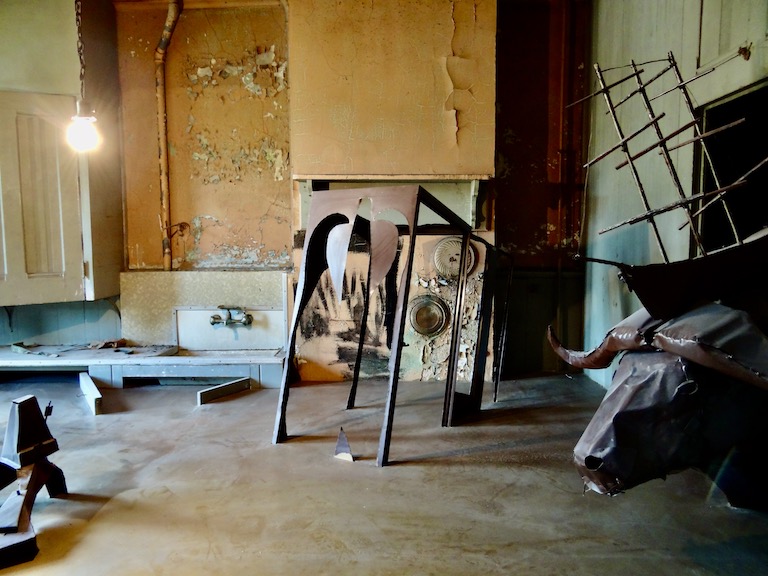
The Common: A domestic interior, once private, becomes the setting for an art gallery exhibition, now common

You-I interconnectedness and Being-with

The initial discursive sources for the recognition of the common, as the shared world, the only world that there is, are firstly Beata Stawarska’s dialogical phenomenology, which establishes the ontological primacy of the the You-I relation over the linguistic and the agential-performative ‘I’ as well as the individuated, actantial embodied ‘me’; and secondly Jean-Luc Nancy’s assertion of the ontological primacy of the relational being-with in the unfolding of being-in-the world.

Thus, for example, in Nancy’s account, singular beings cannot be abstracted from their spatiality or spaciousness: the space they inhabit through movement; the space they take up as ‘substantial’ entities; and the space opened by this operating and structuring. Being in the world assumes appearance and disclosure in and of spatial forms, incorporating movement. Singular beings are intimately bound up with the spatial and temporal unfolding of the world. Thus, being, space and world are inter-dependent (Dikec, 1997: 66).

Continue reading “(The) Common (World)”

Design, the Buddhisms, Geo-Politics and Geo-Economics

RELATED TERMS:  Mono No Aware and Ma; Sabi and Wabi-SabiWorld as Geoeconomics and Geopolitics [Snippets 10]

Preamble

In a post on David Lynch’s film set design in relation to the design of narrative environments (Narrative Environments – Lynchian Set Design), the significance of Tibet, meditation and yoga in Twin Peaks was seen to exhibit signs of intertextuality with late Victorian European and American encounters with Asian religions (Krug, 2017). A genealogy of the construction of the ‘supernatural’ in Twin Peaks can therefore be traced to this particular period in the Western encounter with Buddhist traditions. 

Such an intertextual semiotics is valuable. It shows the links between literary data from South Asian literature dating from as early as the first millennium and a pop-cultural television phenomena addressed to an early 1990s television audience. If one relies upon this means alone, however, to explain the appearance and significance of the themes of Tibet, meditation and yoga in Twin Peaks, there is a risk that it becomes formal and ahistorical. In discussing what these signifiers mean, the issue is not simply where such tropes have come from, their borrowed meanings, but also why they are (re-)appearing at this particular historical moment, their contemporary significance.

Continue reading “Design, the Buddhisms, Geo-Politics and Geo-Economics”

Narrative Environments – Lynchian Set Design

RELATED TERMS: Actant; Defamiliarisation; Liminality; Design, the Buddhisms, Geo-Politics and Geo-Economics

Greer Lankton, It’s all about ME, not you, 1996/2009

According to Edwin Heathcote (2025), the interiors in David Lynch’s films suggest that, “our environment is somehow theatrical, temporary, a dream – an expression of the subconscious.” Lynch, while working with production designers, “conceived of these rooms as spaces with every bit as much character as the actors.”

In other words, in the language of Greimasian narrative semiotics and Actor-network theory, the room, as environment, is an actant. The room ‘acts’. It has ‘agency’ or rather actantiality, potential to act in an ensemble or network situation. In Lynch’s case, the designed rooms act to ‘disorient’ the audience-spectator, by imbalancing the degree of ‘agency’ distributed among the actors and the environment as ‘set’ or ‘set-up’. In turn, this alters the amount of attention that needs to be paid to the ‘set-up’ as much as to what the actors ‘do’ and ‘say’. Lynch’s interior sets perform an act of defamiliarisation and ‘making strange’. An awareness emerges that ‘this is a set-up’. ‘We’ have been ‘set up’. We have, like the actors in the drama, been ‘framed’.

Continue reading “Narrative Environments – Lynchian Set Design”

Black Studies

RELATED TERMS: Afrofuturism; Afro-Pessimism; Critical Race Theory; Whiteness Studies 

Theaster Gates – Collage presented in exhibition 1965: Malcolm in Winter: A Translation Exercise, White Cube, 2025

Writing in 2020, Dhanveer Singh Brar and Ashwani Sharma contend that,

“In a manner similar to ‘French’ post-structuralism in the 1970s and 1980s, U.S. Black Critical Thought offers an urgently needed – if not always satisfactory – grammar to address the racial faultlines of UK knowledge formation.”

In discussing how this more recent intellectual importation came about, Brar and Sharma trace the prior influence of black British cultural studies, developed by the likes of Stuart Hall and Paul Gilroy from the 1970s to the 1990s, on what they are calling US black critical thought, practised by the likes of Hortense Spillers, Saidiya Hartman, Sylvia Wynter, Fred Moten, Stefano Harney, Frank Wilderson, Jared Sexton, Nahum Dimitri Chandler, David Marriott and Denise Ferreira da Silva (Baker, Diawara and Lindeborg, 1996; Brar and Sharma, 2020).

It is this cycle of influence that makes US black critical thought so recognisable in the UK.

Black Studies in the USA

Marable (2008: 2) points out that, since the founding of Black Studies in academic institutions in the USA in the 1960s, there has been an ideological debate about what the appropriate geopolitical and cultural boundaries for the study of blackness should be. Marable outlines three main approaches:

  • The Afrocentric approach argues that the black experience in the USA is but a subsidiary of a much larger African civilisational story. Therefore, Black Studies should trace its intellectual lineage back to classical Egyptian civilisation.
  • The African Diasporic approach, taking note of the destructive effects of the transatlantic slave trade, focuses on the cultural and political resistance of African Diasporic populations scattered across North America, South America, the Caribbean, Europe and Asia as a decisive element in the making of the modern world.
  • The African American-centric approach, developed by scholars educated in the USA, emphasise the struggles waged by African Americans to achieve political rights and equality against the American nation-state.
Continue reading “Black Studies”

Hallucination and Confabulation

RELATED TERMS: Large Language Models; Paradox of the Anonymous: When We Wake [Snippets 9];

Hallucination or Confabulation?

One way of conceiving the co-dependence or collaboration between human agency and artificial intelligence (AI) agency is to consider it through the lens of the metaphors used to understand the processes of Large Language Models (LLMs). Smith, Greaves and Panch (2023), for example, argue that using a precise and accurate metaphorical language to convey the complex functions and malfunctions of LLMs can lead to a better understanding of these powerful digital technologies. Through a meticulous choice of metaphors, taken from the language used to describe human neuro-cognitive processes for example, a better shared understanding of the complex concepts in the field of AI and LLMs may be achieved.

Thus, Smith, Greaves and Panch (2023) argue that employing the term ‘hallucination’ to characterise the inaccurate and non-factual outputs generated by LLMs implies that LLMs are engaged in perceiving, in other words, becoming consciously aware of a sensory input. However, since LLMs do not have sensory experiences, they cannot mistakenly perceive them as real. Therefore, the term ‘hallucination’ misrepresents the kind of process occurring within LLMs that it aims to characterise. The LLM is not ‘seeing’ something that is not there. Rather, the LLM is making things up.

Continue reading “Hallucination and Confabulation”