RELATED TERMS: (The) Everyday and Design; World; Worldlessness
USE FOR: Shared World; World in Common
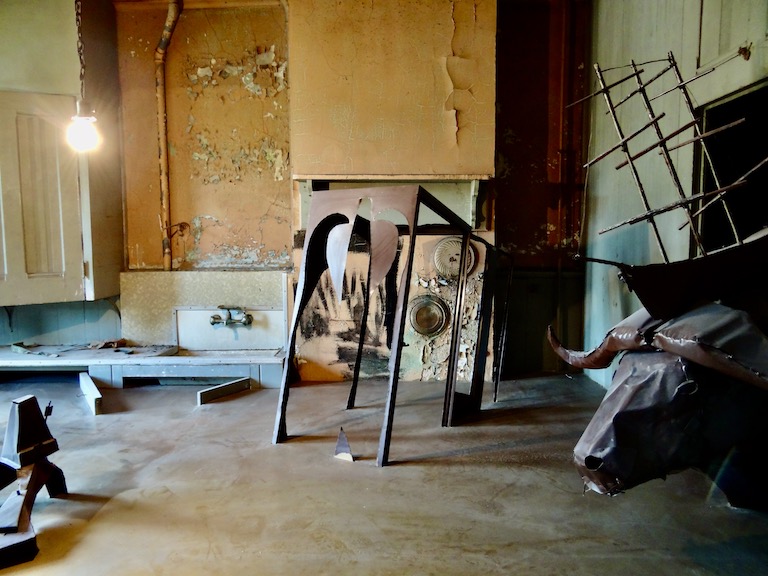
You-I interconnectedness and Being-with
The initial discursive sources for the recognition of the common, as the shared world, the only world that there is, are firstly Beata Stawarska’s dialogical phenomenology, which establishes the ontological primacy of the the You-I relation over the linguistic and the agential-performative ‘I’ as well as the individuated, actantial embodied ‘me’; and secondly Jean-Luc Nancy’s assertion of the ontological primacy of the relational being-with in the unfolding of being-in-the world.
Thus, for example, in Nancy’s account, singular beings cannot be abstracted from their spatiality or spaciousness: the space they inhabit through movement; the space they take up as ‘substantial’ entities; and the space opened by this operating and structuring. Being in the world assumes appearance and disclosure in and of spatial forms, incorporating movement. Singular beings are intimately bound up with the spatial and temporal unfolding of the world. Thus, being, space and world are inter-dependent (Dikec, 1997: 66).
As Dikec (1997: 66) interprets Nancy, space, as a form of appearance, allows for the disclosure of phenomena. At the same time, as a form of actuality, space allows for relations of simultaneity and mutual exposure which provides a stage or platform upon which singularities open for co-appearance. Thus, being is materialised through spatial forms and in spaces opened up by the mutual exposure of singular beings. In short, Nancy offers an account based on the disclosure of and exposure in a world that is spatially ordered and aesthetically apprehended.
From a design practices perspective, it should be pointed out that this spatiality and spaciousness is not ‘pure’, in the sense of being solely an intersubjective experience. It is mediated by materialised markers that stand for, stand in place of and stand in the way of mutual co-presentation, as part of mutual co-appearance, that is, part of the proposed dialogical phenomenology. The appearance is ‘clothed’, that is, both apparent and concealed. The stage ‘constructed’, as both actual and potential, artificial and factual. The sense of the world emerges as a passage back and forth between act (and fact) and representation (and imagination), with action itself weaving together the more materialised with the more idealised elements.
Afterword
While dialogical phenomenology recognises the co-constitution of the shared or common world, what must also be acknowledged are the exclusions which this world-forming simultaneously enacts; the kinds of ‘worldlessnesses’ that it brings into play.
In short, the common world, although the only world there is, is ‘not all’. This is a paradoxical theme that pervades those philosophical and theoretical discourses that concern themselves with modernity and the modern ‘world: ‘our world’, its hierarchies and its exclusions; its ontological, axiological and epistemological ‘violences’; its designs.
References
Dikec, M. (2015) Space, politics and aesthetics. Edinburgh, UK: Edinburgh University Press.
Nancy, J.-L. (1997) The Sense of the world. Minneapolis, MN: University of Minnesota Press.
Stawarska, B. (2008) “You” and “I”, “here” and “now”: spatial and social situatedness in deixis, International Journal of Philosophical Studies, 16(3), pp. 399–418. doi: 10.1080/09672550802113359.
Stawarska, B. (2009) Between You and I: Dialogical Phenomenology. Athens, OH: Ohio University Press.
 Incomplete ...