RELATED TERMS: History; Large Language Models; Hallucination and Confabulation
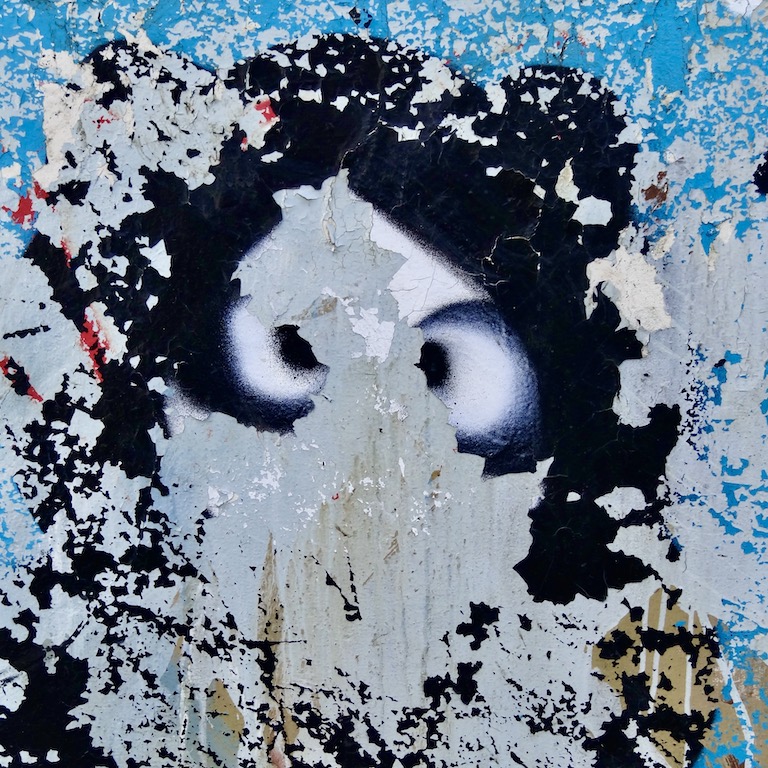
“The Arcades Project, Benjamin’s great study of 19th-century Paris, is in Jameson’s phrase an unfinished ‘collection of clippings’.”
“Benjamin thought of writing a book consisting entirely of quotations; Wittgenstein contemplated writing one consisting entirely of jokes.”
(Terry Eagleton, 2021)
Walter Benjamin and Brian Eno, in different decades, in different contexts and in different ways, are both ‘against’ the ‘great man theory of history’. However, this insight, gleaned from journalistic discourse, takes place in the context of a profile of Benjamin (Hancox, 2025) and an interview with Eno (Shariatmadari, 2025), who are both treated implicitly and explicitly as ‘great men’ who have, in some way, ‘made history’.
This type of paradox, or is it simple inconsistency, might suit Benjamin well, if Hancox (2025) is to be believed, since Benjamin, “rarely set foot in a synagogue but was greatly influenced by Jewish mysticism; he never joined the Communist party but was one of the century’s most important Marxist intellectuals;” while, as a (Jewish, Marxisant, philosophical) intellectual, Benjamin nevertheless, “saw the value of taking popular culture, mass media and the business of living seriously”. [1]
Benjamin’s legacy, a “call to action [that] remains unfinished,” according to Hancox, is, “the difficult but vital work of honouring the anonymous rather than the renowned” and to defend, “the right to be unremarkable” (Hancox, 2025). In responding to that call, we must continue to ‘honour’ the anonymous and defend their ‘right to be unremarkable.’ [2]
Hancox argues that Benjamin’s Theses on the Philosophy of History also serves as a, “defence of history against fascists and Stalinists who would rewrite it, but also [a defence] against any conveniently tidy views of the past, or tired myths of linear historical progress – against … the homogenising blandness of canonical history.” Rather than fascist, Stalinist, opportunistic, progressive or canonised history, Hancox projectively ascribes to Benjamin a wish or a command for us, “to sift through the rubble, bring up the dead, to reassemble history from below.”
In other words, Benjamin ‘wants us’ to rewrite history ‘from below’, but using what methods of remembering, recovering, or indeed ‘creating’, the evidence from which such a history is to be assembled, or rather reassembled? As forensic archaeological gravediggers, do we put the already existing evidence together differently (reassemble the existing assembly otherwise, change the plot, so to speak) or find, discover or invent new evidence, to form a novel assembly from the found assemblage.
For this second option, a method of discovery-invention is most certainly needed. Here, the insight of Caryl Phillips may be useful, again gleaned from a journalistic source, an interview (Nelson, 2025). Phillips is quoted by Nelson as saying, “A piece of non-fiction can take a walk around a subject. But as soon as you start to do a deep dive … it becomes fiction.” When we do a deep dive, then, dig up the bodies and start to speak on their behalf, or ‘make them speak’, albeit through us, as characters, we are engaging in fiction.
Like the people aphorised by James Baldwin (1964: 138), invoked by Nelson (2025), such fictional characters are “trapped in history and history is trapped in them.” The context of Baldwin’s aphorism is his approval of the utterance of James Joyce’s character Stephen Dedalus, for whom “History … is a nightmare from which I am trying to awake.” Baldwin responds, “Joyce is right about history being a nightmare — but it may be the nightmare from which no one can awaken.”
Caryl Phillips is perhaps a little more optimistic. While he is interested in characterising, “the vulnerabilities carried and concealed by human beings on their journeys through the world” (Nelson, 2025), he does not necessarily see that as a nightmare from which no one can awake. Rather, “we are all, to a certain extent, a product of the history that’s going on around us, and for some people history is liberating but for many it is not.” He continues, “For most migrants the story of history is one they have to flee” (Nelson, 2025).
The figure of the migrant fleeing the history in which they are immersed, or trapped, and which pervades their very being, or is trapped in them, a nightmare from which they may never awake, has become, for Doris Salcedo, “something more universal” (Adams, 2025). Her work, Uprooted, began as a response to a particular crisis, that of climate migrants. However, as the frames of reference of her work kept on expanding, she began to think that it referred to all of us, to our shared situation: “We are losing our home, by destroying this planet” (Adams, 2025). This takes the horizon of her concept of ‘domicide’, the deliberate bombing and destruction of places that people call home, from local conflicts to its planetary extreme[3]. Like Phillips, who calls New York his ‘way station’ rather than his home, we are all at a stopover location in our various histories of displacement. As Phillips elaborates in an interview with Anthony Cummins (2025), “I used to think that migrancy put you at odds with the main narrative … [of] rootedness. … As I’ve got older, I’ve realised migrancy is the main narrative.”
Hancox fictionalises that Benjamin, “wanted us to see that every story of a once-in-a-generation genius fleeing death or destruction exists amid the stories of equally precarious ordinary lives, as rich and important in their ostensible mundanity as that of any great philosopher, renowned actor or Olympian athlete.” Salcedo equally is engaged in ‘honouring the anonymous’, but in her case it is through, “the often courageous journalistic act of bearing witness” (Adams 2025). She has, “collected the stories of survivors and victims of war: people who have seen loved ones tortured and murdered, women who have been raped” (Adams, 2025). Those testimonies are the starting point for her sculptural works, “dramatic acts of commemoration” that create imaginative spaces for mourning (Adams, 2025).
Adams asks Salcedo how she keeps herself from despair. She replies, “We just have to keep working – harder than ever before.” Which, by “a commodious vicus of recirculation” (Joyce, 2012), brings us back to Brian Eno. For Eno, everyone must assume the responsibility for their own agency, for their own creative life (Shariatmadari, 2025). Eno argues that, “if we want a new world, we have to start making it right now, and whatever we are doing, we have to make it as though we are in that new world.”
In other words, as though we have awoken from the nightmare of history, from the endless domicidal war in which we are engaged!
Afterword
Who are these ‘unremarkable’ others, the anonymous, the nameless, whom we are to commemorate? For Phillips, it is Another Man in the Street. However, what if, Shariatmadari (2025) asks, that creative agency, to which Eno refers, belongs to an artificial intelligent (AI) agent rather than a human auteur?
In response to Shariatmadari’s question, Brian Eno argues that you would still need a curator and an editor, that is, a human being, with whom the AI agent has to dialogue and by whom it is, in a sense, supervised. [This point is further elaborated in Hallucination and Confabulation] This points to a certain co-dependence of human and AI agency. The terms of that proposed negotiation between human and artificial intelligence, however, are mediated by actors or agents of a yet further kind: corporations as legal persons, enacting a different kind of (singular yet collective) ‘anonymity’.
Our ‘anonymous partners’, are engaged in selling us consumer electronics, from televisions, smart home systems to smartphones; operating the telecommunications networks and data centres that link us and monitor us; and providing the autonomous driving solutions in our electric cars. They design and make semiconductors and solar panels; and they operate hotels and surveillance systems for local governments (in China). All of which elements and operations are gradually becoming more infused with generative artificial intelligence that our ‘anonymous partners’ are researching and developing (Olcott, 2025).
The question that remains is: are our anonymous partners, our design, manufacturing and operational partners, our partners in shaping the world, themselves engaged in keeping us asleep-immersed in the (domicidal) nightmare of history? Which raises a further question, pertinent to this website: how are the professional practices of design, design education, design as public discourse and design as material culture implicated in this (ongoing, domicidal) history?
Notes
1: A possible residual counter-suggestion may seem to be that if he were (truly, fully, faithfully, properly?) Jewish, if he were (truly, fully, faithfully, properly?) Marxist, if he were (truly, fully, faithfully, properly?) a philosopher, he would take none of that (that is, popular culture, mass media and everyday life – “the business of living”) seriously. He would have to discount them as ’trivial’, commonplace; not matters worthy of genuine (religious, Marxist, philosophical) concern. However, they were for Benjamin a matter of urgent practical concern: “The complete uncertainty about what the next day, even the next hour, may bring, has dominated my life for weeks now. I am condemned to read every newspaper … as if it were a summons served on me in particular, to hear the voice of fateful tidings in every radio broadcast.” (Benjamin, cited by Hancox, 2025).
2: Again, is there a possible residual counter-suggestion here? Is there a parallel right to be ‘remarkable’, to be ‘exceptional’, in short, to be ‘great’, a position from which the right to be ‘unremarkable’ can be defended, but in what court and court of appeal? Is ‘history’ such a court? If so, where does it take place? What are the grounds of this defence and on what ground does the defender stand: one who is as unremarkable as the unremarkable themselves? Would that not be self-serving; or perhaps self-founding and self-sustaining?: “I, unremarkable as I am, defend the right to be unremarkable, the right to exist unremarkably.” Who would mark and (continue to) re-mark, to commemorate, that remark, that (unremarkable yet messianic) performative utterance: “I am that I am”? In being as unremarkable as I am, as we are, as they are, may not the significance of my, our, their story, pass unmarked and unremarked, because unremarkable. Have we entered the domain of the unremarked mark – pure eventuality, perhaps, pure event, pure passing, unmarked and unremarked, not just forgotten, not just forgettable but never marked and therefore unremarked, already passed in passing?
3: Porteous and Smith (2001: ix) write, “Currently, no word exists for the action of destroying peoples’ homes and/or expelling them from their homeland. We suggest the neologism ‘domicide,’ the deliberate destruction of home that causes suffering to its inhabitants. A second term, ‘memoricide,’ concerns deliberate attempts to expunge human memory, chiefly through the destruction of memory’s physical prop, the cultural landscape (e.g., in Muslim Bosnia, 1990s).”
Bibliography
Adams, T. (2025) “Most of my work is a response to some kind of war’ [Interview with Doris Salcedo]. The Observer, 12 January, Review pp.18-19, 21.
Baldwin, J. (1964) Stranger in the village, in Notes of a native son. New York, NY: Bantam Books, pp.135–149.
Cummins, A. (2025) ‘It was Britain that made me a writer” [Interview with Caryl Phillips]. The Observer, 19 January, Review p.45.
Eagleton, T. (2021) The Marxist and the Messiah, London Review of Books, 43(17). Available at: https://www.lrb.co.uk/the-paper/v43/n17/terry-eagleton/the-marxist-and-the-messiah (Accessed: 4 September 2021).
Hancox, D. (2025) Final days, Financial Times Magazine, 11 January, pp. 16–19.
Joyce, J. (2000) Ulysses [with an introduction by Declan Kiberd]. London, UK: Penguin Books.
Joyce, J. (2012) The Restored Finnegans Wake. Edited by D. Rose and J. O’Hanlon. London, UK: Penguin Classics.
Nelson, F. (2025) Reading is an act of empathy [Interview with Caryl Phillips], Financial Times, Life and Arts, 11 January, p.8.
Olcott, E. (2025) The domination of Huawei. Financial Times, Life and Arts, 11 January, p.9.
Porteous, J. D. and Smith, S. E. (2001) Domicide: The Global destruction of home. Montreal, CA: McGill-Queen’s University Press.
Shariatmadari, D. (2025) ‘I don’t want to be revered’ [Interview with Brian Eno and Bette Adriaanse]. The Guardian, Books, 11 January, pp.45-47.
 Incomplete ...
One thought on “The Paradox of the Anonymous: When We Wake [Snippets 9]”