RELATED TERMS:
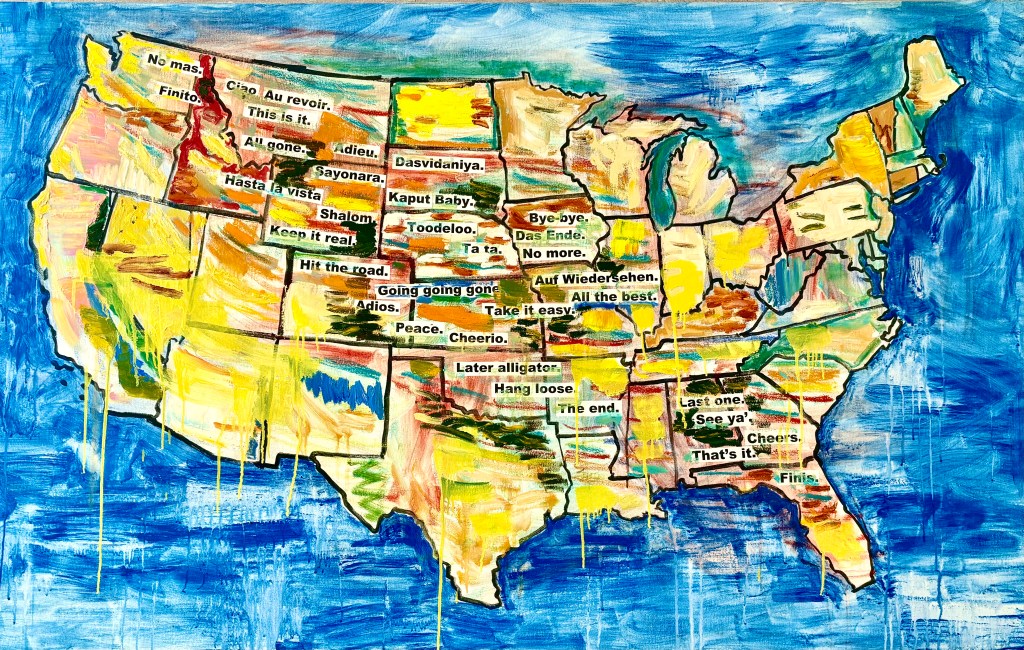
In 1932, Gertrude Stein wrote that America is,
“the oldest country in the world because by the methods of the civil war and the commercial conceptions that followed it America created the twentieth century, and since all the other countries are now either living or commencing to be living a twentieth century life, America having begun the creation of the twentieth century in the sixties of the nineteenth century is now the oldest country in the world.” (quoted by Frank, 2024)
Edwin Frank (2024) comments: “In this nicely gnomic pronouncement there’s the wit of Oscar Wilde as well as — looking at the Civil War as method — an almost Leninist realism and sangfroid …”
This raises a number of questions, such as, are we still living in the 20th century or are we now in the 21st century? When, for Stein, would the 20th century have ended, if it began in the 1860s, and what now would be the oldest country in the world? If we follow Hobsbawm, for example, who uses a very different periodisation, the 20th century was short, spanning from the start of the First World War in 1914 to the fall of the Soviet empire in 1989/1991, the response to the question of when is it we are living is that we are firmly in the 21st century. For Hobsbawm, Stein’s 20th century would belong to the long 19th century, 1789-1914.
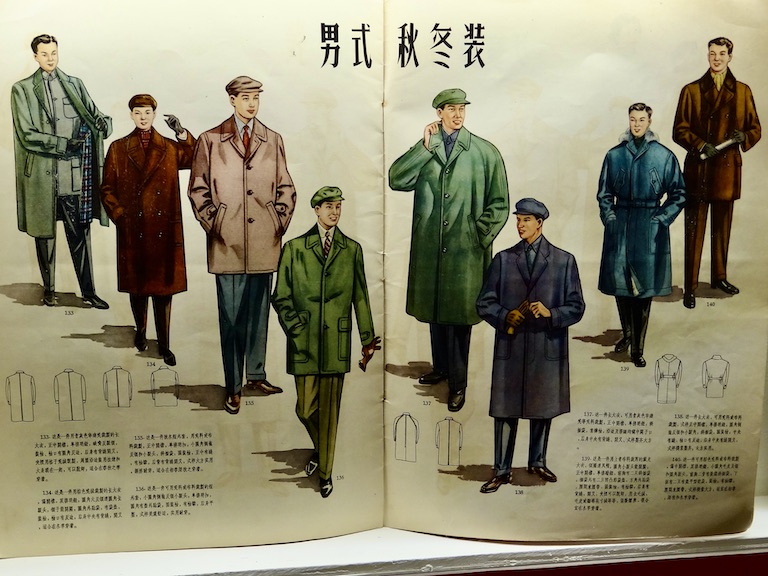
If we accept Hobsbawm’s starting date, what are the orientations that might differentiate the 21st from the 20th century which was guided, according to Stein, by the double-headed methods of mechanical industrial militarisation and commercialisation? Perhaps the difference is mainly marked by a skin of broadcast media and subsequent digitisation, an evolution of the envelope of technical, communicational objects that environs us, altering the media ecology and some of the outputs?
The methods, though, may remain similar: cyber-warfare and e-commerce woven through mechanical industrial militarisation and commercialisation, which, from the perspective of this this website, incorporate multiple layers of digital-material design within layers of political-economic-ecological design, all as aspects of the processes of ‘design designing’. In which case, is America still the oldest country in the world, having entered the 21st century first while others have subsequently entered or are entering into 21st century life?
How are we adapting to the 21st century and how is it unfolding locally and globally? How can we understand it in order to orient ourselves and act in it? Are we all part of a precariat-proletariat, one that extends the sense of the classical proletariat which, as Mike Davis (2018: 23) indicates, has always meant, “the European and North American working classes, considered in the period 1838-1921.”
References
Davis,M. (2018). Old gods, new enigmas: Marx’s lost theory. New York, Verso, 2018).
Frank, E. (2024). The American sentence: on Gertrude Stein’s melanctha, Paris Review, 24 September. Available at https://www.theparisreview.org/blog/2024/09/24/the-american-sentence-on-gertrude-steins-melanctha/ [Accessed on 26 September 2024]
Hobsbawm, E. (1995) The Age of extremes: the short twentieth century, 1914-1991. London, UK: Abacus.
 Incomplete ...