RELATED TERMS: Collage, Montage, Assemblage and Bricolage; Sabi and Wabi-Sabi
USE FOR: Incompleteness
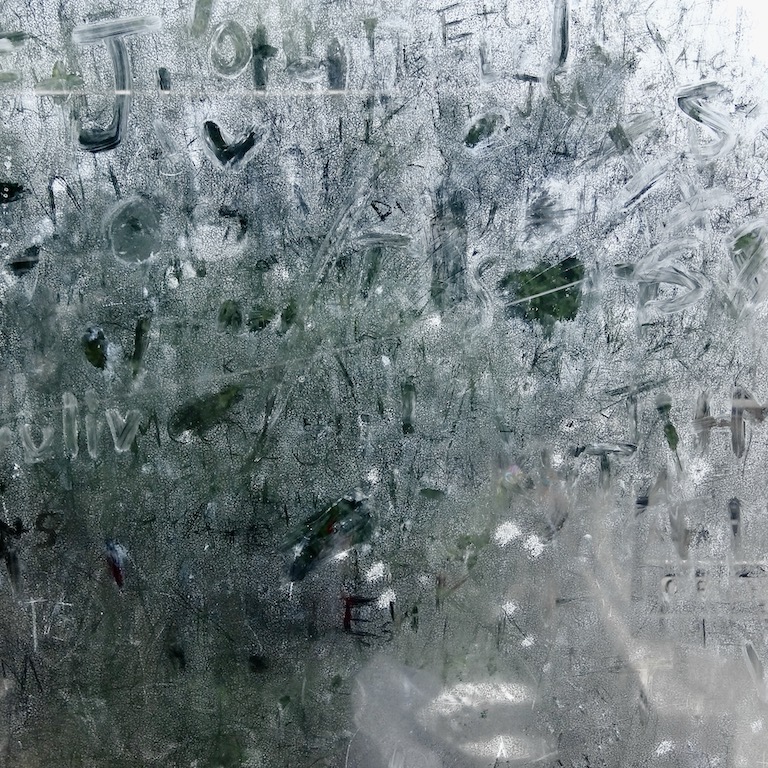
“Abstraction and perfection transport us into the world of ideas, whereas matter, weathering and decay strengthen the experience of time, causality and reality.” (Pallasmaa, 2000: 79)
As noted in the About page, the approach to design taken in this website is guided by an aesthetic that accepts the impermanence, imperfection and incompleteness of the world. As a consequence, designs as part of the world, are conceived as impermanent, imperfect and incomplete. In as far as designs are ‘made’ in order ‘to do’, that is, to act upon people and in the world, what they actually do is not up to the design itself. Designs are open to use and ‘mis’-use, to interpretation and invention. Designs, once launched into the world, continue to act and to reverberate. In that sense, they may be considered to take part in the ongoing montage which is the world. Montage, according to Graver (1995), flaunts the cohesive power of its constructive procedure through its intentional incompleteness.
As highlighted by Damon Taylor (2013: 372) when discussing the Do Add chair, where Jurgen Bey took a functioning chair and sawed off one of its legs, some designs, by their material form or deformation, can bring this incompletion to the surface. Thus, Taylor states,
“In a culture whereby things are presented to us as “complete,” the creation of a radically incomplete object is a refutation of the dominance of the finished commodity; it is a refusal of the socio-technical script of efficiency; it is a frustration of the metascript of the complete and completed commodity and therefore the static entity which is the consumer.”
Such designs, in other words, refuse to engage in the constitution of the complete and perfectly behaved consumer, frustrating their sense of self-possession through possessions (commodities). For Taylor, this constitutes a political act.
Although it is not necessarily a model for design practice, there are similarities between the practice of designing and the writing of James Joyce’s Finnnegans Wake, as discussed by Stephen Heath:
“The writing of Finnegans Wake, however, work in progress (‘wordloosed over seven seas’ (FW2I9.16)), develops according to a fundamental incompletion; the text produces a derisive hesitation of sense, the final revelation of meaning being always for ‘later’.”
(Heath, 1984: 31)
In Joyce’s own words, the principle of incompletion may be expressed in the following way:
“Toborrow and toburrow and tobarrow! That’s our crass, hairy and evergrim life, till one finel howdiedow Bouncer Naster raps on the bell with a bone and his stinkers stank behind him with the sceptre and the hourglass. We may come, touch and go, from atoms and ifs but we’re presurely destined to be odd’s without ends”.
(James Joyce, Finnegans Wake, p.455, lines 12–18).
References
Graver, D. (1995) The Aesthetics of disturbance: anti-art in avant-garde drama. Ann Arbor, MI: University of Michigan Press.
Heath, S. (1984) ‘Ambiviolences: notes for reading Joyce’, in Post-structuralist Joyce : Essays from the French. Cambridge, UK: Cambridge University Press, pp. 31–68.
Pallasmaa, J. (2000). Hapticity and time. Architectural Review, 207 (1239), 78–84.
 Incomplete ...