RELATED TERMS: Avant-garde movements; Modernism; Design practice and functionalism
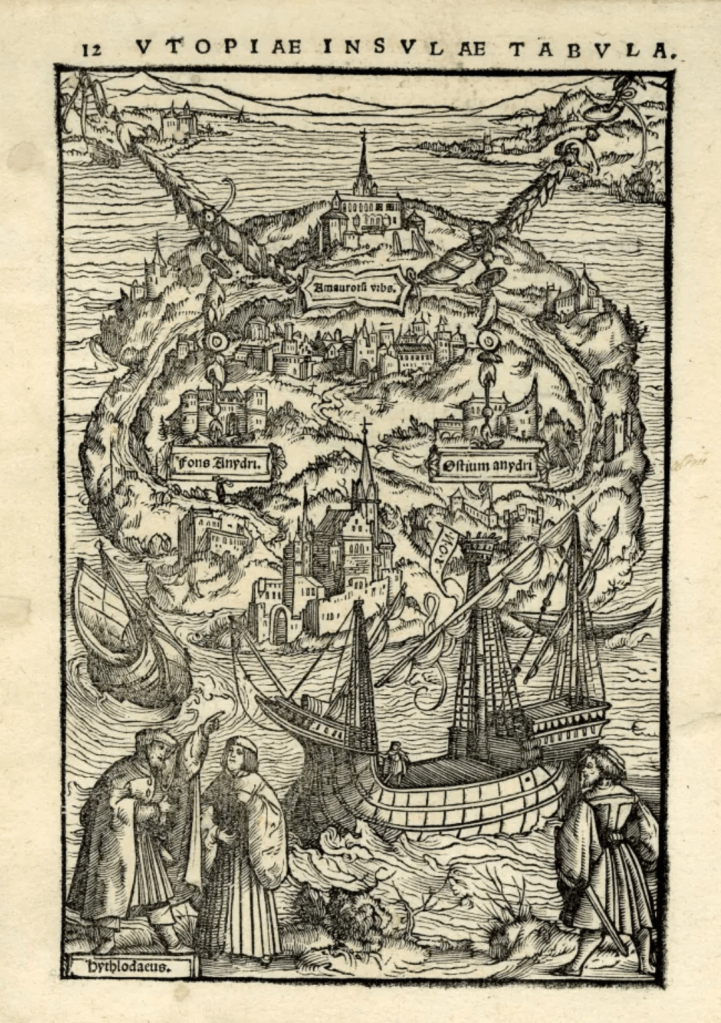
Sir Thomas More published his Utopia in 1516 . The word ‘utopia’ combines two Greek roots, ou- meaning ‘no’ and topos meaning ‘place’, hence literally utopia is a no-place, a non-existent place or nowhere. However, embedded within the word utopia is a pun. The near-identical Greek word eu-topos means a ‘good place’.
In creating such a concatenation, More was highlighting the question of whether and, if so, how a good place (eutopia), currently non-existent or nowhere to be found (outopia or utopia), can be created (brought into existence) and established (sustained).
Utopian thinking is an important element of modernism and of avant-garde practices. It is therefore of great important for design practices when considering what any specific design is seeking to accomplish as an intervention and how it is seeking to do so.
References
British Library (No date). Utopia. British Library Learning. Available from http://www.bl.uk/learning/histcitizen/21cc/utopia/utopia.html [Accessed 25 June 2016].
 Incomplete ...