RELATED TERMS: Heidegger
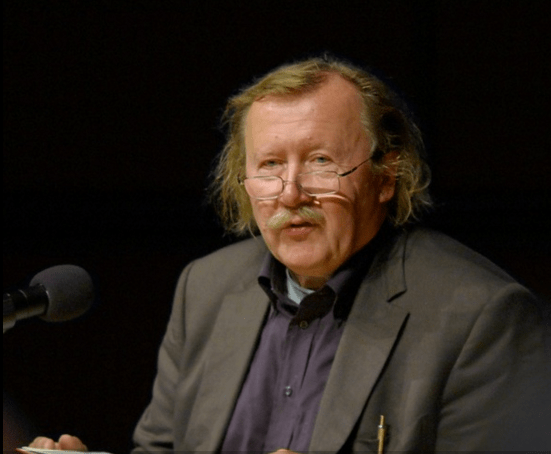
“Humanity becomes a political concept. Its members are no longer travellers on the ship of fools that is abstracted universalism, but workers on the consistently concrete and discrete project of a global immune design.” (Couture, 2016: 73)
The work of German philosopher Peter Sloterdijk (1947-) has direct relevance for design practices. As with all theorists, his work may be considered to constitute a particular kind of text-based narrative as well as a particular kind of environmental discourse: discourse about the spatio-temporal environment; and environment as discourse and as apparatus [1].
Sloterdijk argues, following through on the initial Heideggerian insight, that Dasein, literally there-being or here-being, as ‘being thrown into the world’, is to be thrown into an envelope of some kind. To define humans, for Sloterdijk, is to define the envelopes, the life support systems, that make it possible for them to breathe, to live. Furthermore, all of the envelopes or life support systems into which people are born (‘thrown’) are artificial, constructed, designed. These envelopes are called ‘spheres’ by Sloterdijk and the study of them he calls spherology.
It would be very fruitful, from the point of view of design practices, to engage with Sloterdijk’s theory of spheres, bubbles and foam, that is, different scales of envelope, as processes of environing, immersing and insulating (from hostility and danger) which are folded and/or embedded into one another, potentially in the form of a knot or a torus or a “strange loop” (Hofstadter, 1979) – an entanglement of some kind.
Sloterdijk also suggests that human beings oscillate between the desire to be embedded (immersed, insulated) and the desire to break free (transgress, flow, mingle). Nevertheless, for Sloterdijk, this ‘breaking free’ can never be more than a process of moving from one envelope to another, wherein may be found further or other life support systems.
It could also prove fruitful to relate Sloterdijk’s enfolded-spheres to Gerard Genette’s notion of diegetic levels in a narrative, which also implies processes of framing or embedding, in order to complement narrative complexity with environmental complexity: nested stories running through nested environments, not necessarily inn parallel.
This may also yield an interesting way of exploring the processes of metalepsis [2], wherein the boundaries or borders between levels, spheres or ‘worlds’ of narratives and of environments are transgressed, so that one level, sphere or world, which does not seem to belong there, emerges or appears within another in a disruptive manner. This may also enable a development of the argument, as expressed for example by Ryan (2006), that there are two main types of metalepsis: rhetorical, as discussed by Genette; and ontological, as discussed by Brian McHale.
Notes
[1] For a lengthier discussion of Sloterdijk and narrative environments, see Parsons (2016, 28 Feb)
[2] For a comprehensive discussion of metalepsis, see Pier (2013).
References
Couture, J.-P. (2016) Sloterdijk. Cambridge, UK: Polity.
Hofstadter, Douglas (1979). Gödel, Escher, Bach: an Eternal Golden Braid. New York: Basic Books.
Latour, B. (2009a). A Cautious Prometheus ? A few steps toward a philosophy of design (with special attention to Peter Sloterdijk ). In: Hackney, F., Glynne, J., and Minto, V., eds. Networks of design: proceedings of the 2008 Annual International Conference of the Design History Society. Boca Raton: Universal Publishers. Available from http://www.bruno-latour.fr/sites/default/files/112-DESIGN-CORNWALL-GB.pdf [Accessed 10 August 2012].
Latour, B. (2009b). Spheres and networks: two ways to reinterpret globalisation. Harvard Design Magazine, 30 138–144.
Pier, J. (2013). Metalepsis. The Living handbook of narratology. Available from http://wikis.sub.uni-hamburg.de/lhn/index.php/Metalepsis [Accessed 28 February 2016].
Parsons, A. (2016, 28 Feb). Sloterdijk and Narrative environments. Poiesis and Prolepsis [Blog], 28 February. Available from http://prolepsis-ap.blogspot.co.uk/2016/02/sloterdijk-and-narrative-environments.html [Accessed 28 February 2016].
Ryan, M.-L. (2006). Metaleptic machines. In: Avatars of story. Minneapolis, MN: University of Minnesota Press, 204–230.
Sloterdijk, P. (2011). Architecture as an art of immersion. Interstices, 12, 105–109. Available from http://interstices.ac.nz/wp-content/uploads/2011/11/INT12_Sloterdijk.pdf [Accessed 9 January 2016].
 Incomplete ...
One thought on “Sloterdijk”