RELATED TERMS: Avant-Garde Movements; The Everyday and Design; Mono No Aware and Ma; Incompletion
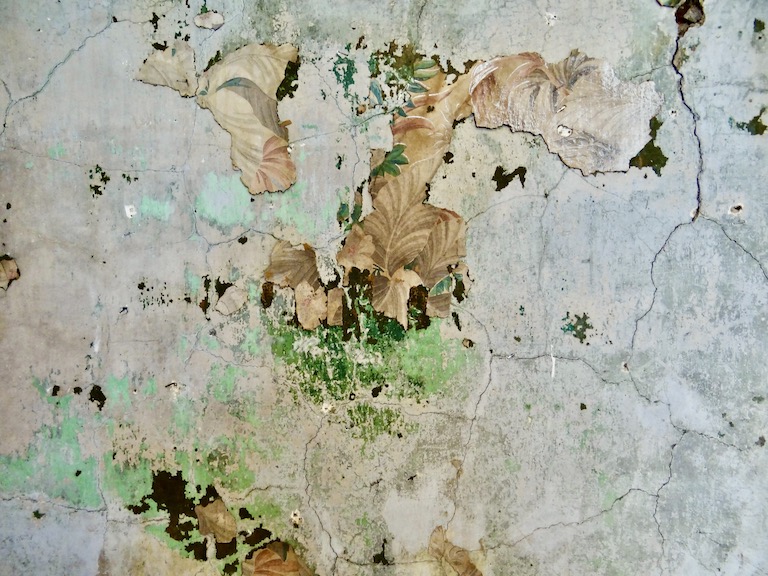
“Thirty spokes are joined together in a wheel, but it is the center hole that allows the wheel to function. We mold clay into a pot, but it is the emptiness inside that makes the vessel useful. We fashion wood for a house, but it is the emptiness inside that makes it livable. We work with the substantial, but the emptiness is what we use.” Lao Tzu, Tao te Ching
The Zen Buddhist principles of emptiness, space and tranquility may be relevant for, and could be deployed in, the design of particular kinds of narrative environment. Such principles have already served as inspiration in the arts. For example, as Ellen Pearlman (2012) shows, Buddhism, particularly Zen Buddhism, was a significant source of inspiration for the arts in New York City from the early 1940s to the early 1960s.
The Zen Buddhist aesthetic of sabi is better known as wabi-sabi. Wabi is the yearning for simplicity, even ugliness or absence of obvious beauty. The wabi tea room, from which the term derives, was rustic and small. Sabi is an aching solitude coupled with imperfection and historical profundity. Sabi also means rust; and sabi-ya means loneliness. (Pearlman, 2012: 118)
Wabi and sabi, as expressions of the Japanese virtues of selflessness, modesty and humility, mean that Japanese art undoubtedly reflects the philosophy of life of Zen. However, Nyozekan Hasegawa argues in his 1938 book, Nihonteki Seikaku, that while the profound influence of Zen on Japanese art is undeniable, Japanese artists’ love for the imperfect, the asymmetrical and the simple dates back to a period earlier than the arrival of Zen in Japan (Dumoulin, 1940: 324), for example, to the Heian era (794-1185) when Japan, revitalising its embrace of the unpredictable fluctuations of the natural world, adopted a sensitivity to and appreciation for nature (Prusinski, 2012). [1]
According to Nancy Moore Bess, “[s]abi refers to the natural wear that comes with aging and daily use, for instance the patina of a naturally aged bamboo ceiling in an old villa, where the once green bamboo has mellowed to a range of soft grays and golden browns. (p.74)” (Quoted by Doordan, 2002: 78).
Arthur Erickson (1973: 328) claims that the qualities of wabi and sabi and shibui (‘aristocratic simplicity’) are untranslatable into English because there are no equivalent words, and furthermore the feelings they express, the closest evocations being melancholy, sombreness and restraint, are not readily recognisable, and are certainly not highly valued, in an English-language-inflected sensibility. Inasmuch as the qualities can be defined, Kondo (1985) suggests, sabi is the beauty of the imperfect, the old, the lonely (aloneness-loneliness, but not in a sentimental sense); while wabi is the beauty of simplicity and poverty.
The life of wabi, as practiced by the master Sen no Rikyu, was in a sense a training based on original enlightenment, a “disclosure of the Buddha-mind” in the naturalness and commonness of everyday life. “There is no need to look for transcendental meanings behind ordinary forms, according to Rikyiu, nor is there any need to escape from ordinary life. Nirvanic realization in life, as in the tea ceremony, takes place in the austere simplicity and commonness of daily life.” (Ludwig, 1974: 49)
Thus, “ … the Buddha-reality which people seek is really nothing but the real world of our daily experience” (Ludwig, 1974: 49). For Han (2022: 10), “The freedom of the ‘everyday mind’ consists rather in not kneeling down in awe. Its mental attitude is better expressed as ‘sitting unmovable like a mountain’”.
Similar insights guide the approach to design practices in Incomplete …, an approach which accepts the impermanence, imperfection and incompleteness of the world. The complicating factor taken into account, however, is that the ‘real world of our daily experience’ is pervaded by existing designs which, in the way that they ‘show up’ or ‘show themselves’ to us, may contradict or contravene acceptance of the ‘austere simplicity’ of the flawed, the faulty and the weathered. Instead, they may seek to instil in our decision making over whether to act or not to act, of what to acknowledge or relinquish in our continual inter-actions, a desire for ‘the beauty of perfection’ that engages us in a passage to an elsewhere, an anywhere-but-here-now, perhaps towards the seeming safety of an absolute grounding or origin (arche) or a final destination (telos).
The question that arises for design practices is how our aesthesis, or our way of sensing, perhaps definable as a sensibility of synaesthesia dominated by the ocularcentric, determines our way of being, suspended and extensible in inter-action with the other and in otherness.
Notes
[1] Lauren Prusinski (2012), citing Antanas Andrijauskas (2003), points out that most of the Japanese aesthetic sensibility originated from Japan’s indigenous Shinto religion, with its emphasis on an awe-inspired deification of nature. However, while Shinto provided the basis in which ancient aestheticism is grounded, Andrijauskas argues that Buddhist, Taoist, Confucian, Tantric, and Ch’an have modified and enriched it with new ideas. Nevertheless, the roots of Japanese aesthetics have remained grounded in the celebration and consciousness of nature, Prusinski contends.
References
Andrijauskas, A. (2003). Specific Features of Traditional Japanese Aesthetics, Dialogue and Universalism, 13 (1-2):199-220.
Bess, N. M. (2001). Bamboo in Japan. Tokyo: Kodansha International.
Cheyne, P. (ed.) (2023) Imperfectionist aesthetics in art and everyday life. New York, NY: Routledge.
Doordan, D. (2002).Bamboo in Japan by Nancy Moore Bess. Design Issues, 18 (2), 78-79 Available from http://www.jstor.org/stable/1512045 [Accessed 31 May 2016].
Dumoulin, H. (1940). Zen Buddhism and its influence on Japanese culture by Daisetz Teitaro Suzuki [Review]. Monumenta Nipponica, 3 (1), 323–325. Available from http://www.jstor.org/stable/2382420 [Accessed 31 May 2016].
Erickson, . (1973). The Classical tradition in Japanese architecture. Modern versions of the Sukiya style. Pacific Affairs, 46, (2), 327-328.
Han, B.-C. (2022) The Philosophy of Zen Buddhism. Translated by D. Steuer. Cambridge, UK: Polity.
Kondo, D. (1985). The Way of tea: a symbolic analysis. Man, 20 (2), 287–306. Available from http://www.jstor.org/stable/2802386 [Accessed 1 June 2016].
Ludwig, T.M. (1974). The Way of tea: a religio-aesthetic mode of life. History of Religion, 14 (1), 28–50. Available from http://www.jstor.org/stable/1061891 [Accessed 31 May 2016].
Pearlman, E. (2012). Nothing and everything: the influence of Buddhism on the American avant-garde, 1942-1962. Berkeley, CA: Evolver Editions.
Prusinski, L. (2012) Wabi-sabi, mono no aware, and ma: tracing traditional Japanese aesthetics through Japanese history, Studies on Asia, Series IV, 2(1), pp. 25–49.
 Incomplete ...