RELATED TERMS: Design Practice and Functionalism; Human Actantiality; Latour; Methodology and Method; Modernity; Narrative Environments; Narrative Environments – Celia Pearce; Narrative Environments – Environmental Psychology in Architecture; Ontological Designing; World-Building; Worldlessness #1; Worldlessness #2: Worldlessness and Design
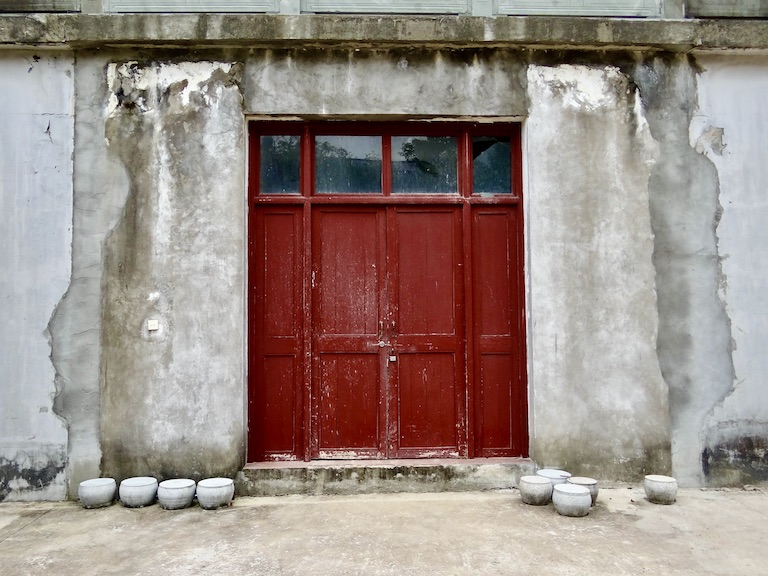
” ‘the environment’ is not a location; rather, it is ‘the everywhere’ — the inner and outer; the earth, the sky and the ocean; the home as the world given and the world of our own creation.” (Fry, 2012: 3)
The design of narrative environments, as a field of practice, is an example of research-led or research-informed designing. It may also be a means of or an element in practising design-led research.
Although in some respects similar to post-structuralist literary and cultural theories, the design of narrative environments differs significantly from them in stressing the complex relational materiality of designed entities. The design of narrative environments emphasises the historical, situated, constructed, mediated, performative and immersive character of our experiences. It is concerned with the configurations of the world (or worlds) that circumvents us, the ‘circumverse’, as Tiqqun (2010) calls it; and the ways in which those worlds actively configure us as ‘being human’ or as non-being, excluded from the ‘worlding of the world’, in other words as ‘worldless’.
It also takes part in a re-orientation which questions the assumption that ‘fiction’ is synonymous with recounted or diegetic fiction, by rendering complex the relationships among telling, showing and participating. In this way, much like computer-simulated and screen-projected gaming environments, it draws into play discussions about the ontological status of ‘fiction’ in relation to that of the ‘real’ and the epistemological assumptions that accompany distinctions, for example, among real, fictional and virtual ‘worlds’.
There is no single approach or methodology for the design of narrative environments although, whatever the approach, a narrative environment is taken to be a more or less complex whole or assemblage, although not necessarily a unified whole or totality, integrating different kinds of material reality. A narrative environment is by definition ‘incomplete’. In short, a narrative environment may be said to constitute a ‘world’, with its ontological assumptions about what exists and can exist in this ‘world’. While forming a ‘world’ as a form of sphere or envelope, a ‘world’ that is co-created by the designer, the design and the participants who enter the designed narrative environment, narrative environments remain open or porous to the other ‘worlds’ in relation to which they also exist.
For example, developing an actantial approach, taking its orientation from the work of A.J. Greimas, Jacques Lacan and Bruno Latour, a narrative environment may be considered to be articulated from three main classes or kinds of actant, narrative actants, environmental actants and human actants, each of which act upon the others and become entangled to form a complex whole or field of actantiality: they form a rhizome, ‘a tangle of roots’, through which narratives paths can be carved or traced.
Alternatively, in an approach which relies more heavily upon the terminology employed by Etienne Souriau, Christian Metz and Gerard Genette, this complex whole or world may be termed diégèse.
The design of narrative environments could be seen as part of a post-Humanist, non-instrumentalist, materialist approach to understanding and re-designing (or un-designing) the ‘real’ or ‘actual’ world, in which human agency is not taken to be the centre of the world but is an emergent phenomenon within, for example, a sphere (Sloterdijk), a network (Latour), a rhizome (Deleuze and Guattari) or a living system (Maturana and Varela). It therefore partakes in the ‘ontological turn’ in design, in particular a relational ontology, as discussed, for example, by Escobar (2013).
References
Escobar, A. (2013). Notes on the ontology of design [Draft paper]. Available from http://sawyerseminar.ucdavis.edu/files/2012/12/ESCOBAR_Notes-on-the-Ontology-of-Design-Parts-I-II-_-III.pdf [Accessed 4 September 2016].
Fry, T. (2012) Becoming human by design. London, UK: Berg.
Tiqqun (2010) The Cybernetic Hypothesis. Anarchist Library. Available at: https://theanarchistlibrary.org/library/tiqqun-the-cybernetic-hypothesis (Accessed: 4 May 2024).
 Incomplete ...
One thought on “Design of Narrative Environments”