RELATED TERMS: Collecting; Defamiliarisation; Events; Material Culture; New Materialism; Representation; Tangled Hierarchy and Strange Loop
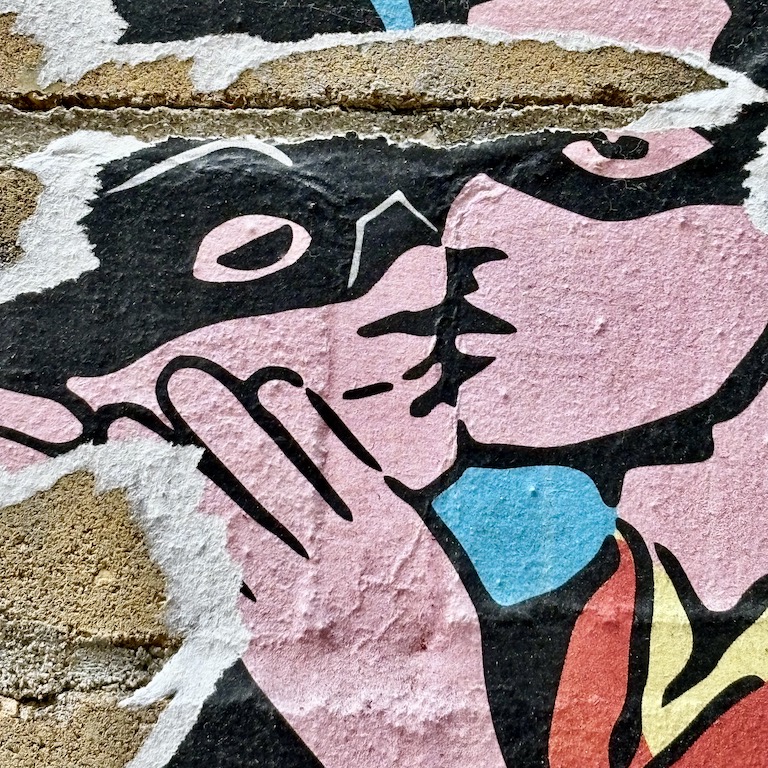
The world is made up of networks of kisses, not of stones.” (Rovelli, 2018)
“the thing really names less an object than a particular subject-object relation.” (Brown, 2001: 4)
“Thing theory is at its best … when it focuses on this sense of failure, or partial failure, to name or to classify. Thing theory highlights, or ought to highlight, approaches to the margins—of language, of cognition, of material substance. “Things” do not lie beyond the bounds of reason … but at times they may seem to. That seeming is significant: these are limit cases at which our ordinary categories for classifying signs and substances, meaning and materiality, appear to break down.” (Plotz, 2005: 110)
What the epigraph above from Plotz raises is the question of the relationship between a ‘design’ and a ‘thing’. A design, it could be argued, is easily named and categorised. It is, so to speak, fully ‘scripted’ and ‘framed’ so that what it is, what kind of thing it is and what it does are clearly recognised. Furthermore, its symbolic narration and dramatisation are easily unfolded from this grounded naming and categorising. The wager of some forms of critical design and speculative design is that a ‘design’ may be such that its material qualities, its ‘thingness,’ may interfere with its script and frame, making it susceptible to an analysis using thing theory which allows us to question in specific ways our conventional or accepted techniques of classifying signs and substances. It may become a limit case, in Plotz’s terms. In turn, this may be recognised as a particular instance of defamiliarisation or ‘making strange’. This process may be more effective in the context of what Buchanan (2021) calls levels 1 and 2 of design practice, which concern the design of artefacts and communications, and less effective when it comes to levels 3 and 4 of design practice, which concern system and service (inter-action) design and design as a method for organisational, political, financial or social development, although it might be interesting to experiment with defamilarisation in these latter contexts.
Thing Theory
Since the late 20th century, there has been a ‘return to things’ in the social sciences and humanities, to the extent that Bill Brown (2001), a scholar of American literature, has called for a ‘thing theory’. This movement contravenes an earlier focus on representation and the long scholarly tradition that separated subject from object, mind from matter. Among these approaches, human existence and social life are understood to depend on material things and are entangled with them. People and things are relationally produced (Hodder, 2014), along with, it should be added, the ‘worlds’ in which such ‘things’ are recognised as ‘objective realities’ and the (co-related and simultaneous) ‘worldlessness’ or ‘worldlessnesses’ that such world-forming practices also create.
The design of narrative environments is in accord with these perspectives: in being world forming, narrative environments also create worldlessness, while at the same time creating entities that raise the question the boundary between a ‘design’, replete with value(s), and a ‘thing’, without value or actively dis-valued.
While accepting these perspectives, Hodder nevertheless points out that the focus on dependence rather than on relationality draws attention to the ways in which humans may be entrapped in and by their relations with things: humans are caught in a double bind, depending on things that depend on humans. Hodder defines this as ‘entanglement’. For the design of narrative environments, this constitutes a ‘tangled hierarchy’.
In a narrative ecology perspective, things are designed objects, products or services, with specific roles, a purposefulness upon which thing theory may cast doubt. As actants, which afford certain possibilities for action, things-as-designs exert a design-centered view of the world of activities and the meaningful relationships which participants have with it.
Things and Events
While the human is engaged, or perhaps co-constituted, with(in) the material world as an entanglement in the form of a ‘tangled hierarchy’ of phenomenological and ontological levels, such things of the world are nevertheless temporal. They have a limited duration. They are, in other words ‘events’. As Carlo Rovelli (2018) argues,
“We can think of the world as made up of things. Of substances. Of entities. Of something that is. Or we can think of it as made up of events. Of happenings. Of processes. Of something that occurs. Something that does not last, and that undergoes continual transformation, that is not permanent in time. The destruction of the notion of time in fundamental physics is the crumbling of the first of these two perspectives, not of the second. It is the realization of the ubiquity of impermanence, not of stasis in a motionless time.”
In this sense, “The world is not a collection of things, it is a collection of events”, the difference between them being, as Rovelli eloquently expresses it, is that,
“things persist in time; events have a limited duration. A stone is a prototypical “thing”: we can ask ourselves where it will be tomorrow. Conversely, a kiss is an “event.” It makes no sense to ask where the kiss will be tomorrow. The world is made up of networks of kisses, not of stones.”
[Although, we do ask ourselves, do we not, where (the consequences of) the kiss, having happened (to us), not simply just having occurred, will lie (will emerge) tomorrow, or where the (next) kiss (for us) will come tomorrow?]
Design practices, while recognising and employing the duration of certain ‘things’, is concerned with the world as the passage and timing of events. It is, in this way, similar to composition (semiotic notation), on the one hand, and choreography (the inter-relationships among moving bodies and ‘things’), on the other hand; and to composed choreographics or choreographed composition, on the third hand!
The things that are most ‘thinglike’, that is seemingly durable, are more properly long-lasting events which seem to have consolidated or coagulated.
Thing Theory
‘Thing theory’, as articulated by Brown (2001), for example, draws on the work of Heidegger, for whom, as Wasserman (2020) explains, “objects become things when they can no longer serve their common or intended function. When an object breaks or is misused, it sheds its conventional role and becomes visible in new ways: it becomes a thing. Thing theory draws upon this notion of productive estrangement to consider the meaning that physical artifacts can have for human subjects.”

What might be called the second phase of ‘thing theory’ finds scholars decentring the human subject, generating ‘new materialisms’ which expand the reach of thing theory well beyond literary studies. Such new materialisms, building on the Marxist tradition of historical materialism and other branches of thought that attempt to decentre the human, include object-oriented ontology, actor-network theory, ecocriticism, and posthumanism (Wasserman, 2020).
References
Brown, B. (2001) Thing theory, Critical Inquiry, 28 (1), pp. 1–22. Available at: http://www.jstor.org/stable/10.2307/1344258 (Accessed: 14 November 2012).
Buchanan, R. (2001) Design research and the new learning, Design Issues, 17(4), pp. 3–23. doi: 10.1162/07479360152681056.
Hodder, I. (2014) The Entanglements of humans and things: a long-term view, New Literary History, 45(1), pp. 19–36. doi: https://dx.doi.org/10.1353/nlh.2014.0005.
Plotz, J. (2005) Can the Sofa Speak? A Look at Thing Theory, Criticism, 47(1), pp.109-118. Available at: http://digitalcommons.wayne.edu/criticism/vol47/iss1/5 (Accessed: 5 August 2025)
Rovelli, C. (2018) The Order of time. Translated by E. Segre and S. Carnell. New York, NY: Riverhead Books.
Wasserman, S. (2020) Thing theory, Oxford Bibliographies. doi: https://dx.doi.org/10.1093/obo/9780190221911-0097.
 Incomplete ...