RELATED TERMS: Anthropo-Scenes; Human Ecosystem; Postanthropocentrism; Posthuman; Posthumanism; Symbiocene; World; World-as-Milieu; World-Building
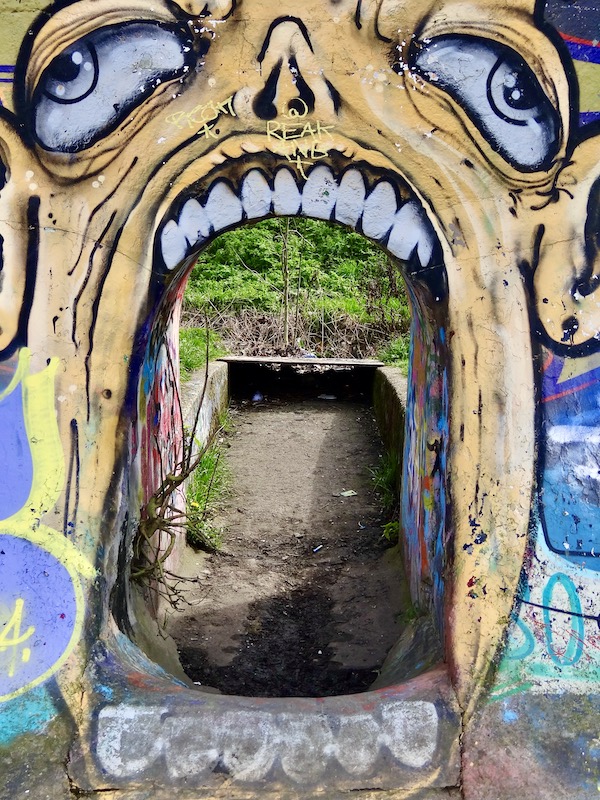
“the Earth … is leaving the relatively stable and benign state that is known as the Holocene, the geological period of the last 11,700 or so years which is now retrospectively perceived as a rather unique period, the rare ‘long summer’ (Fagan 2004, Dumanoski 2009) that allowed for the rise and flourishing of civilizations based on agriculture and later industrialization, and is entering a much more instable and unpredictable state now which has been termed the Anthropocene” (Lemmens, Blok and Zwier, 2017: 115)
“If the Anthropocene proclaims a sudden concern with the exposures of environmental harm to white liberal communities, it does so in the wake of histories in which these harms have been knowingly exported to black and brown communities under the rubric of civilization, progress, modernization, and capitalism.” (Yusoff, 2018)
Eugene Stoermer, a freshwater biologist who studies diatoms in the Great Lakes of North America, proposed the name the Anthropocene in 2000 to indicate the anthropogenic processes that are acidifying the waters and changing the nature of life on Earth. The term was picked up and re-used by Paul Crutzen, an atmospheric chemist, who joined together with Eugene Stoermer to popularise the name Anthropocene specifically in relationship to those sorts of processes emanating from the mid-18th century related to the steam engine and the extraordinary expansion in the use of fossil fuels that acidify the oceans and bleach the corals. They were particularly worried about a vibrio infection in coral reefs that is responsible for the bleaching (Haraway, 2014).
In general, the term Anthropocene is used to refer to the preponderance of humans in the balance of earthly life and the human experimentation, albeit until recently unwitting, in the chemistry of the planet’s atmosphere and oceans. There is disagreement about when the Anthropocence can be said to begin. Some scholars date it back to roughly 10,000 years ago, with the nearly universal extinction of megafauna at the hands of Neolithic hunters. This would make the Holocene and the Anthropocene virtually overlap. A more common view is that the Anthropocene started in modern times. One study (Lewis and Maslin, 2015) dates it to 1610, when the depopulation of the Americas after European conquest led to the reforestation of the New World, bringing on the Little Ice Age.
Thus, Lewis and Maslin (2015: 175) argue that,
“The impacts of the meeting of Old and New World human populations — including the geologically unprecedented homogenization of Earth’s biota — may serve to mark the beginning of the Anthropocene. Although it represents a major event in world history, the collision of the Old and New Worlds has not been proposed previously, to our knowledge, as a possible GSSP [Global Stratotype Section and Point or ‘golden spike’]. We suggest naming the dip in atmospheric CO2 the ‘Orbis spike’ and the suite of changes marking 1610 as the beginning of the Anthropocene the ‘Orbis hypothesis’, from the Latin for world, because post-1492 humans on the two hemispheres were connected, trade became global, and some prominent social scientists refer to this time as the beginning of the modern ‘world-system’.”
For others, like Stoermer and Crutzen, it is the Industrial Revolution that initiates the Anthropocene, while for yet others the Anthropocene began on 6 August 1945 with the explosion of the atomic bomb over Hiroshima (Kunkel, 2017: 22)
However, Donna Haraway proposes that, for all of the failings of the Anthropos and the Anthropocene, and all of the strengths of both, the figure of the Anthropos is not responsible for the processes that threatens mass extinction. Rather, she suggests, if we were to use only one word for the processes that we are talking about, it should be the Capitalocene. It should be noted in passing that geologists use the suffix -cene, derived from the Greek word for new, to designate recent geological eras.
Haraway also argues that a third term is needed: Chthulucene, a word derived from chthon, meaning “earth” in Greek and which is associated with things that dwell in or under the earth. The Cthulucene, for Haraway, refers to processes of reworlding. She suggests it is more like a process of composting than one of being Posthuman. The path towards something that might possibly have a chance of living on, Haraway argues, is through the activation of the chthonic powers that are within our grasp, as we collect up the waste of the Anthropocene and the exterminism of the Capitalocene.
For a review of three books published in 2015-2016 on the topic of the Anthropocene, see Kunkel (2017).
Plantationocene
Malcolm Ferdinand (2022) argues that the term “Plantationocene,” proposed by Anna Tsing and Donna Haraway (Haraway, Tsing and Mitman, 2019), is the best placed to translate the development of the colonial inhabitation of the Earth, because it reveals five fundamental dimensions of its disruptive force: the material-economic; the historical; the geographical; the political; and the cosmopolitical.
Technocene
Agostino Cera (2017) argues that the best term for our current age is not Anthropocene but Technocene, as it is technology that currently forms the world, not humanity. The Technocene corresponds to the emergence of technology as (neo)environment, on the one hand, and to the ‘feralisation’ of humanity, on the other hand.
Discussion: The Anthropocene as a Political Issue
Lemmens and Hui (2017) suggest that Peter Sloterdijk, approaching it from an anthropotechnic perspective, and Bernard Stiegler, from an anthropotechnogenic perspective, both offer interesting and pertinent philosophical diagnoses of the Anthropocene. For both, the Anthropocene marks the necessity, for the anthropos, radically to change the course and the very nature of the technogenic adventure from which it is born and upon which it vitally depends. Both also suggest a response to the Anthropocene: a homeotechnological revolution in the case of Sloterdijk; and a negentropic turn of technology in the case of Stiegler. In both cases, this is immediately a technopolitical issue, entailing an immunopolitics for Sloterdijk and a pharmacological noopolitics for Stiegler.
Natasha Myers (2018: 53) cautions that one should not be,
“distracted by the misplaced concreteness of scientific efforts to articulate the physical markers and temporal boundaries of a geological era made by humans. What we are witnessing is the apotheosis of five hundred years of colonial violence, extractive capitalism, white supremacy, and the hubris of human exceptionalism. The Capitalocene and the Plantationocene are apt monikers to identify the forces that have long been at work terraforming the planet.”
In a similar critical vein to Myers, Nicholas Mirzoeff (2018: 123) poses the question, “What kind of “man” is meant when we say Anthropocene?” His response is that the Anthropos in Anthropocene is the imperialist white male. As a result, his mantra has become, “it’s not the Anthropocene, it’s the white supremacy scene.”
Kathryn Yusoff (2018) is similarly critical in discussing definitions of the anthropos of the Anthropocene. She writes that,
“There is not geology on one hand and stories about geology on the other; rather, there is an axis of power and performance that meets within these geologic objects and the narratives they tell about the human story. Traveling back and forth through materiality and narrative, the origins of the Anthropocene are intensely political in how they draw the world of the present into being and give shape and race to its world-making subjects.”
Thus, for Yusoff, the anthropocentrism of the Anthropocene is a world-making practice. This practice names, firstly, the production of a mythic Anthropos as geologic maker or destroyer of worlds; and, secondly, a material, evolutionary narrative that re-imagines human origins and endings within a geologic rather than an exclusively biological context.
She considers that through this ascension to geologic force, the Anthropocene creates a planetary genesis that ties the Anthropos to the creation of an epoch. In this way, human agency is substituted for geologic processes.
References
Cera, A. (2017) The Technocene or technology as (neo)environment, Techne: Research in Philosophy and Technology, 21(2/3), pp. 243–281. doi: 10.5840/techne201710472.
Ferdinand, M. (2022) Decolonial ecology: thinking from the Caribbean world. Translated by A. P. Smith. Cambridge, UK: Polity Press.
Haraway, D. (2014). Anthropocene, capitalocene, chthulucene: staying with the trouble. Open Transcripts. Available from http://opentranscripts.org/transcript/anthropocene-capitalocene-chthulucene/ [Accessed 23 December 2016].
Haraway, D. J., Tsing, A. L. and Mitman, G. (2019) Reflections on the Plantationocene: A Conversation with Donna Haraway and Anna Tsing, moderated by Gregg Mitman. Madison, WI: University of Wisconsin-Madison.
Kunkel, B. (2017). The Capitalocene. London Review of Books, 39 (5), 22–28. Available from https://www.lrb.co.uk/v39/n05/benjamin-kunkel/the-capitalocene [Accessed 1 March 2017].
Lemmens, P., Blok, V. and Zwier, J. (2017) Toward a terrestrial turn in philosophy of technology: Guest editors’ introduction, Techne: Research in Philosophy and Technology, 21(2/3), pp. 114–126. doi: 10.5840/techne2017212/363.
Lewis, S.L. and Maslin, M.A. (2015). Defining the Anthropocene. Nature, 519 (7542), 171–180. Available from http://dx.doi.org/10.1038/nature14258 [Accessed 25 April 2019].
Lemmens, P. and Hui, Y. (2017) Reframing the technosphere: Peter Sloterdijk and Bernard Stiegler’s anthropotechnological diagnoses of the Anthropocene, Krisis: Journal for Contemporary Philosophy, 2, pp. 26–41.
Mirzoeff, N. (2018) It’s not the Anthropocene, it’s the white supremacy scene; or, The Geological color line, in Grusin, R. (ed.) After extinction. Minneapolis, MN: University of Minnesota Press, pp. 123–150.
Myers, N. (2018) How to grow livable worlds: ten not-so-easy steps, in Oliver-Smith, K. (ed.) The World to come: art in the age of the Anthopocene. Gainesville, FL: Samuel P. Harn Museum of Art, pp. 53–63.
Yusoff, K. (2018) A Billion Black Anthropocenes or none. Minneapolis, MN: University of Minnesota Press.
Resources
 Incomplete ...
One thought on “Anthropocene – Capitalocene – Chthulucene; Plantationocene”