RELATED TERMS: Dau Project; Diegese and Diegesis; Lifeworld – Lebenswelt – Umwelt; Storyworld; Worldlessness #1; Worldlessness #2: Worldlessness and Design; Worldlessness #3: Saving the world / at the end of / the world / is not enough
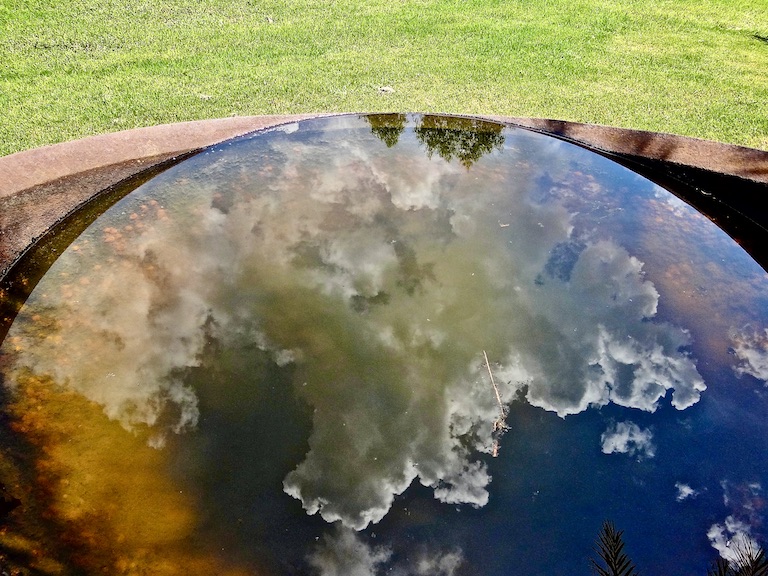
“these three types of world — the world, my world and a contained world-like domain — are often difficult to distinguish.” (Gaston, 2013: x)
“Every human lives in a world”. (Reed, 2021)
“the word ‘world’ constantly shifts between its cosmological, ontological, theological, chronological, anthropological, sociological, political, and existential meanings.” (Klepec, 2021)
“There is only one world, however diverse, and all animals live in it, although we human animals have altered it to suit ourselves. We have done so wastefully, thoughtlessly and, if we do not mend our ways, fatally.” (Gibson, 1979)
“It would be helpful if Gaston were clearer about the way he uses these kinds of terms — world, earth, globe, planet, cosmos, universe — since the differences between them are bound to be significant for a history of the concept of world.” (McQuillan, 2014)
World of the Story; World of the Narrative Environment
It could be argued that a narrative environment forms a ‘world’. What does this mean? The writer who perhaps best explains this in a way useful for the design of narrative environments is Jean-Luc Nancy. Nancy (2007) argues that two senses of the ‘world’ are generally conflated: the world as the givenness of all that exists; and the world as a globality of sense, a meaningful whole.
The former sense of ‘world’ is the sum total of things in existence, as in the phrase ‘everything in the world’. The latter, however, is a totality of meaning. For example, one can speak of Debussy’s world’, a Kafkaesque world, the world of James Joyce’s Ulysses or indeed, the modern world, the world of modernity (and post-modernity). In such cases, one grasps that one is speaking of a totality, to which a certain meaningful content or a certain value system properly belongs. This relates closely to ‘the world of the story’ or to the notion of diégèse in Souriau’s and Genette’s sense.
A world in this latter sense means a meaningful, shared context. Worldhood here implies “an ethos, a habitus and an inhabiting” (Nancy, 2007, 42). Madden (2012) explains that a group of people who hold anything in common, living in proximity, or sharing vulnerability to disease, for example, can be said to be part of the same world in the first sense. However, in order to qualify as sharing a world in the second sense, they need to be able to form this aggregate world into something more sensible or inhabitable, to be able to communicate dialogically, for example, or to cooperatively transform the conditions of their coexistence (Madden, 2012, 775).
While the design of narrative environments is firstly concerned to create a world that has its own consistency and integrity, both narratively and environmentally, a second level of concern is that of the relationship between the world of the narrative environment and the lifeworld, which is of a critical and dialogical character. The encounter between the world of the narrative environment and the lifeworld takes place in the imaginary storyworld that the participants construct through interaction with the narrative environment.
This is to acknowledge the major and minor, and dominant and subordinate, narratives in play in ordering lifeworlds, even though the lifeworld as a lived experience does not simply follow a narrative structure. In other words, the historio-spatiality of the lifeworld is not reducible to a single homogeneous, explanatory narrative structure.
References
Bencin, R. (2024) Rethinking the concept of world: Towards transcendental multiplicity. Edinburgh, UK: Edinburgh University Press.
Gaston, S. (2013) The Concept of world from Kant to Derrida. London, UK: Rowman & Littlefield International.
Gibson, J. J. (1979) The Ecological Approach to Visual Perception. New Jersey: Lawrence Erlbaum Associates.
Klepec, P. (2021) World? Which world? On some pitfalls of a concept, Filozofski vestnik, 42(2), pp. 45–69. doi: 10.3986/fv.42.2.03.
Madden, D.J. (2012). City becoming world: Nancy, Lefebvre, and the global-urban Imagination. Environment and Planning D: Society and Space, 30 (5), 772–787. Available from http://journals.sagepub.com/doi/10.1068/d17310 [Accessed 11 May 2019].
McQuillan, J. C. (2014) The Concept of World from Kant to Derrida [Review of Sean Gaston’s book The Concept of World from Kant to Derrida, Notre Dame Philosophical Reviews, 5(32). Available at: https://ndpr.nd.edu/reviews/the-concept-of-world-from-kant-to-derrida/ (Accessed: 25 February 2026).
Meurs, P., Note, N. and Aerts, D. (2009) The world without another. On Jean-Luc Nancy and la mondialisation, Journal of Critical Globalisation Studies, (1), pp. 31–46.
Nancy, J.-L. (2007). The creation of the world, or, Globalization. Albany. NY: State University of New York Press.
Reed, P. (2021) The End of a world and Its pedagogies, Making & Breaking, (2).
 Incomplete ...
4 thoughts on “World”