RELATED TERMS: Actantiality; Disciplinary societies and Societies of control; Lifeworld – Lebenswelt – Umwelt; Methodology and Method; New Materialism; Phenomenology;
The notion of affordance is important for design practices as it emphasises the active nature of perception; the importance of the moving body in perception; the co-constitution of the human, the environmental, the ecological and the economic; and the interactive nature of perceptual, meaning-making and world-making actions and processes, that is, the active, collective, making of lifeworlds as shared worlds of meaningfulness and sustainable life-forms.
To ecological psychologist James Gibson (1979), affordances are opportunities for action that an object provides or affords a perceiver/agent. For example, a chair may ‘afford’, i.e. enable, sitting; or it may permit standing upon it, to reach something else (a double ‘affordance’, so to speak: standing and reaching); or, alternatively, it may, because of its age or delapidation, provide a resource for chopping up to use as firewood.
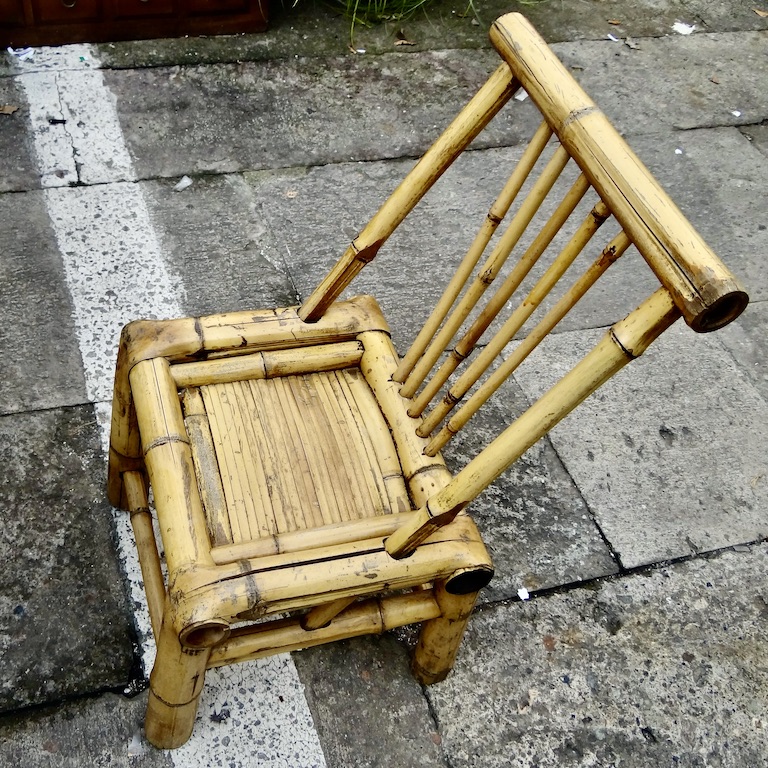
In Gibson’s (1986, 1979) words, “an affordance is neither an objective property nor a subjective property; or it is both if you like. An affordance cuts across the dichotomy of subjective-objective and helps us to understand its inadequacy. It is equally a fact of the environment and a fact of behavior. It is both physical and psychical, yet neither. An affordance points both ways, to the environment and to the observer.”
Such affordances could be understood as ‘objective’, i.e. ‘reflective’ or ‘expressive’ of ‘properties’ that the chair ‘has’ or ‘possesses’, but this would be to adopt a reductive, essentialist approach. Affordances, more properly, are relations between perceivers/actors and objects. Any person may perceive/enact more than one affordance of the same ‘object’, depending on need or circumstance, thereby changing its ‘objecti-ive’ status. Persons from different cultural backgrounds may share perceptions of the same affordances; or they may see different ones.
Furthermore, such environmental or ecological perception is part of the ongoing situation(s) in which the perceiver, as actant, is actively partaking and constituting. It is through such situations that the environments or ecologies are in part, constituted as environmental and ecological realities. That is, perception itself is an active scanning of situations and environments, not simply a passive reception of stimuli from situations and environments. Perception, in other words, is multiply motivated and involves, as Merleau-Ponty affirms, the whole body in movement in domains constituted through intercorporeal interaction.
Affordance as Bewandtnis
Mark Wrathall (2021) notes that we do not typically describe things as offering themselves for use. J.J. Gibson, in struggling to come up with an English word to express the thought of the “offerings of nature, these possibilities or opportunities,” described them as “affordances,” as in the expression, “the door affords entry and egress” (Gibson 1986: 18). Context of use suggests that Heidegger is trying to express the same notion with his term Bewandtnis. This allows Heidegger to describe the lived world as Bewandtnisganzheit, a whole of affordances. The world thus appears as a shifting and richly interconnected context of opportunities and invitations to act. The available entities that we encounter are ontologically defined in terms of what they afford (Wrathall, 2021: 31).
The particular affordances that are disclosed in any given situation are a function of the equipment that is on hand; the kind of activities or practices in which agents are engaged; and the character of the particular agent themselves, including their skills and bodily constitution. Similarly as for Gibson, an affordance for Heidegger is defined simultaneously in terms of the way we are coping with things and the state of the environing world. Thus, in addition to being contextually determined, affordances, unlike objects, are inherently indexed to our skills and bodily capacities for action.
The entities that populate our everyday world, including or especially, the already-designed elements of our world, stand out as being available. Furthermore, they are structured by the place they hold in a network of reference relationships. That is, they ‘refer’ or point us, both explicitly-deictically and implicitly-inferentially, to the work or end product we are producing; the materials out of which they are constructed; the people who will put them to use; and the natural environment in which they are to operate or, in other words, provide further affordances.
Affordances and Design
The Interaction Design Foundation develops the discussion of the use of the notion of affordances in the context of design. The key figure in the introduction of affordances into design discourse and practice is Don Norman.
References
Edgeworth, M. (2016). Grounded objects. Archaeology and speculative realism. Archaeological Dialogues, 23 (01), 93–113. Available from http://www.journals.cambridge.org/abstract_S138020381600012X [Accessed 21 June 2016].
Gibson, J. J. (1986, 1979) ‘The theory of affordances’, in The ecological approach to visual perception. Hillsdale, NJ: Lawrence Erlbaum, pp. 127–143.
Interaction Design Foundation (no date). Affordances. Interaction Design Foundation. Available from https://www.interaction-design.org/literature/topics/affordances [Accessed 2 April 2021]
Norman, D. (2013) The Design of everyday things. Rev & Exp ed. New York, NY: Basic Books.
Rucińska, Z. (2020) Affordances in Dennett’s From Bacteria to Bach and Back, Avant, 11(2), pp. 1–11. doi: 10.26913/AVANT.2020.02.05.
Wrathall, M. A. (2021) Affordance (Bewandtnis), in Wrathall, M. A. (ed.) The Cambridge Heidegger lexicon. Cambridge, UK: Cambridge University Press, pp. 31–33.
 Incomplete ...
One thought on “Affordances”